Eco Bomb Near Zagreb: 500,000 Tons of Hazardous Waste Next to a Wellfield Supplying 150,000 People
While awaiting the remediation of 37,000 tons of waste in Gospić, the illegal dump in Kosnica grows by the day, and institutions remain silent
While awaiting the remediation of 37,000 tons of waste in Gospić, the illegal dump in Kosnica grows by the day, and institutions remain silent
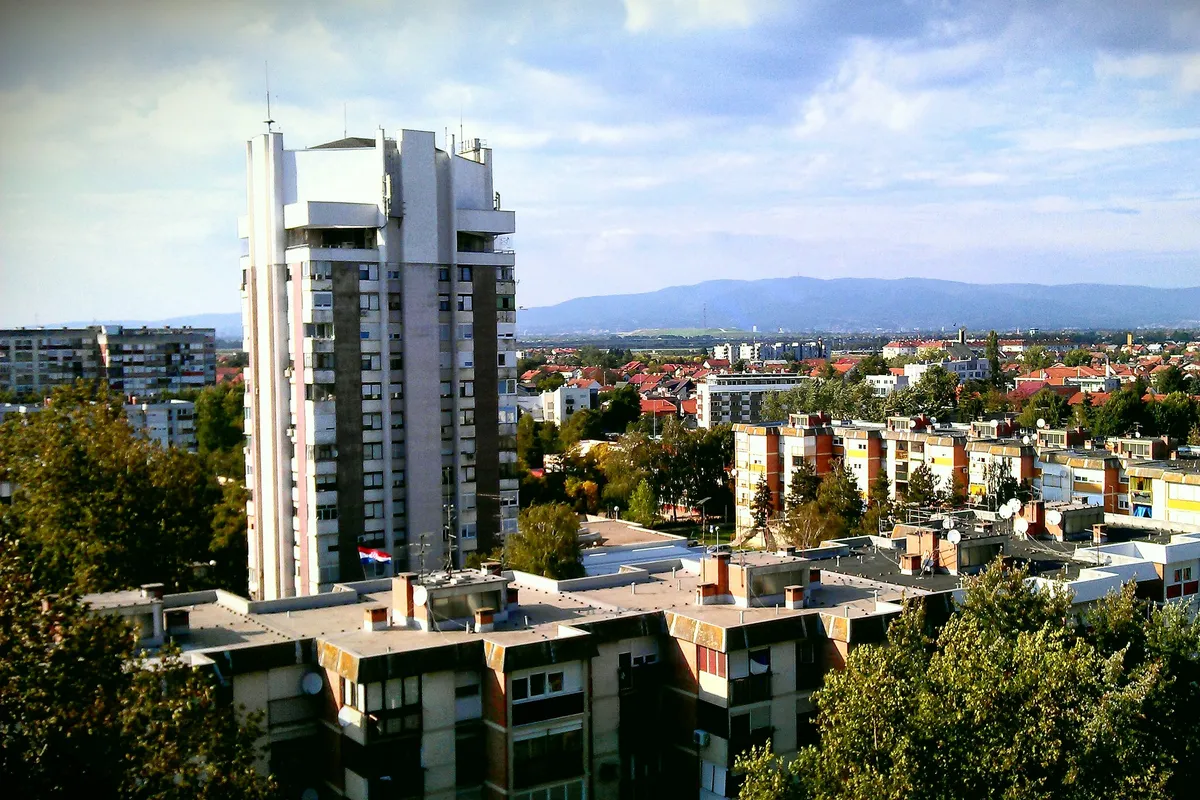
On the outskirts of Zagreb, in a forest near Kosnica, lies an illegal dump containing approximately 500,000 tons of hazardous waste, with the largest area spanning 280,000 square meters. The waste is disposed of in the immediate vicinity of the Črnkovec wellfield, a water source for 150,000 people, as reported by Net.hr on August 18, 2026.
"Citizens are asked to protect water and its surroundings for the common good," reads a sign near the wellfield, but the reality is far from that message. Trucks and semi-trailers continue to bring waste into the forest undisturbed, and the city administration of Velika Gorica is aware of the problem, yet no solution is in sight.
Josip Pavlović, president of the Ekologija grada association, described the scale of the problem: "From heavy fuel oil, industrial lubricants, medical waste, construction waste, asbestos, mixed municipal waste, animal waste-we can't even imagine what's all there. That area, once a gravel pit 7-8 meters deep, has turned into a hill 15 meters high over the past 12 years."
Pavlović confirmed to Net.hr that they have filed hundreds of reports, including the latest one in April 2026 to the State Inspectorate. "We reported and filmed the trucks bringing in waste. We captured everything, with all photo and video documentation-sent to the State Inspectorate-but I still haven't received any response," he said. Journalists also sent inquiries to the inspectorate and the ministry, but received no answers.
Gordana Mikulčić Krnjaja, head of the City of Velika Gorica's Department for Urbanism and Environmental Protection, recounted how their communal inspectors experienced a shock in the field: "During one inspection by our communal inspectors, they went out to the field, acting on a report, but a certain individual attacked them with a gun."
As a temporary measure, the city installed concrete barriers to block truck access, but that didn't work either. "We installed them on several occasions, but you can see on the cameras before they were knocked down that they were pushed aside and removed from the road," added Mikulčić Krnjaja.
In parallel with the problem in Kosnica, the start of remediation for 37,000 tons of hazardous waste buried in Gospić is also pending. Renato Šarc, deputy head of the Department for Recycling Technologies and Waste Management in Leoben, Austria, explained to Net.hr what the remediation should look like.
"If the surface is covered with an impermeable membrane, you can ensure no new water enters, so there will be no further leaching. But as I mentioned, that's only a temporary measure," said Šarc. After that, triage follows-sorting the heterogeneous waste mass into fractions, analyses, and disposal at appropriate facilities.
"Such a process can be carried out over a period of at least 12 to 24 months. It will definitely be an expensive process. The more mixed the waste, the more complicated and costly it is to dispose of," warned Šarc. The waste will have to be transported to multiple locations across Europe.
Members of parliament and ministers will hold an emergency session in Gospić in two days to discuss the poison in the ground, but a concrete remediation plan for Lika is still unknown. Given what has been seen in the Kosnica area and many other illegal dumps, there will be work throughout Croatia.