EU Losing Battle with Wildfires: 435,000 Hectares Burned
As the fiery onslaught sweeps the continent, record-low water levels threaten nuclear power plants, and experts warn the EU's strategy remains too slow.
As the fiery onslaught sweeps the continent, record-low water levels threaten nuclear power plants, and experts warn the EU's strategy remains too slow.
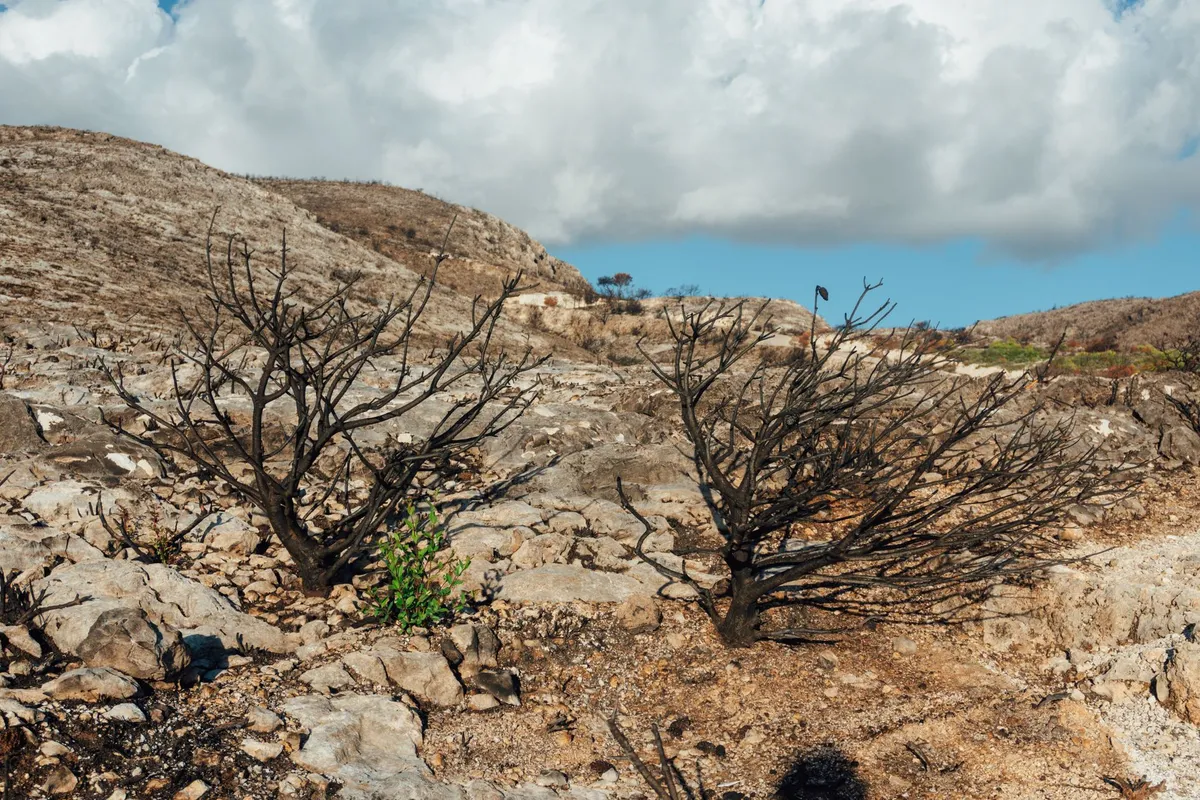
Europe is once again facing devastating forest fires this summer, which have consumed more than 434,976 hectares of land since the beginning of 2026. According to data from the European Forest Fire Information System (EFFIS) as of July 30, 2026, 1,407 fires have been detected, releasing an estimated 17.98 million tonnes of carbon dioxide. "These fires are beyond capacity," a European Commission official told Euronews, describing how the flames are spreading faster than firefighting forces can respond.
The situation is so severe that the EU Civil Protection Mechanism was activated for the first time this year in late April. Croatian forces have been deployed to assist France, alongside teams from the Czech Republic, Germany, Portugal, Slovakia, Sweden, and Turkey.
The cornerstone of Europe's response to wildfires is the EU Civil Protection Mechanism, a solidarity framework that allows a disaster-stricken country to request assistance from other member states. The mechanism is not triggered automatically-a request must be submitted by the country that deems the fire beyond its capacities. Operations are managed 24/7 by the Emergency Response Coordination Centre (ERCC) in Brussels.
Support comes from rescEU, the EU's strategic reserve for firefighting, and the European Civil Protection Pool, composed of national resources that governments have pre-committed for Union-level use. The system is complemented by the Copernicus satellite mapping service and EFFIS, which forecasts fire danger up to ten days in advance.
A new addition for 2026 is a firefighting hub in Cyprus, capable of pre-positioning six aircraft, and a specialized Fire Support Team that bolsters the ERCC from June to September.
For this year's season, the European Commission has made available 22 firefighting aircraft, 5 helicopters, 777 firefighters from 14 countries, and 21 certified teams across 12 countries. As fires escalated on the Iberian Peninsula and in France, France received seven aircraft and four helicopters, while Spain received six aircraft and three ground teams. Five Canadian aircraft were shared between the two countries.
EU Commissioner Hadja Lahbib acknowledged that the mechanism is "under pressure," but told Euronews: "it works."
In March 2026, the European Commission presented a communication on integrated wildfire risk management, reshaping the Union's approach around prevention, preparedness, response, and recovery as a continuous cycle. Yet, four months later, little has translated into new rules. EU Environment Commissioner Jessika Roswall stated in late May that the Commission "does not plan any new initiatives on forest management." The only binding document to emerge, a recommendation on integrated wildfire risk management adopted on June 29, 2026, is non-binding.
Alexander Held, a forester at the European Forest Institute, has been tracking changes in fire patterns for 25 years. "We now have fires from Turkey through Greece, Spain, Portugal to France," he told Euronews, describing the collapse of the old, compartmentalized fire season into something resembling a simultaneous, year-round risk across the continent.
"We see fires in Iceland, Greenland, and the Arctic belt," he added, which he sees as proof that "pyrogeography is definitely changing." However, he stressed that "we can't just blame climate change for the fire situation," pointing to land management decisions, abandoned farmland, and monocultures that make the landscape more flammable.
Held highlighted Portugal as an example of a country that "has shifted its strategy from fire suppression to actual fire management and invests 50 percent of its budget in land management and prevention." He also warned countries newly facing fires not to think that trucks and planes are the solution: "If other countries with far more resources and experience can't control [these fires], how do we conclude, oh, let's do the same and then we can control them?"
European Commission spokesperson Anna-Kaisa Itkonen told Euronews: "It is very clear that climate change is making every summer hotter, harsher, and more dangerous." She noted that "Europe is the fastest-warming continent in the world" and that in 2025, "more than one million hectares" burned across the EU. She added that 35 percent of the next long-term EU budget is earmarked for climate and environment, including nearly €19 billion from cohesion funds for adaptation.
Meanwhile, record-low levels of the Danube are causing dramatic problems across southeastern Europe. Hungarian Prime Minister Péter Magyar confirmed that the Paks nuclear power plant was on the brink of a complete shutdown on Tuesday night. "Around 1:30 a.m., we were a few millimeters away from a full shutdown of the Paks plant, but then the water level stopped falling and by morning it had risen by 1.5 centimeters. The last turbine is currently operating safely," Magyar announced.
The Paks plant, located about a hundred kilometers south of Budapest, with its four reactors commissioned between 1982 and 1987, provides nearly half of Hungary's total electricity. Due to low water levels, it was already operating at reduced capacity of just over ten percent, with only one of its four reactors in operation.
On Monday, August 3, 2026, the Hungarian government introduced emergency austerity measures, including mandatory consumption reductions for large industrial users. Energy Minister István Kapitány stated that the measures had successfully lowered consumption and kept the grid stable.
Neighboring countries are not spared either. In Romania, the military dynamited rocks in the Danube to redirect the flow and secure cooling water for the Cernavoda nuclear power plant. After a controlled explosion on the night of Monday to Tuesday, August 3-4, 2026, the water level rose by about two centimeters. On Tuesday, the sinking of barges continued with the aim of raising the level by 10 to 12 centimeters. Bulgaria is concerned about its Kozloduy nuclear plant, also located on the Danube.
Despite the pressure, the EU is investing in expanding capacity. The procurement of a permanent rescEU fleet of 12 new firefighting aircraft and five helicopters is underway, but deliveries will not be completed until 2030. The Commission is also preparing a portal and guidelines on integrated risk management, expected to be finalized by early 2027.
Yet, the question remains whether it is enough. Every aircraft and helicopter in the current fleet is still nationally owned, and interoperability issues between national equipment and command systems, an aging firefighting workforce, and EU sanctions grounding Russian helicopters in Spain further narrow the maneuvering space. As Held summarized: "We know the roadmap, but there is a long road ahead."