Kherson as a 'Human Safari': 26 Dead in July
Russian forces systematically target civilians with drones in Kherson. Residents live in constant fear, and July saw a drastic surge in attacks.
Russian forces systematically target civilians with drones in Kherson. Residents live in constant fear, and July saw a drastic surge in attacks.
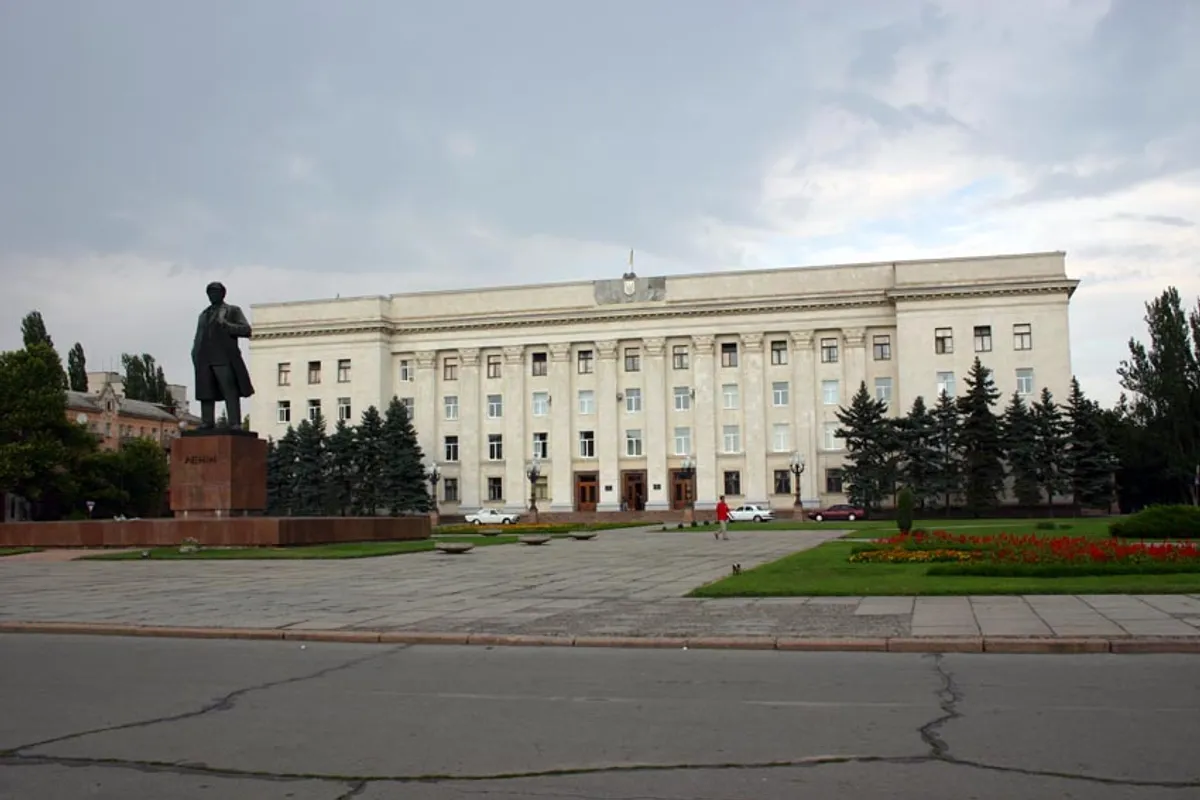
In the Ukrainian city of Kherson, under constant threat from Russian drones, 26 civilians were killed and 421 wounded in July, according to data provided to WELT by Alexander Tolokonnikov, spokesperson for the Kherson military administration. This marks a dramatic escalation of violence that locals call a 'human safari.' Attacks have become so frequent that no one feels safe.
The world was recently horrified by a video clip just over 30 seconds long. It shows a small drone laden with explosives circling just a few meters above a vegetable stall near Kherson. The vendor, 52-year-old Yuriy, recognized the danger and tried to hide behind a van, but the drone pursued him like a predator around the vehicle before diving and exploding right next to him.
Yuriy, who normally lives in neighboring Mykolaiv and regularly comes to Kherson to sell vegetables, miraculously survived the August 4 attack, sustaining multiple shrapnel wounds to his arms, legs, and back, as well as a concussion. "The drone came from somewhere behind the market, from that bush over there, and it was flying very low. It's an open area. There's nowhere to go. It's terrifying. Really terrifying," Yuriy said in a video interview from the hospital released by Ukrainian authorities.
Ukrainian President Volodymyr Zelensky strongly condemned such attacks, calling them deliberate strikes on civilians. "The Russians have gone mad," Zelensky said, sharing the attack footage on his Twitter profile.
Austrian Colonel Markus Reisner, who has analyzed numerous attack videos, told WELT that this constitutes a clear war crime. "This is clearly a war crime when you fly a drone loaded with explosives directly at civilians or into an ambulance," Reisner said. He added that there is a clear strategic calculation behind the attacks: "The Russians are trying to drive the population out of Kherson to the other side of the river and make this area uninhabitable."
According to WELT reports, Russian drone pilots regularly hunt people in Kherson, making no distinction between soldiers and civilians. "The Russians mainly attack cars and buses. There have also been many attacks on medical personnel and ambulances," Tolokonnikov confirmed. Targets include pedestrians, cars, and emergency vehicles, and attacks have become more frequent since autumn 2024.
Kherson was under Russian occupation for eight months, from the start of the full-scale invasion in 2022, until Ukrainian forces liberated it in November 2022. Since then, opposing forces have been positioned on opposite banks of the Dnipro River, and the city has been under fire day and night.
Before the start of the full-scale Russian invasion in 2022, Kherson had more than a quarter of a million residents. Today, only between 50,000 and 60,000 remain. Daily life is increasingly moving underground. Olga Chernyshova survived a drone attack in September 2024 while returning from shopping. "The drone was flying very low and making that noise. I immediately ran toward home, and then it exploded behind me," she recounted. Her car was severely damaged, but she escaped without physical injuries.
Volodymyr Shemenkov, manager of the last brewery on the city's outskirts, testifies to the fear that has become part of everyday life. "If I tell you I'm not afraid, that wouldn't be true. The truth is that every one of us is afraid. No one is safe anymore. When you walk down the street, you have to expect every second that a drone could hit you," Shemenkov said, adding that he knows many civilians who have been targeted. In late 2024, one of his workers was hit by a grenade dropped from a drone as soon as he got out of a taxi.
Official data presented by Tolokonnikov shows a clear trend of escalation. In January, four people were killed and 28 wounded; in February, two killed and 53 wounded. March brought seven dead and 66 wounded; April, 12 dead and 147 wounded; May, 11 dead and 201 wounded; and June, 10 dead and 179 wounded. July was the worst so far, with 26 dead and 421 wounded in just one month.
Aleksandra Kniga, who works with children and teenagers in Kherson, was herself wounded on April 2 in the Shumenskyi district while looking for a new shelter for the children. "In April, it became absolute hell," she said, describing how she heard shotgun blasts, apparent attempts to down a drone, before her detector went off and the drone exploded nearby. "This is the reality we live with. This is how Russia terrorizes the people of Kherson every day," Kniga concluded.
The British non-profit organization Centre for Information Resilience (CIR) has verified several such videos by the end of 2024 and found a "clear escalation" in drone attacks by Russian forces. Meanwhile, Russian propaganda repeatedly tries to blame Ukraine for these attacks, even claiming that Ukrainians are killing their own civilians.
The author of the report, foreign correspondent Ibrahim Naber, who has been reporting from Ukraine since 2022, was himself wounded in October 2025 in a Russian Lancet drone attack in Dnipro, further confirming the dangers faced by journalists on the ground.