Croatia Under Siege: Adriatic Sea Hits Record Temperatures
Scientists warn of the disappearance of the native marine ecosystem, while Croatian Waters experts record the third negative water level record in two weeks.
Scientists warn of the disappearance of the native marine ecosystem, while Croatian Waters experts record the third negative water level record in two weeks.
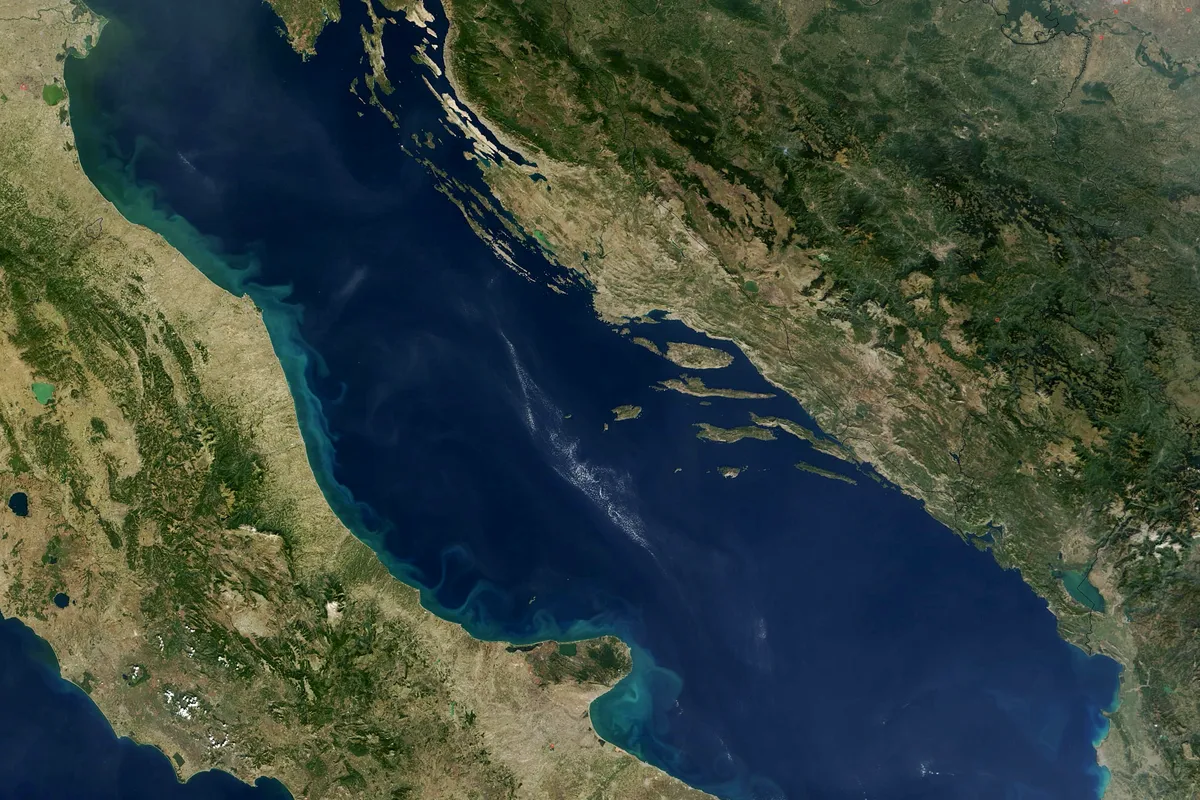
Croatia is simultaneously facing two alarming climate extremes that are fundamentally altering its environment. While Adriatic Sea temperatures in some places reach 30 degrees Celsius and rapidly change marine life, inland waters are hitting historic lows. In just ten to fifteen days, the negative water level record for the Drava River has been broken for the third time, and the Danube at the Batina gauge has surpassed the lowest level recorded back in 1909.
The heatwave that has gripped the country has also dramatically warmed the sea. Swimmers in Pula are noticing changes, but their impressions are divided. "In recent years it's been warmer, but for those of us who are a bit older, it's very pleasant," one swimmer told HRT. Others are skeptical of drastic changes: "You know, it all depends on the wind, the temperature, but I don't think it's, maybe one degree, but maybe not even that. It's summer, it should be."
However, scientific data leaves no room for doubt. Dr. Martin Pfannkuchen, head of the laboratory at the Ruđer Bošković Institute in Rovinj, presented alarming figures to HRT Magazine. "In the last ten years, we've seen very rapid warming in the northern Adriatic; we've been adding an average of over 2.7 degrees Celsius to the mean annual temperature. That's a record for the entire Mediterranean and all European seas," Pfannkuchen warned.
The rise in temperature is opening the door to new, aggressive residents of the Adriatic. Ela Pahor, a professional associate at the Pula Aquarium, explained the threat mechanism to HRT Magazine: "These are species that may be more aggressive than native ones; they can displace them from their habitats, compete heavily for food, or be predators that actively attack in large numbers; usually, they are voracious species."
Dr. Pfannkuchen added that the consequences are already dramatically shaping the seabed. "If the temperature rises significantly, then of course there's a possibility that bacteria take over the system, and these are usually undesirable bacteria. A lot of habitats have disappeared, especially coastal habitats; we see this most in shallow waters and the coastal belt. We can say we've recorded very significant changes that don't resemble the Adriatic as it was 40 years ago," he told HRT Magazine.
While the sea warms, inland waters are drying up. Mario Spajić, deputy director of the Water Management Department for the Danube and Lower Drava at Croatian Waters, described the situation to Net.hr as extremely critical. "The water levels of the Drava and Danube are in the domain of extremely low water levels. The trend is stagnation without major changes. However, it should be noted that in ten to fifteen days, we've already recorded negative water level records for the Drava for the third time," Spajić stated.
Particularly alarming is the data from the Batina gauge. "On Friday at 10 PM, the lowest water level was recorded at the Batina gauge, meaning the Danube's water level surpassed the lowest recorded level from 1909," Spajić revealed to Net.hr, emphasizing that a record over 117 years old had been broken.
Spajić sees climate change as the main culprit. "There are multiple reasons. Climate change is evident; we feel it, we see it. There's a long dry period that is now even more pronounced with these extreme temperatures that will continue over the next week," he told Net.hr. He added that "the situation on the watercourses in the upstream sections is similar to here, meaning extremely low water levels."
The receding water is not only exposing sandbars but also hidden dangers. According to Net.hr, last week aircraft bombs were found in the Drava riverbed, which the police safely deactivated. Experts warn citizens that walking on the exposed riverbed is extremely dangerous because the river remains fast and powerful enough in some places that carelessness could end tragically.