The Croatian Institute of Public Health (HZJZ) issued a new statement on Thursday, August 13, 2026, regarding PFAS compounds, the so-called 'forever chemicals,' whose presence was confirmed in groundwater in the Gospić area. The statement provides a more comprehensive overview of potential health effects of long-term exposure, but simultaneously emphasizes that the presence of PFAS does not necessarily imply that the population is exposed to a health risk.
Unlike the previous response to Index, which mentioned changes in cholesterol and liver enzyme levels, weakened immune response, and reduced birth weight, HZJZ now additionally lists hormonal system disruptions, high blood pressure during pregnancy, and an increased likelihood of developing certain cancers.
What Research Says About Long-Term Exposure
In its statement, HZJZ notes that risk assessment depends on the specific compound, its concentration, and the route and duration of exposure. The Institute warns that the detection of PFAS cannot automatically be interpreted as poisoning, as the prescribed limit value serves for risk management and does not represent a concentration at which adverse health effects automatically begin.
The most scientific data exists for the compounds PFOA and PFOS, which were intensively used for decades but are now significantly restricted. Among the better-studied compounds are PFNA and PFHxS, and it is on these compounds that much of the current assessment of potential health effects is based.
"Research has shown that continuous and long-term exposure to certain PFAS compounds contributes to an increased risk of elevated cholesterol levels, reduced immune system response, changes in liver and hormonal system function, high blood pressure in pregnancy, and that certain PFAS may contribute to an increased risk of certain types of cancer," HZJZ states in the release.The Institute also emphasizes: "Exposure to PFAS compounds does not automatically mean the occurrence of disease in every exposed person, nor does the mere detection of PFAS prove a health threat. Health risk depends on which compound a person is exposed to, at what concentration, through which route of intake, and for how long. Even with known exposure, which can be continuously monitored, the risk that this exposure poses to health is difficult to isolate as a unique effect of a substance on the health of the exposed person, and to exclude all other health risks for the occurrence of a disease or health disorder. In today's civilizational moment, it is increasingly difficult to link a health disorder exclusively to exposure to a single substance, or here specifically PFAS compounds, given the many exposures to various hazards that have different potentials and carry different health risks for humans, and we have them in our living environment and use them through various products that are part of modern lifestyles or unhealthy habits."
The PFAS category encompasses about 10,000 different synthetic compounds that have been used for decades due to their resistance to water, grease, heat, and chemical agents. Many of them degrade very slowly, so they can persist in water, soil, and living organisms for a long time. They can be found in water-repellent fabrics, carpets, food packaging, non-stick cookware, firefighting foams, cosmetic products, and other items.
Concentration at Tonkovića Vrilo 20 Times Below the Allowed Limit
During 2025, HZJZ conducted an analysis of 473 water samples intended for human consumption for the presence of 20 PFAS compounds, of which 77 were raw water and 396 were water from points of consumption. PFAS above the quantification level were detected in five raw water samples and eight treated water samples. In more than 97 percent of analyzed samples, PFAS was not detected, while 2.7 percent contained PFAS in amounts below the maximum permissible concentration.
At the Tonkovića vrilo spring, a concentration of 0.0052 micrograms per liter was recorded, which is 5.2 percent of the maximum permissible value of 0.10 micrograms per liter. HZJZ states that this amount is "far below any level that poses a health risk." The statement further specifies that the measured concentration is 5.2 nanograms per liter, while the maximum allowed value is 100 nanograms per liter.
Comparisons with Other European Countries
To demonstrate that very low concentrations of PFAS in water are not specific to Gospić or Croatia, HZJZ also published comparisons with other countries. In Slovenia, during groundwater monitoring in 2025, PFAS were found above the detection limit at 118 of 163 measurement sites, corresponding to 72.4 percent of tested locations. The Institute notes that these are groundwater samples, not necessarily water delivered to consumers, and that the data was published by the Slovenian Environment Agency (ARSO).
In a study conducted in Germany by the Federal Environment Agency (Umweltbundesamt), the highest measured value for the sum of 20 PFAS was 0.080 micrograms per liter, or 80 nanograms per liter, with all samples below the 0.10 microgram level. In Switzerland, 564 drinking water samples were tested in 2023. At least one of the 20 analyzed PFAS compounds was found in 46 percent of samples, while the European standard of 0.10 micrograms per liter was exceeded in five samples, or 0.9 percent.
Finding Does Not Prove Link to Landfill
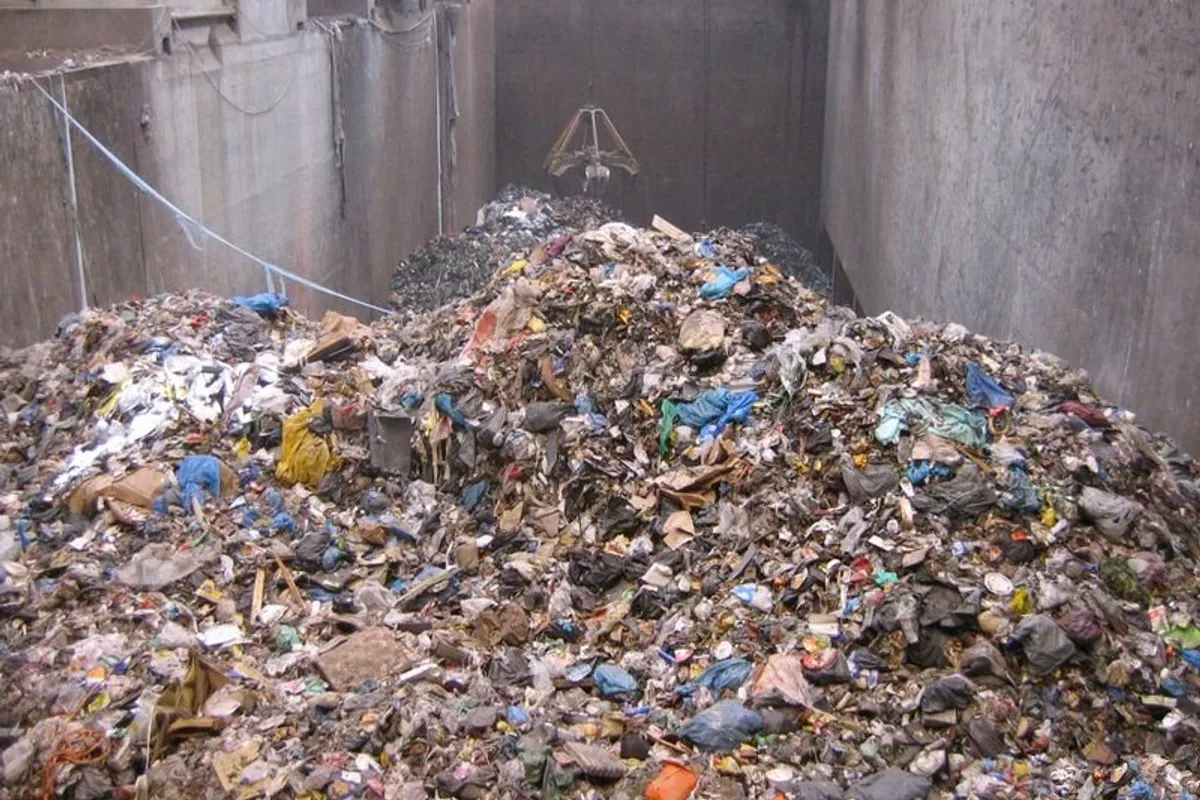
HZJZ continues to caution that the finding of PFAS at Tonkovića vrilo does not in itself prove that the compounds originate from the illegal waste dump in the Gospić area, where approximately 37,000 tons of waste are located. To establish such a connection, it is necessary to examine hydrogeological conditions, the directions and speed of groundwater flow, the spatial distribution of findings, and the types of PFAS found at individual locations. According to analyses so far, HZJZ emphasizes that no transfer of contamination from the landfill via water, air, or soil has been confirmed, and questions about groundwater movement and its connection to the landfill must be resolved through hydrogeological studies.
The new statement focuses solely on PFAS, so it does not provide additional information about lead, antimony, copper, and other substances detected in the expert assessment, nor about plans for waste remediation.