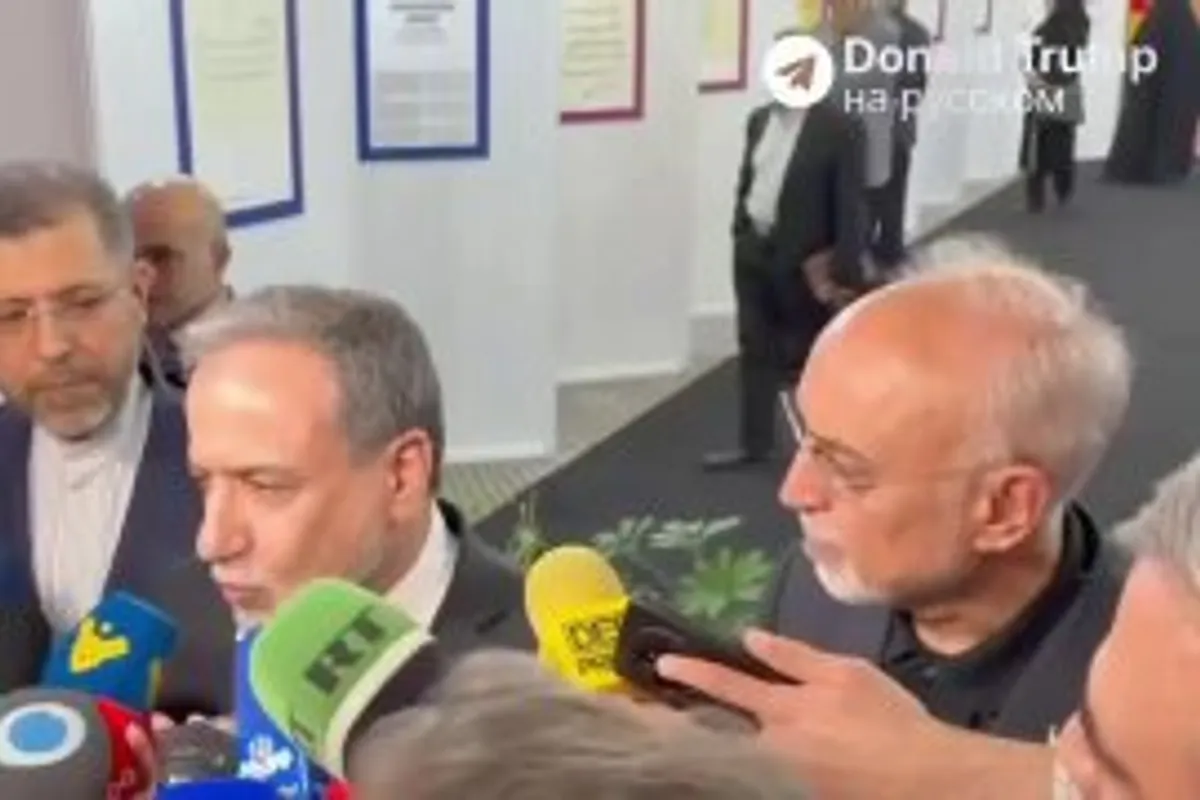
Iran's foreign minister stated on Saturday, August 9, 2026, that there are no direct negotiations between Iran and the United States to end the conflict. The two sides communicate solely through the exchange of messages via intermediaries. "Intermediaries are still trying to find new ways for negotiations," the Iranian foreign minister told the Anadolu Agency.
At the same time, negotiations between Iran and Oman on establishing a new maritime route through the Strait of Hormuz "have reached the final stage," the minister added. This development suggests that Tehran is actively seeking alternative solutions while the blockade of the strategic waterway, which has been closed since the start of the conflict in late February, continues.
Tehran Raises the Stakes with New Demands
Iranian security official Mohammad Bagher Zolghadr presented an extensive list of conditions on Saturday for reopening the strait. The demands include a permanent ceasefire, the withdrawal of US forces from the region, the lifting of the naval blockade and sanctions, the return of frozen assets, and the payment of billions of dollars in compensation by the US. Tehran also demands an end to attacks on its allies in Lebanon, Palestine, Yemen, and Iraq.
Iran's Revolutionary Guards further escalated their rhetoric on Sunday, stating that they will not open the strait until the US accepts all their conditions. "Until the enemy accepts all our conditions... the strait is now effectively a battlefield for us, not just a shipping route," the Revolutionary Guards said in a statement, as reported by AFP.
Trump's Dilemma Ahead of Elections
According to a Wall Street Journal report, US President Donald Trump was ready to end the conflict with Iran without reaching an agreement on Tehran's nuclear program, provided that the Strait of Hormuz is fully reopened. He has privately discussed this possibility with his closest aides.
Trump has repeatedly claimed publicly that the strait is open, although it is not. He has also threatened a "massive bombing campaign" against Iran, but Tehran has signaled readiness for a "long and exhausting conflict." The president also stated: "They called me and said, 'Please, don't attack. We'll make a deal.' That's the absolute truth, and everyone knows it."
Impact on US Elections
Trump's urgency to end the conflict could be linked to the upcoming midterm elections, which are less than three months away. Gas prices in the US are significantly higher than before the war began, and the continued blockade of the Strait of Hormuz continues to disrupt the global oil market, putting pressure on voters.
Richard Weitz of the NATO Defence College told Al Jazeera that talks between the US and Iran are stalling precisely because of the indirect nature of communication. "The US and Iran are talking past each other," Weitz said, adding that Washington cannot accept some of Tehran's "hardline demands." The new Iranian conditions appear to have further narrowed Trump's options for exiting the conflict without significant concessions.