Israel Reduces Rafi-Nia Synagogue in Tehran to Rubble
The attack on a synagogue in the Iranian capital has sent shockwaves through an already vulnerable Jewish community, as authorities pledge to rebuild and turn the site into a museum.
The attack on a synagogue in the Iranian capital has sent shockwaves through an already vulnerable Jewish community, as authorities pledge to rebuild and turn the site into a museum.
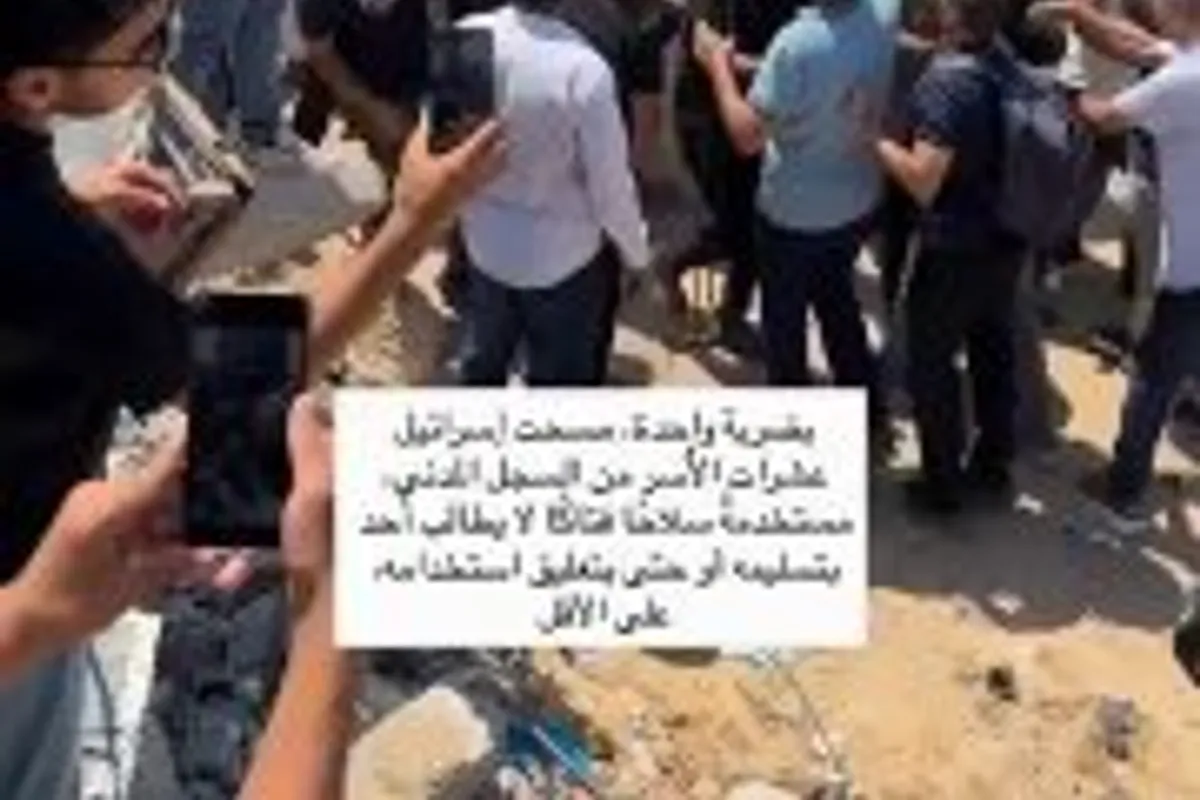
It was still dark when Marjan, a member of the Association of Jewish Graduates of Iran, arrived on Malek Street near the historic center of Tehran on April 7, 2026. A few minutes earlier, at around 3:30 a.m., she had been awakened by a call from a neighbor with the news that the Rafi-Nia Synagogue had been hit in three Israeli strikes. The scene she encountered was devastating.
"I rushed to the scene. The synagogue and the adjacent building were completely destroyed," Marjan recalled to AFP. "Pages of holy books were scattered in the streets." Emergency services, the Red Crescent, the Basij paramilitary forces, and volunteers with Revolutionary Guard insignia were already on the ground, clearing the rubble. Residents who had fled their homes in panic were returning to salvage what remained of their lives. "Neighbors who had welcomed us and accompanied us on our way to the synagogue for years were now watching, nervous, devastated, and in tears, as all their belongings were destroyed in a split second," Marjan added.
Hidden at the end of a dead-end alley, the Rafi-Nia Synagogue was much more than a place of prayer. The homeowner, Abdul Rahman Rafi-Nia, had made it available to the Jewish community back in 1958. It hosted religious services and meetings of the Association of Jewish Graduates. "We wanted this synagogue to remain a living space. People were always coming and going, activities were taking place, families were there. We loved gathering there. It was a beautiful old house with a charming courtyard," Marjan said.
For Narciss M. Sohrabi, an urban planning researcher affiliated with the Ladyss laboratory in Paris and the Center for Iranian Studies at the Austrian Academy of Sciences, the synagogue was a special place. "The doors were always open," she recalled. In the basement of the synagogue, there was a kosher and vegetarian restaurant serving pizzas, falafels, and sandwiches, where local families regularly gathered.
Miraculously, no one was inside the synagogue at the time of the attack. But it soon became clear that ancient Torah scrolls were buried under tons of rubble, sparking a race against time to save them. "We tried to rescue a few holy books. Of course, we weren't experts and we weren't allowed to enter the attack site. But we gathered as many books as we could from the alley and the road," Marjan recounted. Synagogue officials requested that the bulldozers be stopped. "We knew that if the bulldozers continued clearing the rubble around the holy ark, the scrolls would be destroyed. The rubble had to be removed by hand," she explained. The community waited five days before the holy scrolls were finally found, mostly intact, protected by their sturdy wooden cases.
The Israeli military quickly claimed responsibility for the strikes, stating that the target was a senior commander of the Iranian armed forces, Khatam al-Anbiya. In a statement to The Times of Israel, they said: "The Israeli military regrets the collateral damage caused to the synagogue," adding that "precision munitions" were used and measures were taken to reduce risks to civilians.
For Sohrabi, the news was almost unbelievable. "I was stunned. How could a small, modest, almost invisible building, hidden in a dead-end alley in central Tehran, be a target?" she told AFP. "There was no sign indicating it was a synagogue. That invisibility is characteristic of many synagogues in Iran, but even that did not protect Rafi-Nia from Israeli missiles." Sohrabi added that Israel had destroyed "not just a place of worship, but also a place of memory and social life for the Iranian-Jewish community."
The attack heightened fears in an already vulnerable and shrinking community. Before the 1979 Islamic Revolution, more than 100,000 Jews lived in Iran. Today, there are between 9,000 and 10,000. "Iran is still home to the largest indigenous Jewish community in the Middle East outside Israel," said Miriam Nissimov, a senior lecturer at Tel Aviv University and author of 'From Cyrus to Khomeini: The Jews of Iran'. Although Judaism is recognized in the constitution and Jews have their own synagogues, schools, and a representative in parliament, Nissimov warns: "Jews are free to practice their religion, but they do not enjoy full equality as citizens." Access to certain state positions and high-ranking posts is restricted. "Alongside official declarations of religious tolerance, anti-Jewish themes have long been present in certain aspects of the Islamic Republic's religious discourse, and anti-Semitic stereotypes have repeatedly appeared in state-affiliated media, as well as in certain television series and films," Nissimov added.
Concern has particularly grown since the 12-day war between Israel and Iran in June 2025. According to the NGO Human Rights in Iran, at least 30 Iranian Jews were summoned for interrogation by security services during the conflict, mostly due to family ties with Israel. "Many Iranian Jews have children or relatives living in Israel," Sohrabi explained. "Communication has become extremely difficult since that first war. Some use foreign SIM cards. Others don't even answer the phone when they see an incoming Israeli number." Human Rights in Iran adds that some community members are deeply concerned about growing religious pressure and discrimination.
Following the April attack, Iranian authorities promised to rebuild the Rafi-Nia Synagogue and declare it a national heritage site. Seyyed Reza Salehi Amiri, Iran's Minister of Tourism and Cultural Heritage, told the Iranian news agency ISNA that the site will "remain in the historical memory of Iranians, the world, and future generations, so that the world knows that a regime that kills children attacked the heart of Iran and that this crime must be recorded in the country's history." However, human rights organizations warn that the reality is more complex. Human Rights Activists in Iran (HRANA) reports that "certain religious or cultural sites belonging to minorities in Iran face abandonment, encroachment, or destruction."