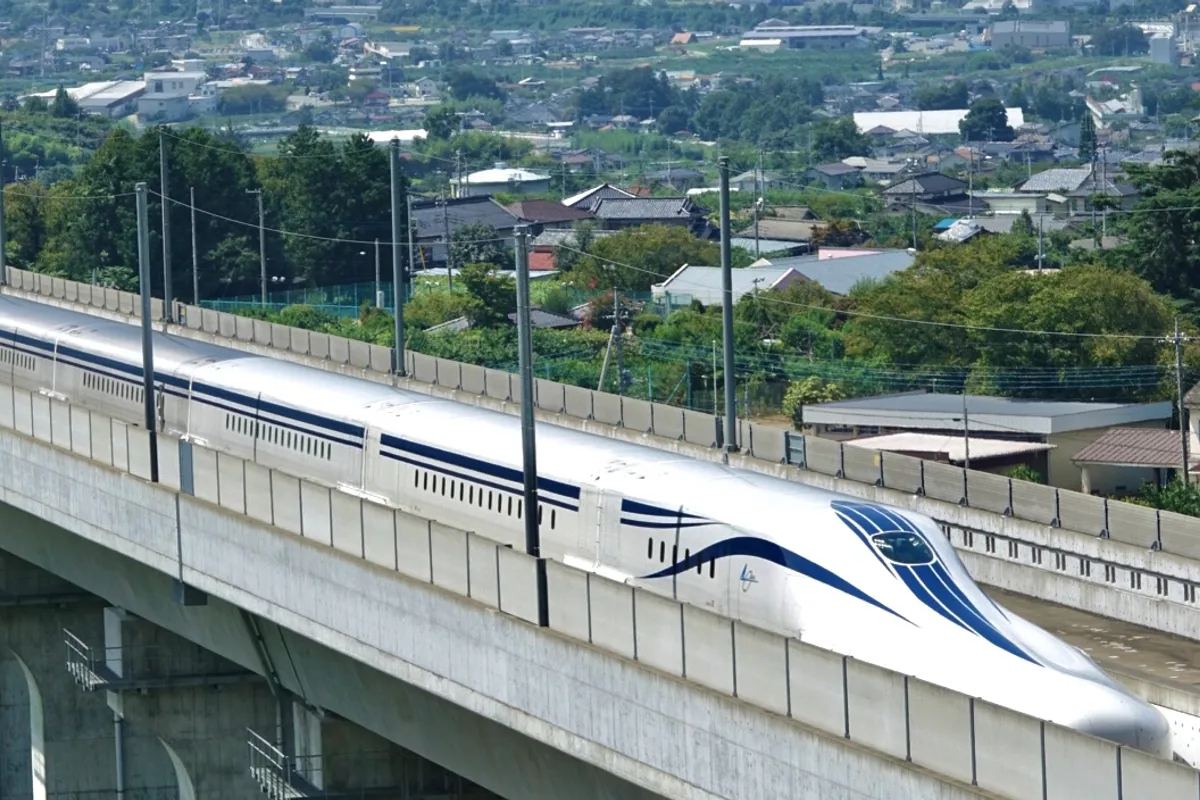
Chinese researchers have achieved an incredible feat in the world of magnetic levitation technology. An experimental maglev vehicle accelerated from 0 to 800 km/h in just 5.3 seconds, setting a new world record, according to CCTV Finance. This third consecutive record was set on a test platform in Hubei province within just six months.
How Does This Technology Work?
Unlike conventional trains, this experimental vehicle does not use wheels to move along tracks. Instead, powerful magnetic forces lift it above the guideway, completely eliminating contact and friction. The system works by having alternating electromagnetic fields, generated by coils along the track, create a traveling magnetic wave. This wave literally pulls and pushes the vehicle forward, acting like a giant, precisely controlled slingshot.
To keep the lightweight vehicle stable at such extreme speeds, the test infrastructure must meet incredibly strict tolerances. Deviations along the track are limited to just 0.5 millimeters, and the control system maintains positioning precision at the millimeter level during operation. The platform has also proven that extreme speed does not preclude controlled stopping; after reaching 800 km/h, the vehicle came to a smooth stop over a distance of just over 200 meters.
The Path to the Record: Three Tests in Six Months
The journey to this latest record was swift and impressive. The first public run took place in June 2025, when the vehicle reached approximately 650 km/h in 7.1 seconds. The very next month, researchers raised the top speed to about 697 km/h. The climax came in November 2025, when a test pushed the record to 799.2 km/h, while also significantly reducing the time needed to accelerate.
According to CCTV Finance's report, these three tests verified several key technologies, including rapid delivery of large amounts of energy, magnetic propulsion, high-speed levitation control, precise positioning, and emergency braking.
From Transport to Rocket Launching
Although the record-setting vehicle is still a laboratory model rather than a prototype passenger train, the potential applications are vast. Data from the Hubei facility could support the development of ultra-fast transport in low-pressure or vacuum tubes, where eliminating wheel friction and most air resistance could sustain speeds comparable to those of aircraft, but on the ground.
However, in the near term, the significance of this technology is likely to be more pronounced in areas beyond passenger transport. The electromagnetic propulsion system could be adapted to accelerate rockets or military aircraft before takeoff, reducing their reliance on fuel they must carry. Another Chinese team from the National University of Defense Technology has achieved similar success, accelerating a vehicle weighing about 1,100 kilograms to 194 m/s (698.4 km/h) in just two seconds on a track of approximately 400 meters.
For broader application of this technology, engineers must address issues related to energy efficiency, passenger safety, vehicle size, infrastructure costs, and the construction of longer, highly precise tracks. Related systems could also power maglev elevators and frictionless industrial transport equipment in the future.