Maričić reveals how Šotiček blossomed at Hajduk
Former player and longtime journalist uncovers the background of the young international's difficult period at Basel and why he is now a different player.
Former player and longtime journalist uncovers the background of the young international's difficult period at Basel and why he is now a different player.
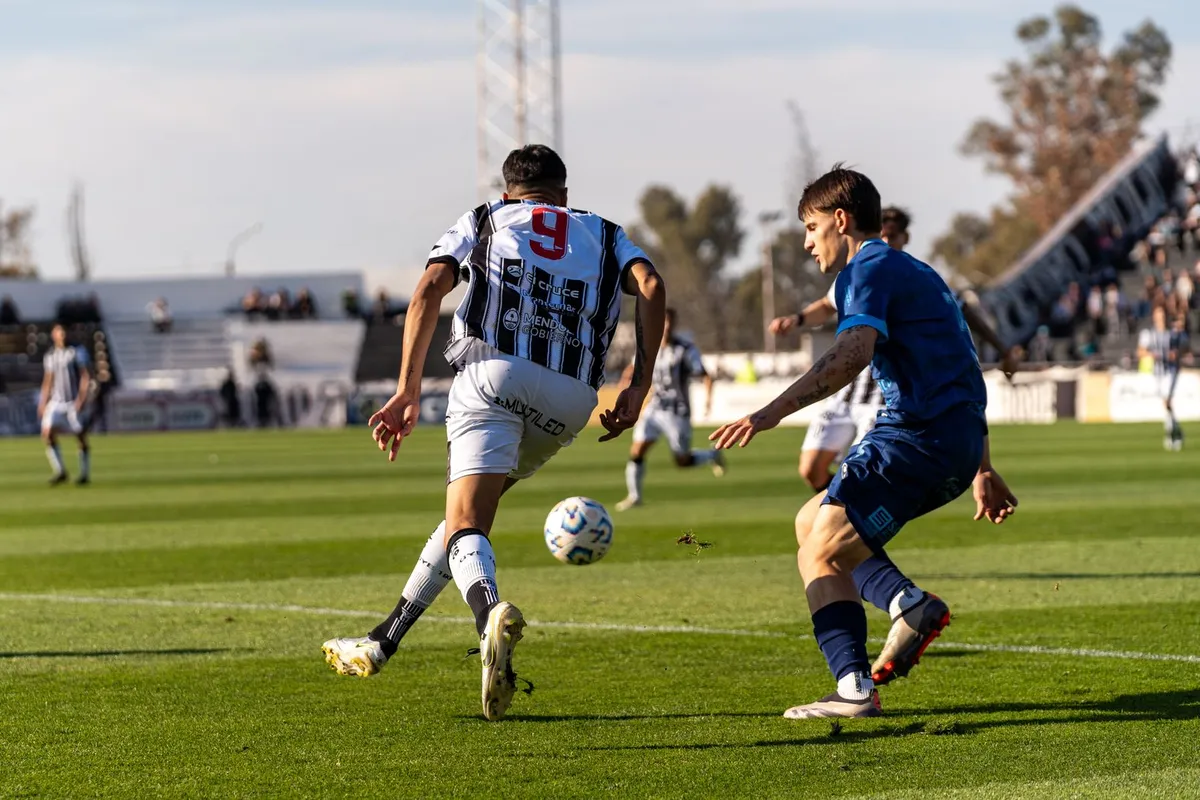
Young Croatian international Marin Šotiček has shone at the start of his adventure at Hajduk, and many are wondering why the same player failed to establish himself at Swiss club Basel. The answer comes from Damir Maričić, a former Hajduk, Dinamo, and Zagreb player, and a longtime correspondent for Sportske novosti from Basel, who followed his journey firsthand.
Maričić told Sportske novosti that he often spoke with Šotiček and gave him advice, with his key piece of advice being simple: "Be a bit more cheeky." Although Šotiček possessed speed and a light step, Maričić noticed that he played tensely in Basel and was constantly in two minds about whether to shoot or pass.
Šotiček arrived at Basel in 2024 from Zagreb's Lokomotiva at the age of 20. In his first season under coach Fabio Celestini, with whom he won the Cup and the league title, he made 28 league appearances, but only five from the start, with four goals and two assists. In the second season, things went downhill.
"The second coach was Ludovic Magnin, under whom he played a bit, but then Stephan Lichtsteiner arrived, and it was as if he completely erased him. Marin lost his confidence, and it's good that he left, while Lichtsteiner is currently the top candidate for the sack in the Swiss league," Maričić recounted. In the second season, Šotiček failed to score, and despite 28 league appearances, he was only in the starting lineup five times.
Maričić confirmed that the young player did not have proper support at Basel. "Marin is a very polite and good guy; he seemed insecure, and he needed someone to stand behind him. He arrived at 20, and Celestini often played him, which was fine for a start," he said. Although the fans quickly took a liking to Šotiček, and Maričić never heard anything bad about him, the club probably expected more.
He is particularly puzzled that coach Lichtsteiner did not count on him, given that his competitors Otele and Traore left the club. "When I look at the current squad, I'm surprised the coach didn't count on Šotiček," he added.
Maričić is delighted with Šotiček's performances in Varaždin and Vilnius, where he finally showed the decisiveness that was missing in Basel. "At Hajduk, I finally saw decisiveness in him. After he changed addresses, I sent him a congratulatory message, writing: 'Marin, you've come to a big and crazy club, I wish you all the best, be a bit more decisive in one-on-ones and shoot,'" he revealed.
Interestingly, Šotiček, whose entire family is Dinamo-oriented, has become a fervent Hajduk supporter. "Last year, journalist Slaven Alfirević called me and said he'd heard that Šotiček is a Hajduk fan. After that, I spoke with him, and he told me that everyone in his family is a Dinamo supporter. I could compare him to Ivan Rakitić in that Rakitić's family is strictly Dinamo, and he ended up becoming a fervent Hajduk supporter," Maričić recounted, who as a journalist was the first to alert the Croatian public to Rakitić while he was still playing for Switzerland.
Although Šotiček is talented, Maričić is honest about his flaws. "Sometimes he gets tangled up. On Thursday, he was confident with the ball. He's young; he can improve certain things. In Basel, he was indecisive in the final third. That's why I told him to be braver. As a foreigner, you have to score to be recognized," he explained. He believes that returning to a familiar environment, to Split, will bring him the necessary confidence and that a great future awaits him.
To conclude, Maričić stated that Šotiček would have "burned out" had he stayed in Basel, where he lacked someone to stand behind him, and Adrian Leon Barišić helped him as much as he could. Now, he seems to be on the right track to fulfill his potential.