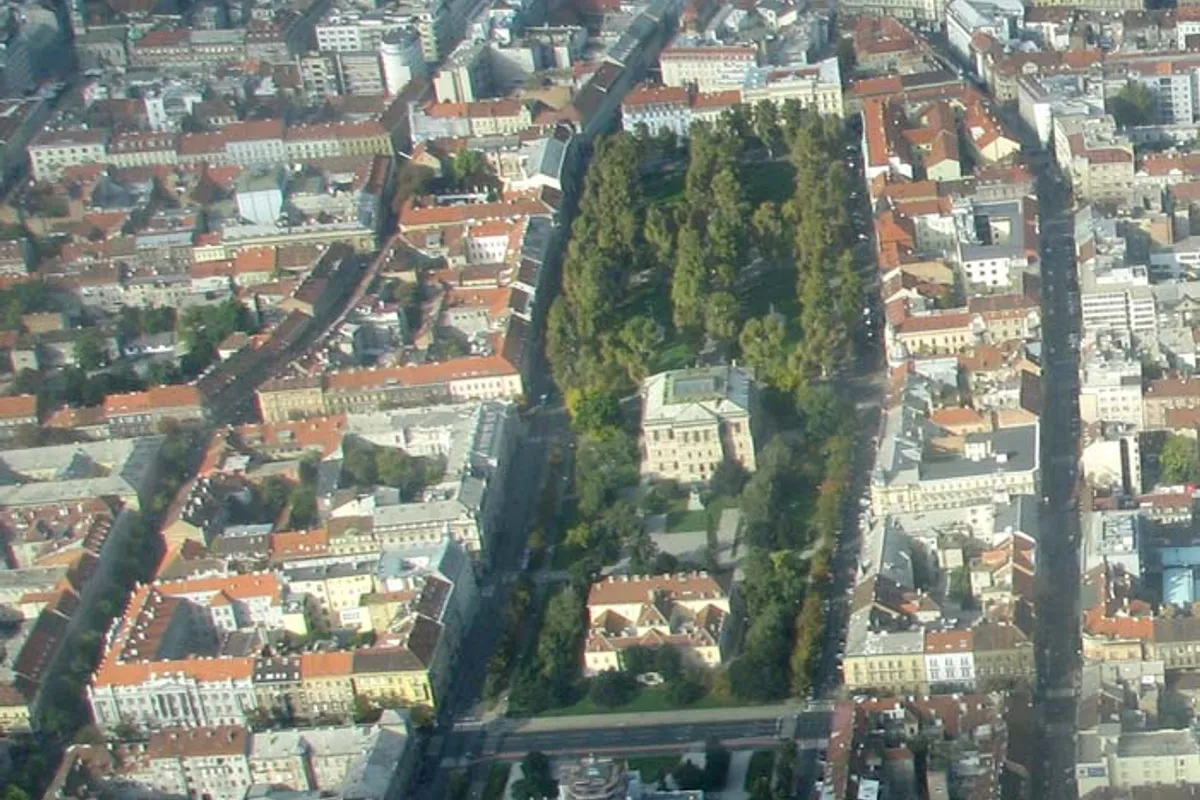
One of Zagreb's most representative areas, King Tomislav Square, was shrouded in unusual darkness at night for days. While the lamps along the perimeter paths worked properly, the entire central green park with its fountain and view towards the Art Pavilion was in darkness, creating an eerie impression and prompting numerous inquiries from citizens.
According to available information, the situation lasted for at least a week. Given that this is the first square visitors see upon exiting the Main Railway Station, the blackout of this part of the protected Green Horseshoe was incomprehensible to many, and various unverified theories about possible reasons began to spread.
City Responds After Inquiry: Malfunction in Control Device
Due to the unusual sight, Jutarnji list sent an inquiry to the City of Zagreb seeking an explanation. A response from the city administration soon arrived, clarifying the technical background of the problem.
"An on-site inspection determined that all lamps around King Tomislav Square are functional. A malfunction was detected in the lighting control device, which caused part of the lighting to be intermittently out of operation. After resetting the device, the lighting is working properly again, and additional testing and troubleshooting of the control device are underway."
From the City's response, it appears that the physical fault was not in the lamps themselves but in the system that controls them. Resetting the device resolved the immediate issue, but additional testing is underway to fully eliminate the malfunction and prevent its recurrence.
A Historical Gem in the Heart of the City
King Tomislav Square is not an ordinary city square. Most of its area consists of a green park that has been a protected monument of park architecture of the City of Zagreb since 1970. The park itself covers 2.16 hectares, while the total area of the square is 2.92 hectares, with an additional 1.59 hectares of space directly in front of the railway station.
Its history dates back to the end of the 19th century. The square began to take shape in 1892 with the construction of the Royal Hungarian State Railway Station, today's Main Railway Station. As early as 1895, in honor of the visit of Emperor Franz Joseph I, who arrived by train for the opening of today's Croatian National Theatre, the square was named after him, and that same year it was landscaped as a green park with a fountain, essentially as we know it today.
Thanks to the swift intervention following the media inquiry, this historical gem has once again shone in full glory, restoring the recognizable vista to one of the city's most beautiful views.