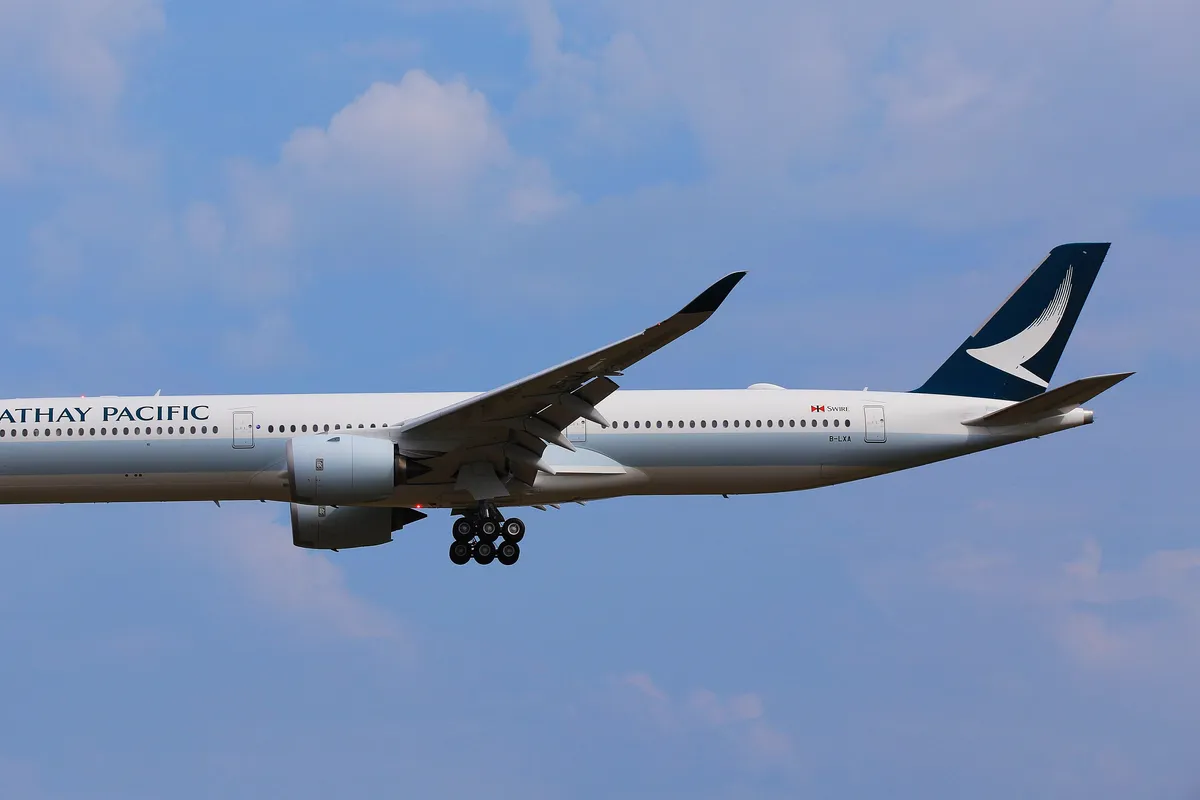
The escalation of tensions in the Middle East is causing visible disruptions to the global economy: Hong Kong airline Cathay Pacific Airways has announced an increase in fuel surcharges on passenger flights of up to 41 percent effective August 1, 2026, while Seoul's stock index KOSPI fell nearly six percent in a single trading day on July 24. Both events point to growing geopolitical risks that are increasingly spilling over into real economic costs.
Jet fuel prices up a quarter in two weeks
Cathay Pacific justified the surcharge increase by the sharp rise in global jet fuel prices. According to IATA (International Air Transport Association) data, the global average jet fuel price stood at $149.40 per barrel for the week ending July 16, 2026, compared to $127.06 a week earlier and $119.13 for the week ending July 3. That represents a rise of nearly 25 percent in just two weeks.
The airline itself emphasized that surcharge levels remain below the April peak. "This is the first increase in fuel surcharges for passengers and cargo since April, and levels remain below the peak from that month," the company stated, according to a report by the South China Morning Post. Previously, Cathay Pacific had reached record surcharge levels in April 2026, followed by temporary reductions.
Steepest increase on routes to South Asia
The specific amounts of the new surcharges depend on the route. Flights between Hong Kong and the South Asian subcontinent see the largest jump, at 41.3 percent: the surcharge rises from HK$448 (about $57) to HK$633. On routes between Hong Kong and mainland China, the increase is 20 percent, so the surcharge for flights from Hong Kong to the mainland will rise from HK$165 to HK$198, while the surcharge in the opposite direction will rise from 135 to 162 Chinese yuan (the previous amount corresponds to about $19.90). The new tariffs take effect on August 1, 2026, and also apply to cargo.
Seoul: KOSPI falls nearly six percent, program trading halted
The same geopolitical context also hit Asian financial markets. Seoul's KOSPI index fell by 406.27 points, or 5.72 percent, on July 24, 2026, closing at 6,690.62 points. The decline was so sharp that the Korea Exchange operator temporarily suspended program trading for five minutes early in the trading day. Trading volume amounted to 30.9 trillion won, equivalent to about $21.1 billion.
Foreign and institutional investors were net sellers, together selling a net 5.2 trillion won, while retail investors took advantage of the drop and bought a net 5.18 trillion won. Analyst Lee Kyoung-min from Daishin Securities described the market situation: "Risk appetite has retreated due to the escalation of tensions in the Middle East. The brakes have failed and the domestic stock market continues its volatile trading."
Tech giant Samsung and Hyundai Motor among biggest losers
Among the biggest losers were technology and industrial giants. Samsung Electronics fell 7.59 percent to 249,500 won, and rival chipmaker SK hynix lost 8.34 percent, closing at 1,759,000 won. Automaker Hyundai Motor slid 7.18 percent, and shipbuilder HD Hyundai Heavy Industries fell 2.51 percent. Additional pressure on the tech sector came from a pessimistic forecast by investment bank Morgan Stanley about the future of the chip supercycle, according to a Yonhap News Agency report.
The exception were biopharmaceutical companies: Samsung Biologics surged 10.08 percent to 1,518,000 won, and Celltrion rose 3.14 percent to 177,600 won, driven by strong business results from Samsung Biologics. U.S. President Donald Trump on July 24 threatened Iran with a "massive attack," further deteriorating the geopolitical picture and increasing market uncertainty, Yonhap reported.
Indirect impact on global and Croatian economies
Although Croatia is not directly affected by these events, rising jet fuel prices and geopolitical uncertainty have indirect economic effects. More expensive fuel means higher costs for airlines flying to Croatia, which may be reflected in ticket prices and the tourism sector, a key component of Croatia's GDP. Growing geopolitical risks also affect the global investment climate and capital flows, and Croatia, as a small open economy in the eurozone, is sensitive to such changes. The situation in the Middle East remains unstable, so economists and market analysts are monitoring further developments.