NASA's Trick Extends Voyager 2's Life by Another Year
By rerouting the heating system, engineers freed up enough power for the legendary probe to continue its scientific mission despite dwindling plutonium reserves.
By rerouting the heating system, engineers freed up enough power for the legendary probe to continue its scientific mission despite dwindling plutonium reserves.
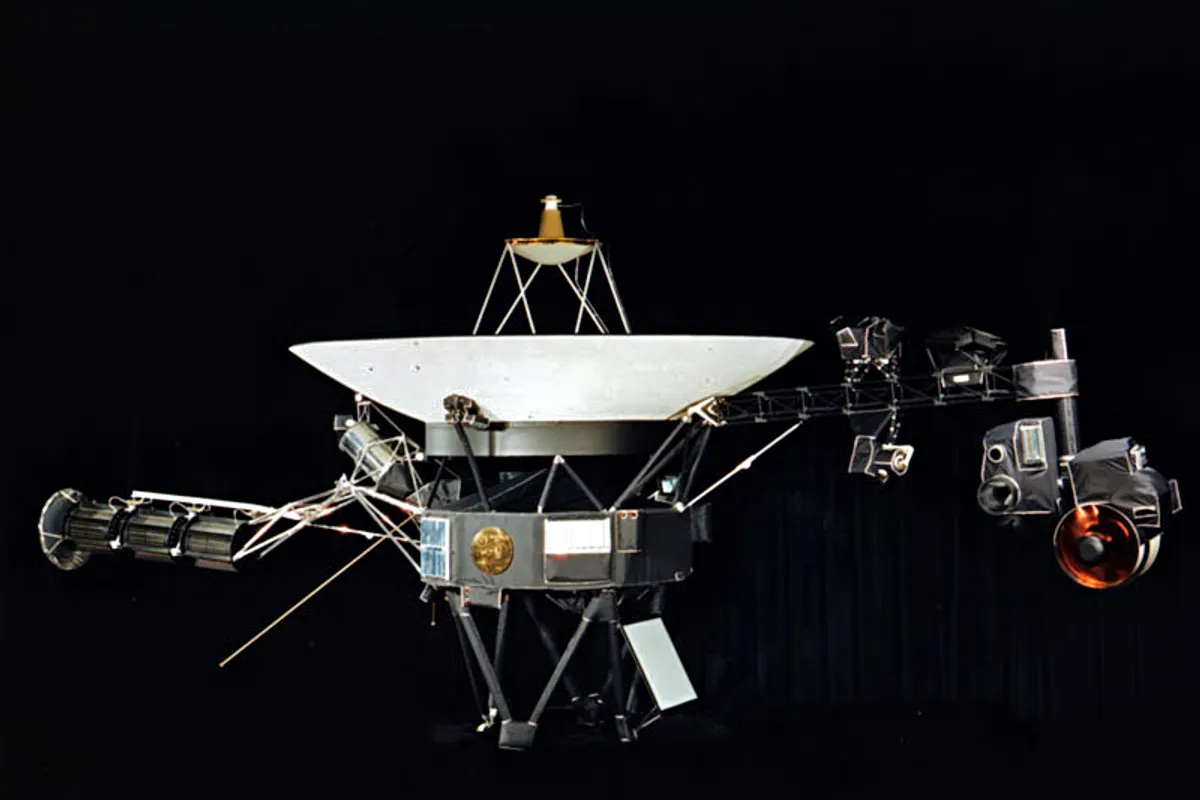
NASA's Jet Propulsion Laboratory (JPL) has carried out an operation dubbed 'Big Bang' that has secured enough electrical power for the Voyager 2 spacecraft to continue its scientific work for at least another year. The procedure involved simultaneously switching off several devices and replacing them with alternative systems that consume less electricity while keeping the spacecraft warm enough for uninterrupted operation.
Both Voyager probes, launched in 1977, are powered by radioisotope thermoelectric generators (RTGs) that convert heat from the decay of plutonium into electricity. Due to the continuous depletion of plutonium reserves, each probe loses about 4 watts of power annually. After nearly 50 years since launch, power reserves have become extremely low, forcing mission control to adopt increasingly aggressive conservation measures.
"The spacecraft's power margins have become extremely thin, forcing the team to conserve energy by turning off non-essential devices and systems," NASA officials stated. Since 2024, two scientific instruments have been switched off on each probe, and of the original ten instruments on Voyager 2, only three are now operational.
A NASA spokesperson explained to The Register that the procedure involved rerouting the operation of two heaters and one device that had remained on because its residual heat was in the right location and it consumed less energy than a nearby heater. Currently, that trio has been replaced with a new trio that continues to produce the necessary heat for the spacecraft's operation, focusing on the fuel lines but with reduced electrical consumption.
Without this intervention, the team would have been forced to shut down another instrument on Voyager 2 before the end of 2026. As it stands, all three remaining instruments will continue to operate. A similar "hacker" maneuver was also performed in 2023, when the probe also received additional energy and time for its scientific mission, which will mark its 50th anniversary next year.
NASA now plans to apply the same replacement method to the Voyager 1 probe, which is farther from Earth than Voyager 2. Voyager 2 is currently about 142 astronomical units (AU) from Earth, while Voyager 1 is approximately 171 AU, or about 25.5 billion kilometers. A signal to each probe takes nearly 24 hours to travel one way.
Both probes were launched to take advantage of a rare planetary alignment of the outer gas giants. After flying past Jupiter and Saturn, Voyager 1 was directed above the plane of the solar system, while Voyager 2 continued toward Uranus and Neptune, becoming the first spacecraft to visit those worlds. The last planetary flyby of Voyager 2 occurred in 1989. Voyager 1 entered interstellar space in 2012, and Voyager 2 followed six years later, in 2018.