NASA's PUNCH Mission Can Now Predict Solar Storms
A new constellation of microsatellites enables scientists to track coronal mass ejections all the way to Earth, cutting forecast error from five hours to under half an hour.
A new constellation of microsatellites enables scientists to track coronal mass ejections all the way to Earth, cutting forecast error from five hours to under half an hour.
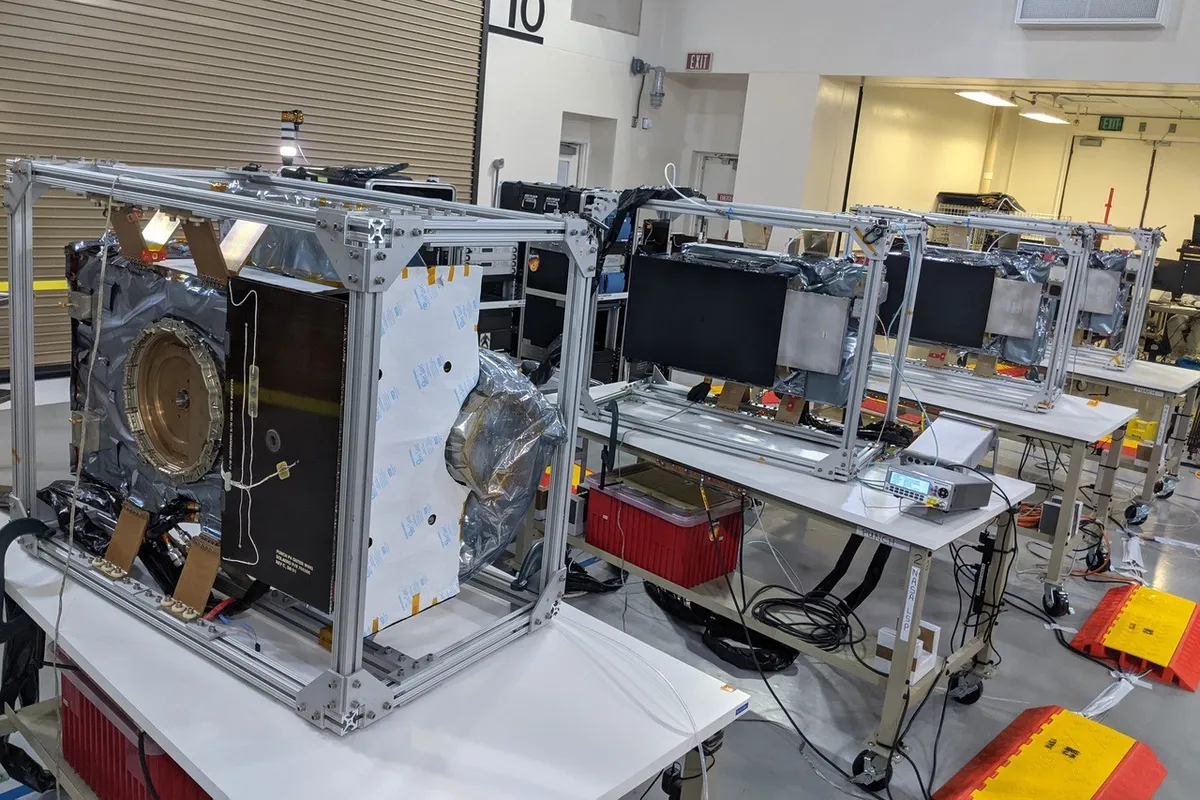
NASA's PUNCH mission (Polarimeter to Unify the Corona and Heliosphere) has achieved remarkable success in its first solar storm forecasting tests. The constellation of four microsatellites, launched in March 2025, has demonstrated that it can predict the arrival of a solar storm at Earth with an error margin of less than half an hour. This is a dramatic improvement over existing methods, which have an error margin of about five hours.
Scientists used imagery of a coronal mass ejection (CME) captured by the PUNCH satellites on May 31, 2025. The data was fed into a computer model that analyzed the edges of the CME over time, then calculated when it would reach Earth based on its speed and shape. After the model processed the first 12 hours of the ejection's development, it predicted that the solar storm would hit Earth eight hours later. The forecast proved accurate with minimal deviation.
The key advantage of the PUNCH mission lies in its ability to continuously monitor. Before it, instruments could only track about one-fifth of the journey a CME takes from the Sun to our planet. The PUNCH satellites, which monitor the Sun 24 hours a day and capture images every four minutes, allow scientists to track coronal mass ejections throughout their entire journey.
"We thought PUNCH would be good at this, but this is a stunning result. To put it in perspective, this could be the equivalent of going from a steam engine to a modern internal combustion engine for space weather forecasting," said Craig DeForest, principal investigator of the PUNCH mission at the Southwest Research Institute in Boulder, Colorado.
More accurate forecasting of solar storms also has a very practical side. Solar storms can trigger geomagnetic storms in Earth's magnetic field, potentially leading to disruptions in radio communications, power outages, and problems with satellites and internet connections. The ability to provide early and accurate warnings is crucial for mitigating impacts on infrastructure, including that in Croatia.
Scientists emphasized that this is currently an initial proof of concept. The results were presented in a scientific paper that is under review for the journal Space Weather. The team believes that with even better models and more precise data that PUNCH continues to collect, it will be possible to forecast solar storms even earlier.