NASA Releases Photos of Moon Crater Created by SpaceX Rocket Impact
The upper stage of a Falcon 9 rocket struck the Moon on August 5, and NASA has now released detailed images of the 18-meter-wide crater.
The upper stage of a Falcon 9 rocket struck the Moon on August 5, and NASA has now released detailed images of the 18-meter-wide crater.
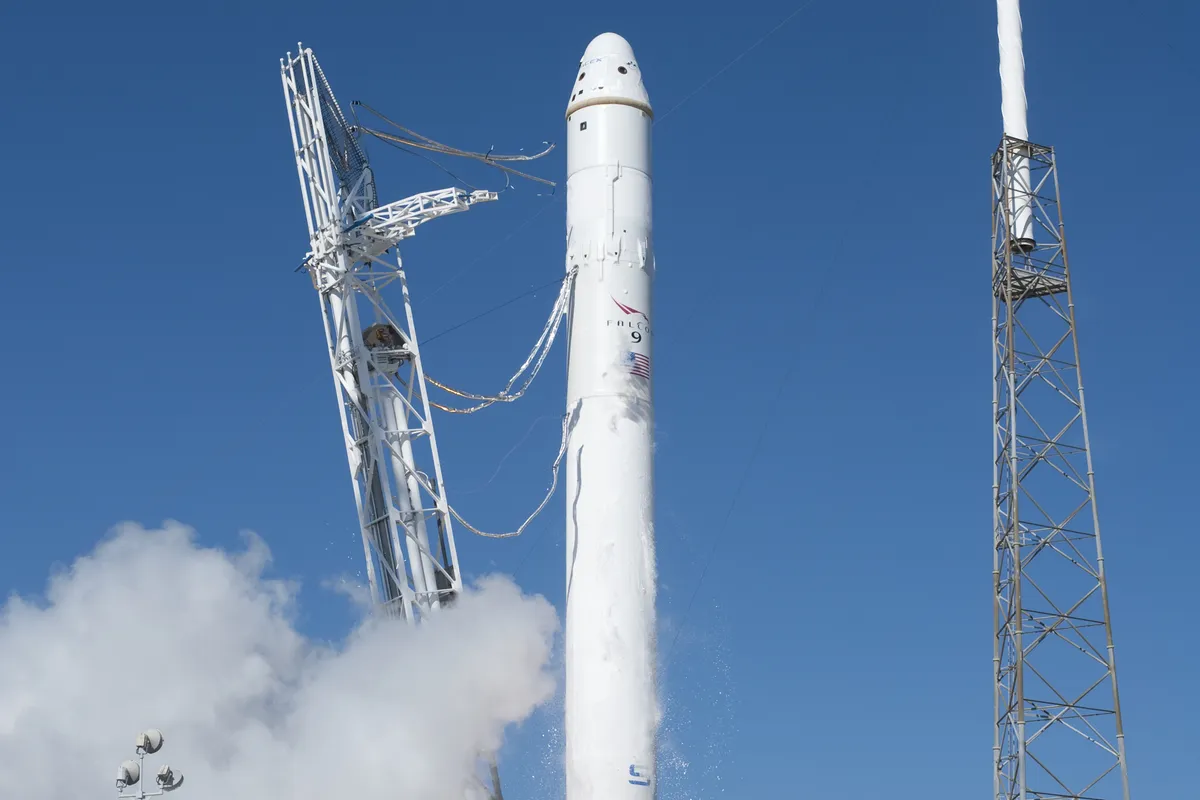
NASA has released fresh images of the impact crater created on August 5 when the upper stage of SpaceX's Falcon 9 rocket struck the Moon. The crater measures approximately 18 meters in diameter and is less than three meters deep, with the images also showing ejected material from multiple layers of the lunar surface.
The upper stage remained in orbit after Firefly's Blue Ghost 1 mission launched in January 2025. According to the Associated Press, the stage hit the Moon at a speed of 8,700 kilometers per hour after drifting through space for over a year.
NASA's Lunar Reconnaissance Orbiter (LRO), a spacecraft that has been orbiting the Moon since 2009, captured the impact site between August 11 and 12, six days after the impact. The imaging was not straightforward, as engineers had to tilt LRO to aim its cameras at the new crater.
The spacecraft was traveling about 97 kilometers above the lunar surface at a speed of roughly 1.6 kilometers per second. LRO circles the Moon from pole to pole every two hours, while the Moon slowly rotates beneath it, so it took six days for the impact site to be in the right position for photography again.
The timing of the image capture was critical. Had the camera taken the photo just ten seconds earlier or later, the impact site would have been shifted by approximately 16 kilometers from the center of the frame. LRO's camera can spot details as small as about 90 centimeters across.
The images show dark and light streaks spreading from the new crater like butterfly wings. The darker material consists of dust and rocks shaped over long periods by the solar wind, cosmic rays, and micrometeorite impacts.
This surface layer of the Moon, located at a depth of approximately 45 centimeters, was blasted to the surface by the Falcon 9's impact. Material from deeper parts of the Moon, which is fresher, is responsible for the lighter streaks visible around the crater's rim. The different viewing angles were particularly useful because some crater features are only visible when the Sun illuminates the surface at a specific angle.
Finding the impact site involved collaboration between experts and amateur astronomers from several countries. Independent astronomers first used publicly available data to determine the rocket stage's trajectory, and then NASA's Center for Near-Earth Object Studies further refined the calculations.
NASA then sent the estimated location to the South Korean team operating the lunar orbiter Danuri. Just a few hours later, the high-resolution camera on the spacecraft captured the new crater, and it turned out that the impact site was about one kilometer from the predicted location.
After that, Danuri provided NASA with more precise location data, allowing the LRO team to better aim its imaging. By comparing the new photos with those taken before the impact, NASA was able to pinpoint the crater's center even more accurately. Impacts like this one allow scientists to study how material beneath the lunar surface behaves under a powerful impact and to test models for predicting the location and consequences of future impacts on the Moon.