On this day in 1976, the world of Formula 1 witnessed one of the most dramatic moments in its history. On the legendary but dangerous Nürburgring circuit, Andreas Nikolaus "Niki" Lauda, a driver remembered today as the embodiment of courage and unwavering will, nearly lost his life. His story is not just a sports chronicle but a universal lesson in the strength of the human spirit in the face of almost certain death.
Path to Stardom Despite Family Opposition
Born into a wealthy Viennese family on February 22, 1949, Lauda dreamed of racing from a young age, which met with fierce resistance from his father, businessman Hans Lauda. Despite pressure to continue the family business tradition, young Niki was relentless. To fund his early steps, in 1971 he took out a bank loan secured by a life insurance policy and bought a seat in the March team, thus beginning his journey to the top.
Rise with Ferrari and First Title
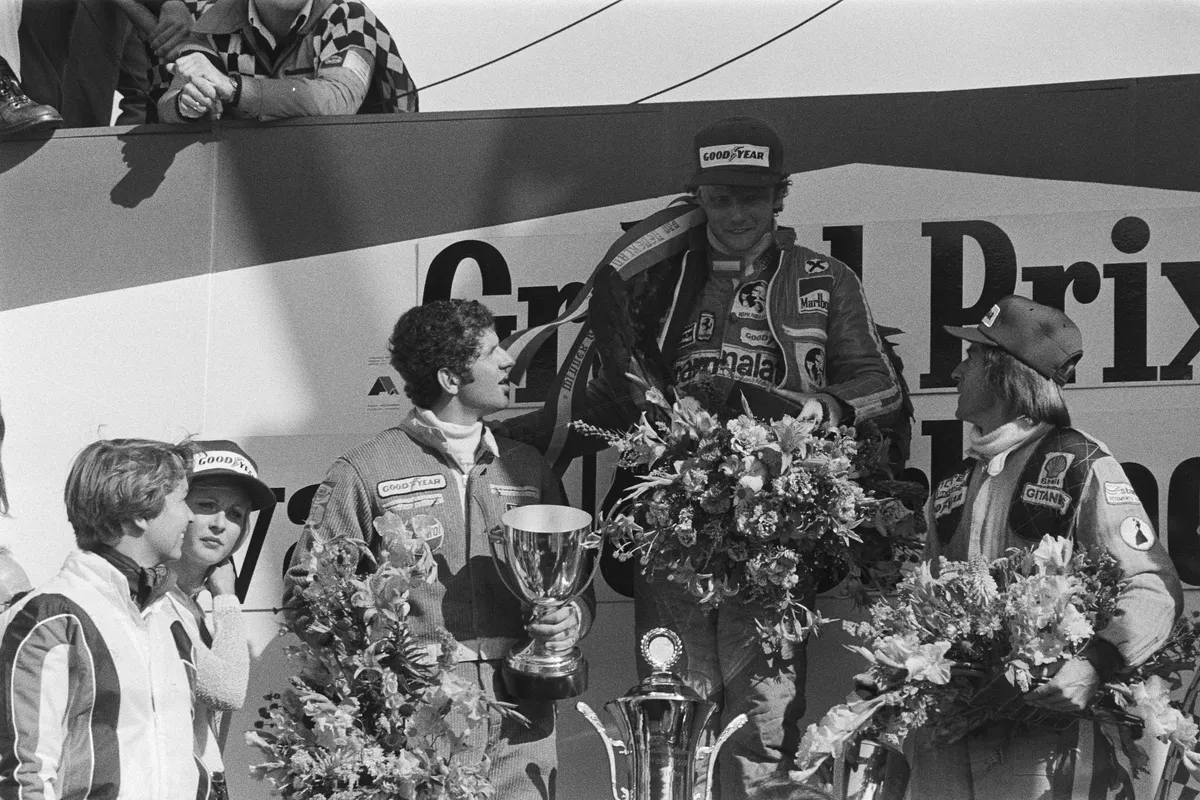
After moving to BRM in 1973, his talent did not go unnoticed, and in 1974 came the key transfer to Ferrari. The Maranello team was in a results crisis at the time, but Lauda's analytical mind and technical knowledge quickly brought a turnaround. Already in 1975, he dominated the season with five wins and clinched his first world title, returning Ferrari to the throne after 11 long years.
"The Green Hell" and the Day That Changed Everything
The 1976 season brought a fierce rivalry with James Hunt of McLaren. However, the race on the 23-kilometer Nürburgring, dubbed the "Green Hell," turned into a nightmare. Aware of the danger, Lauda called on his fellow drivers to boycott the German Grand Prix due to a lack of safety measures, but the majority voted to race.
During the second lap, at the Bergwerk section, his Ferrari lost control at a speed exceeding 250 km/h. After hitting the barrier, the car bounced back onto the track and was struck by Brett Lunger. The fuel tank exploded, and Lauda, without his helmet, was trapped in flames exceeding 900 °C for nearly a full minute. Through heroic efforts, drivers Arturo Merzario, Guy Edwards, Harald Ertl, and Brett Lunger pulled him from the inferno.
Fight for Life and Incredible Comeback
At the hospital in Mannheim, doctors gave him almost no chance; he fell into a coma, and a priest administered last rites. Lauda, however, remained conscious through sheer willpower. "I heard voices and sounds, and I forced myself to listen to them to stay awake," he recalled. He suffered severe burns to his face and hands and lung damage from inhaling toxic fumes. Refusing most cosmetic surgeries, he agreed only to procedures that improved his vision, stating, "As long as I was functional, my appearance didn't matter."
What followed shocked the world. Just six weeks after the accident, on September 12, 1976, Lauda returned for the Italian Grand Prix at Monza and, despite pain and scars, finished fourth. "I didn't think about giving up. I knew the risks, and the accident didn't surprise me," he said.
Rivalry, Friendship, and New Titles
Although he lost that season's title to James Hunt by just one point, after retiring from the final race in Japan due to heavy rain, Lauda had no regrets. "James was a fast and fair rival. I'm glad that if I couldn't win, he did," he said. In 1977, he won his second title with Ferrari, and after leaving Ferrari in 1979 to join Brabham, disillusioned with the uncompetitive car, he temporarily retired from Formula 1 that same year. He returned with McLaren in 1982 and won his third and final title in 1984, beating teammate Alain Prost by the smallest margin in history-just half a point.
Life Beyond the Cockpit
After permanently retiring from driving in 1985, Lauda turned to business, founding the airline Lauda Air in 1979. His life was also marked by personal tragedies, such as the crash of his company's aircraft in Bangkok in 1991, which killed 223 passengers and crew. Lauda personally participated in the investigation, proving that the accident was not caused by pilot error but a technical fault. Health problems plagued him throughout his life; his brother donated a kidney to him in 1997, and his second wife, Birgit Wetzinger, whom he married in 2008, did the same in 2005. With his first wife, Marlene Knaus, whom he married in 1976 and divorced in 1991, he had two sons, Lukas and Mathias, and with Birgit he had twins, Max and Mia, in 2009. Niki Lauda passed away on May 20, 2019, at the age of 70, nine months after a lung transplant.
His legacy transcends numbers. As honorary chairman of Mercedes, he played a key role in bringing Lewis Hamilton to the team. His life motto, "You can only be good at what you enjoy," remains a lasting inspiration for generations to come.