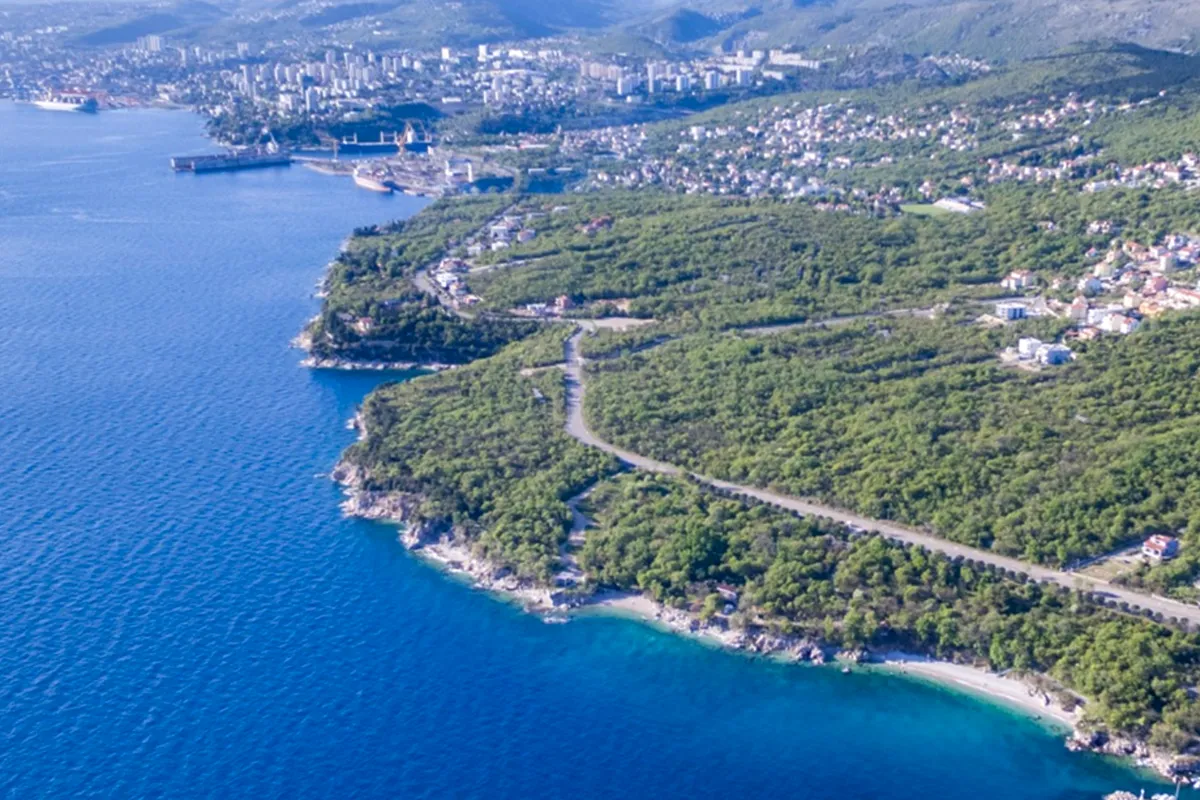
Christoph Ph. Schließmann, a German professor and entrepreneur who has spent his summer months on Brač for the past 18 years and owns property there, recently expressed his dissatisfaction in an open letter with the growing commercialization of this Dalmatian island. He particularly highlighted the issue of charging for services that were previously free, such as beach showers, and noted that food and utility prices are now higher than the quality justifies. He also mentioned the difficulty of finding a free berth for boaters.
Petar Vušković, an economist born on Brač, has now responded to his remarks. Vušković took the letter professionally but also very personally and emotionally, as a man from the island Schließmann writes about. He began his response by addressing the professor from Frankfurt, noting that he is an expert in strategic management in economics, and believes he will understand his perspective on the changes.
The Market Dictates Berth Prices
Vušković emphasized that comparing today's Brač with the island from two decades ago is unfounded. "Brač is no longer the Brač of twenty years ago, just as Croatia is no longer the Croatia of the socialist economy," he said. He also addressed Schließmann's criticism about nautical berths, which he failed to secure this year.
"If the demand for berths is now several times higher than before, and their number is limited, it is only natural that their price rises and that they need to be booked earlier. This is not a Croatian peculiarity but a basic market mechanism. When demand exceeds supply, prices rise," Vušković explained.
Comparisons with Frankfurt
The economist was surprised by Schließmann's thinking that showers should be free. "Water costs money. Water pipes, pumps, system maintenance, drainage, and the entire utility infrastructure that allows you to shower freely on the island all cost money. If the user doesn't pay for this service, someone else has to. And on the island, that someone is often us, the islanders," he warned.
He then moved on to comparisons with Frankfurt, where Schließmann comes from. "In Frankfurt, you pay for public toilets. That's not the case on Brač. In many restaurants in Germany, you'll often pay a cover charge (le couvert), while that's not the practice in Brač taverns where you eat," Vušković noted. He added that on Brač, you can visit numerous beautiful coves and beaches without an entrance fee, as well as Vidova Gora with one of the most stunning viewpoints, without paying for access, unlike many tourist and natural attractions in Germany and elsewhere in Europe.
You Pay Not Just for Food, but for the Experience
Vušković stressed that it's not fair to single out only what is more expensive on Brač today than before, while ignoring everything that remains free or significantly more accessible than in many other European destinations. He told Schließmann that he himself pointed out that price isn't the only factor; quality matters too.
"When a guest dines at a tavern on Brač, on the terrace, by the sea, in fresh air, with a view of the Adriatic, and in an ambiance that offers an experience they can't get in Frankfurt, they're not just paying for food. They're paying for the location, the ambiance, the atmosphere, and the experience. That's also market value," he said.
Croatia Third in the World in Wealth Growth
Vušković told the German professor that he can't simultaneously want higher wages, a higher standard, developed tourism, better infrastructure, better services, more investment, and greater purchasing power, while expecting prices to remain at the level of some past time. "Some prices may be inflated, but the market still pays them. That's the essence of a market economy," he emphasized.
He added that he understands nostalgia, but nostalgia is not an economic model. "Our standard is slowly aligning with the European average. Croatia is third in the world in wealth growth (asset value) over the last five years," Vušković pointed out. He also addressed Schließmann's mention of a cleaning lady, telling him that if she earns 20-30 euros per hour in Frankfurt, he believes he won't have a problem paying the same in Croatia.
Free Amenities and Singing in a Tavern
At the end of the letter, Vušković did send a conciliatory message. "On Brač, there is still much that is free. In many places on the island, showers are still free, for example in Sutivan. In Postira, parking is free," he noted. He concluded that if Schließmann feels nostalgic for the old Brač, singing with friends in a tavern costs nothing, and he believes it will remain free forever.
"Enjoy Brač, its coves, beaches, taverns, people, and above all, singing with friends. Best regards from Brač," the economist Petar Vušković concluded his letter.