Family from Gospić: Give Children Drinking Water!
The six-member Jelinić family lives a kilometer from an illegal waste dump and works in agriculture. While the political elite bickers and stays silent, they fear for their health and future.
The six-member Jelinić family lives a kilometer from an illegal waste dump and works in agriculture. While the political elite bickers and stays silent, they fear for their health and future.
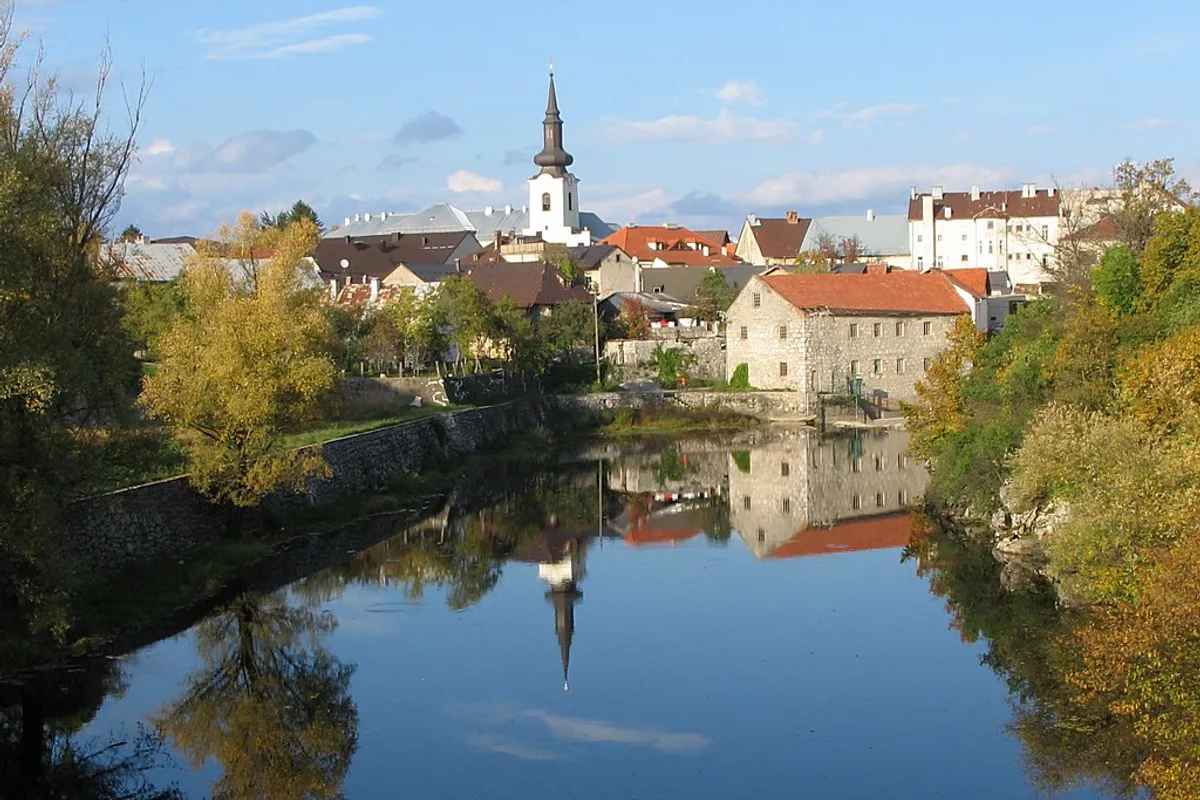
While a battle of narratives rages in political circles over the environmental scandal in Gospić, the Jelinić family lives with its direct consequences. Their family farm is located just a kilometer from the illegal waste dump, and the fear of contaminated water and soil has become their daily reality. N1 television journalist Katarina Plantak visited their farm and spoke with the family members, who shared their harrowing story.
"We are worried about our health; this is a very beautiful town and we had a paradise on earth, but because of this garbage, we are worried about our health and water. The trees are drying up; we want this removed as soon as possible because it will be disastrous for us," Katarina Jelinić, mother of four, told N1.
The family works in agriculture and has so far lived off what they produce themselves. However, their confidence in their own products has been shaken. They grow their own food and keep animals, which is why they particularly fear possible contamination. "We plant our own garden, we have our own animals, and we thought we had healthy food, but we no longer do. The animals eat grass and drink water that is no longer healthy; we water the plants with contaminated water," Jelinić explained.
Initially, they tried buying bottled water, but the cost for a six-member family was unsustainable. "We drink tap water and shower with it. I would like our authorities to at least provide drinking water for our children in kindergartens and schools," she appealed.
Despite the fear, the Jelinić family does not plan to leave their home. She said that some of their friends have already decided to leave the area due to fears about the dump's consequences. "Our friends have decided to move away because of the garbage, but we don't plan to do that because this is our home. We'll wait and see how the action unfolds; if illness and death come soon, it's in God's hands, whatever will be," said Katarina Jelinić.
Her son Dominko Jelinić, who also wants to continue farming in Lika, expressed deep concern for the future. "If this isn't removed quickly, agriculture will decline because it won't make sense; animals will die, the grass will become more toxic, and we won't be able to eat what we've produced ourselves. I want to stay in Lika and farm, but I'm worried because of the garbage," he told N1.
He also issued a clear demand to the authorities: "Let them remove the garbage and provide drinking water in schools and kindergartens, if it can't be purified from the tap."
The Jelinić family's fears are not unfounded. USKOK earlier released the results of an extensive expert analysis in the case of illegal waste disposal against the Šincek couple. Over more than 350 pages, it concluded that the dump at the industrial complex site in Gospić contains significant amounts of waste of various compositions, including hazardous and ecotoxic waste. The analysis warns that the dump represents a continuous source of pollution with a tendency to spread if remediation measures are not implemented.
The case in Gospić has brought to the surface deep systemic problems in Croatia's waste management. Former Minister of Environment Mirela Holy told Nacional Plus about the damning data from the 2026 Environmental Performance Index (EPI), according to which Croatia scored only 52.82 points.
"We are ranked 36th overall, which places us at the very bottom of the list of European Union member states when it comes to environmental performance. These data not only speak to the state of nature but directly assess the capacity and quality of environmental policy management. This should be a red alert for the Government and all local and regional authorities to finally wake up," Holy emphasized.
She interprets the restrained reaction from Banski dvori as a deliberate communication strategy. "It's a classic spin. The passive stance and ignoring journalists' inquiries avoid fueling the media. Responding would only prolong the topic's life in the public sphere, which is not in the ruling party's interest right now. That's why they chose the tactic of ignoring it until the dust settles," Holy explained to Nacional Plus.
However, she also criticized the opposition, which, she says, is vocal only while there is media interest. "The opposition reacts only when it senses media interest and public focus. As soon as they judge the topic 'worn out,' they'll simply move on to something else. There's no real interest on their part in solving the entire system, nor do they offer concrete and feasible policy solutions," she concluded.
While political games continue and everyone waits for the "dust to settle," the Jelinić family continues to water their garden with water they fear is contaminated, and they say they will not leave their home.