The August 17, 1990 Rebellion Split Croatia in Two
On this day 36 years ago, Knin declared a state of war, roads were blocked, and the JNA intercepted Croatian helicopters above Ogulin.
On this day 36 years ago, Knin declared a state of war, roads were blocked, and the JNA intercepted Croatian helicopters above Ogulin.
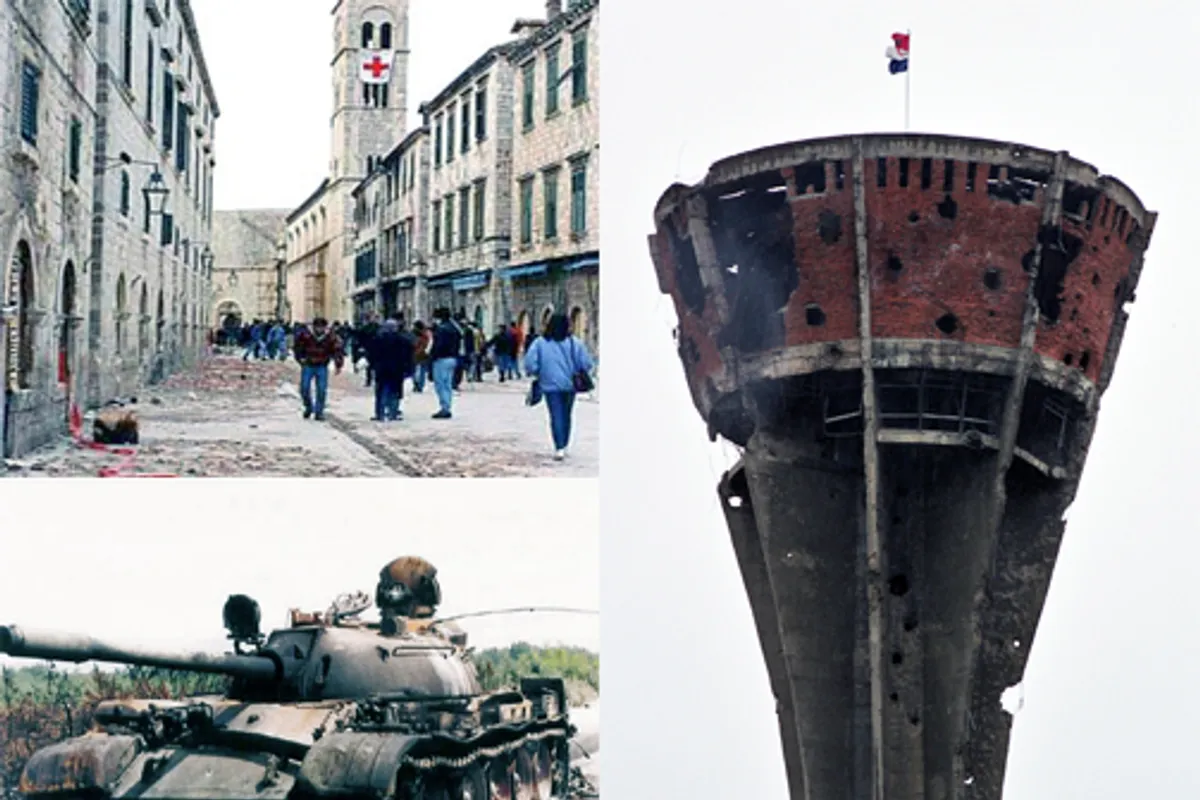
On this day, August 17, 1990, Croatia faced an escalation of a rebellion by part of its Serbian population that split the country's territory and cut off Dalmatia from the rest of the nation. According to a detailed historical overview by Dnevno.hr, the events of that day laid the groundwork for what was to follow in the months ahead.
After the Croatian Democratic Union's victory in the first multi-party elections in the spring of 1990, local politicians led by Jovan Rašković, Milan Babić, and Milan Martić began organizing resistance to the new government. With support from Belgrade and then-Serbian President Slobodan Milošević, they stoked fear among the local Serbian population, portraying the introduction of Croatian state symbols as a return to the symbols of the NDH era.
The first clear sign of resistance came in early July 1990, when about 50 police officers from Knin sent a letter to the federal secretariat in Belgrade, refusing to wear the new Croatian police insignia. A few weeks later, on July 25, 1990, a Grand Serbian Assembly was held in Srb, where a Declaration on the Sovereignty and Autonomy of the Serbian People in Croatia was adopted, and the Serbian National Council was established under the leadership of Jovan Rašković.
Croatian authorities declared the referendum on autonomy illegal and unconstitutional on August 4. Just nine days later, on August 13, a delegation from Knin, led by Milan Babić, traveled to Belgrade for talks with Borisav Jović, the president of the SFRY Presidency. The purpose of the meeting was to secure protection and possible military intervention by the JNA if Croatian police attempted to prevent the referendum.
That same day, the first armed village guards, composed of local civilians, appeared in the wider Knin area. Tension increasingly shifted from the political sphere to the ground, and full escalation followed on August 17, 1990.
The Croatian Ministry of the Interior ordered the withdrawal of reserve police weapons from stations in Benkovac, Obrovac, Knin, and Gračac to prevent the arms from falling into the hands of the rebels. In Knin and surrounding settlements, local Serbian units, along with police officers who refused to follow orders from Zagreb, refused to hand over their weapons. Instead, they broke into warehouses and distributed thousands of rifles and machine guns to the local population.
During the afternoon, Milan Babić declared a state of war in Knin and established a town defense headquarters, although he later denied this decision around 9 p.m. However, the situation was already out of control. On key roads around Knin, Benkovac, and Obrovac, rebels felled trees, brought in rocks, and used heavy machinery to build barricades. This severed road and rail links, effectively cutting off southern Croatia from the rest of the country at the height of the summer tourist season.
The government responded by attempting to restore constitutional order. Three helicopters carrying special forces from the Ministry of the Interior were dispatched from Lučko airbase toward Knin. But intervention never came. Two MiG-21 fighter jets of the Yugoslav People's Army intercepted the Croatian helicopters above Ogulin. JNA pilots threatened to shoot down the helicopters unless they changed course, forcing them to return to base. At the same time, JNA armored personnel carriers on roads in Lika threatened police vehicles trying to reach the rebellion area.
In this way, the JNA, which was formally supposed to be a federal military institution, effectively prevented Croatian authorities from establishing control over the rebel area with their own forces. After August 17, political tensions and incidents began to spread to other parts of Lika. In the following weeks, the regions of Kordun and Banovina would become hotspots of rebellion, especially by late September, according to Dnevno.hr's historical overview.
On the same date, 36 years later, news from the Croatian government is of a completely different nature. This summer, Croatia's young water polo teams have won their third gold medal at international competitions. After world golds in the U16 and U18 categories, Croatia has also become European champion in the under-20 category.
On the same day, Deputy Prime Minister Ivan Anušić attended a holy mass at the Parish of Christ the King in Cer, in Bosanska Posavina, on the occasion of the feast of St. Roch. In a conversation with parishioners and parish priest Don Josip Batinić, he emphasized the government's firm support for Croats in Bosnia and Herzegovina. "The Catholic Church has always been a strong link for Croats in BiH, and today it still plays an important role in preserving the identity and cultural heritage of the Croatian people in Bosanska Posavina, a region that, through the wars in this area, has made great sacrifices in the struggle for the Croatian state and the rights of the Croatian people," Anušić said.