Police Investigation Reveals Two Faces of Croatia
The County Prefect of Brod-Posavina County immediately faced the press and answered questions, while the Mayor of Slavonski Brod has remained silent for ten days.
The County Prefect of Brod-Posavina County immediately faced the press and answered questions, while the Mayor of Slavonski Brod has remained silent for ten days.
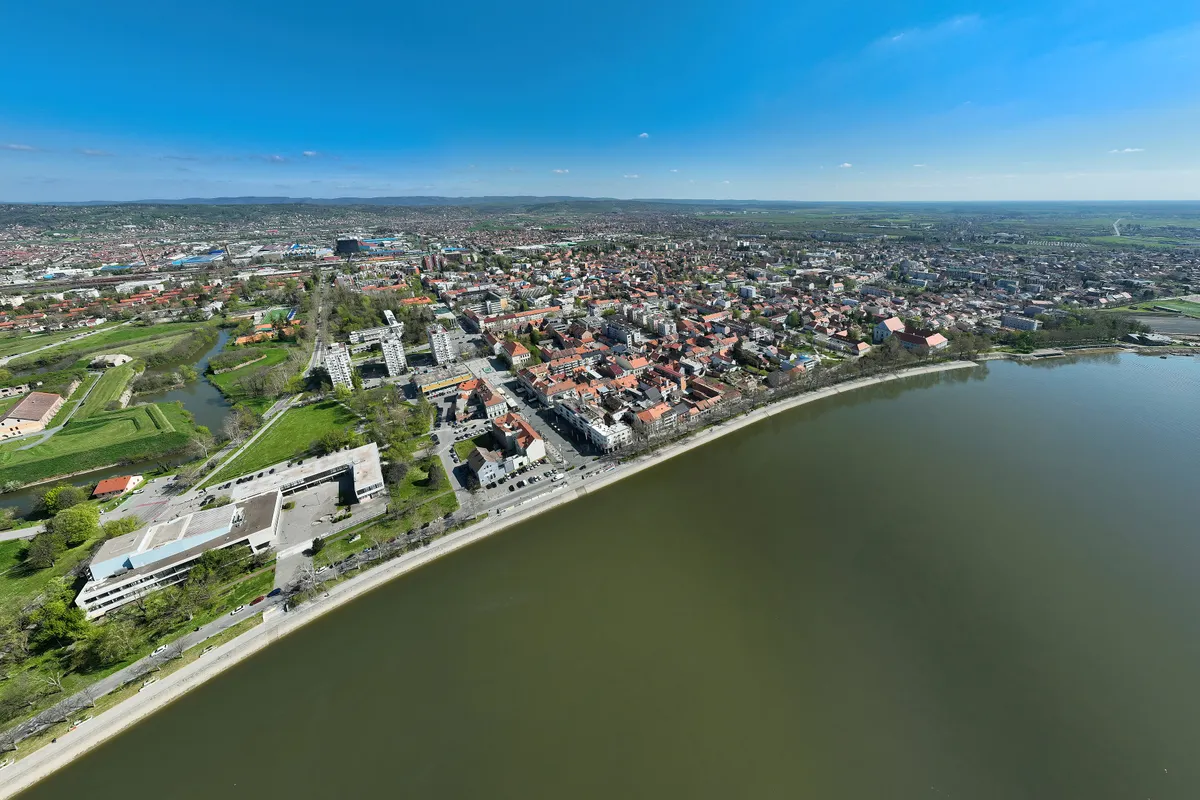
Within a very short time, police investigators entered two key institutions of local and regional government in Brod-Posavina County: first the city administration of Slavonski Brod, then the county building. The outcome of the investigation is still pending, but a comparison can already be made of how the two top officials reacted when the cameras appeared because of the police, not because of projects or openings.
County Prefect Danijel Marušić came out to face the press and answered questions, while Mayor Mirko Duspara did not appear before the cameras. Several simple questions sent by the 035portal editorial team to the City ten days ago remain unanswered.
On August 18, 2026, acting on the order of the State Attorney's Office, the police launched an inquiry into Brod-Posavina County and seized documentation related to the verification of public procurement procedures. The County quickly issued an official statement, emphasizing its readiness to cooperate and make all necessary documentation available to investigators.
Marušić did not hide behind a few carefully crafted sentences in a press release; instead, he stood before the cameras and personally presented the position of the institution he leads.
"One public procurement carried out by a company was conducted fully transparently. There is no concern regarding any violation of the law in that segment," Marušić told HRT cameras.
Whether his statements will be confirmed is up to the competent institutions, as police inquiries and the seizure of documents do not constitute proof of guilt. Nevertheless, Marušić can already be credited with something: in a very awkward communication situation, he did not hide behind the walls of the institution.
The comparison with the behavior of the Slavonski Brod City Administration is therefore even more interesting. When the police entered the city administration, it soon became clear that the County State Attorney's Office had ordered an inquiry based on media claims of possible favoritism toward certain companies during the construction of the volleyball court at Vijuš.
The City's first reaction, however, as reported by Jutarnji list, attempted to steer the story in a completely different direction. The statement was not given by the mayor, but by Ivana Mamula from the city's public relations department, who told Jutarnji list that they believed the police might have been there because of threats previously sent by email to Mayor Mirko Duspara and department head Ankica Majetić.
Once the public was already aware that the County State Attorney's Office had ordered the inquiry, such an attempt to redirect the reason for the police visit to the topic of threatening messages can hardly be considered successful crisis management.
The City then officially responded with the claim that it was a "routine documentation check," a procedure that, according to their statement, "has been carried out countless times in the City Administration," but Mirko Duspara did not personally face the public.
Last Wednesday, the mayor also failed to appear on Radio Brod's show, where he is a regular guest and which allows him direct communication with citizens who ask questions. His absence, just days after the police entered the city administration, could not go unnoticed, especially since it was a slot when citizens usually expect the mayor.
For ten days now, the 035portal editorial team has been waiting for answers from the City of Slavonski Brod to several simple questions posed by journalists. The City is not expected to take on the role of the police or the State Attorney's Office, nor to disclose information it cannot share due to the investigation, but only to answer questions that are in the public interest.
Perhaps this is the key difference between the two stories. Marušić's appearance before the cameras does not confirm that everything in the County was in accordance with the law, just as Duspara's silence does not prove the opposite, but the way a politician behaves while the institution is under scrutiny says a lot about their understanding of responsibility to the public.
It is easy to stand before cameras when opening a road, a kindergarten, or a school, when signing a multi-million-euro contract, or when presenting an EU-funded project. The real challenge comes when the police carry documents out of the building, journalists wait at the door, and citizens ask questions that are not comfortable to answer. Danijel Marušić has decided to face that challenge, at least in communication terms, in full view of the public. Mirko Duspara, for now, meets it with silence, and after ten days, that silence has become an element of the story that is increasingly difficult to ignore.