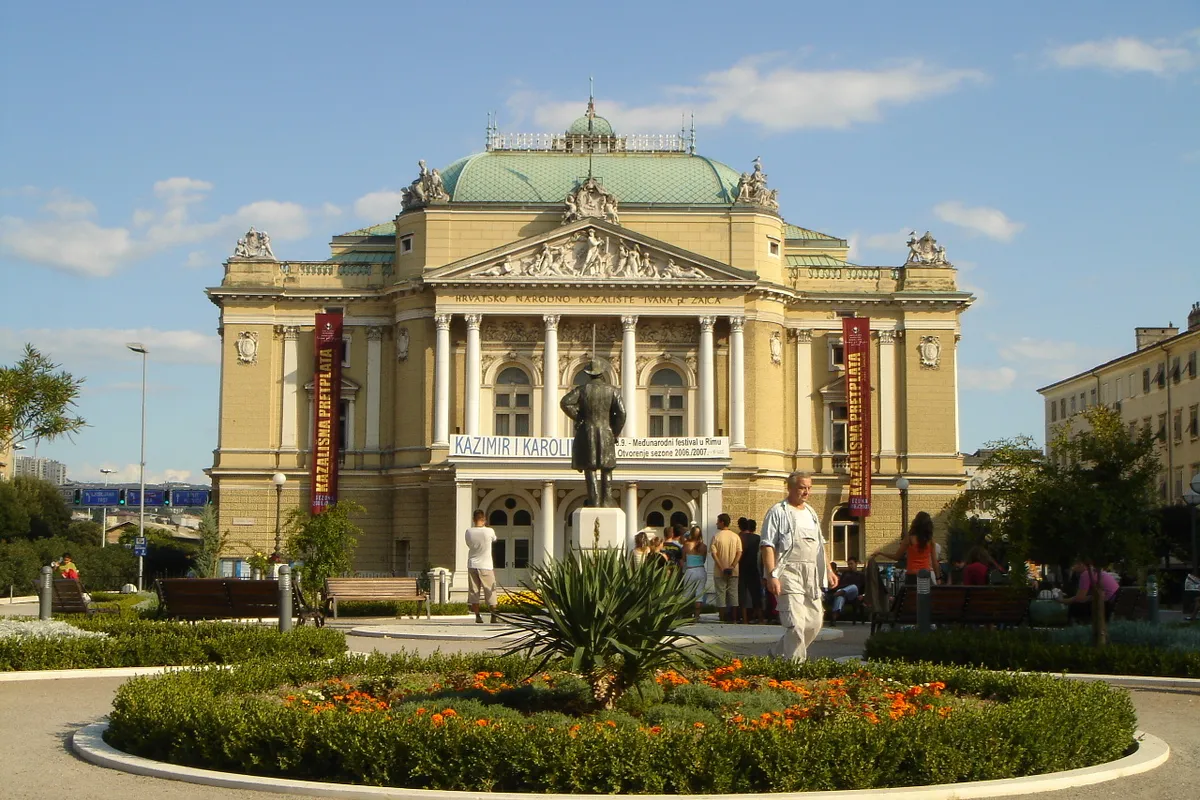
The inclusive theater collective Fifth Ensemble from Rijeka, which for eight years has been creating performances bringing together neurodivergent individuals, persons with disabilities, and neurotypical performers, is on the brink of a historic decision. It has been confirmed that there is a possibility of its formalization as an organizational unit of the Ivan pl. Zajc Croatian National Theatre, which would be an unprecedented move in Croatian theater.
This information was confirmed to Hina by members of the ensemble, the City of Rijeka as the theater's founder, and general manager Dubravka Vrgoč. Although the process is only in its early stages, the very willingness to engage in dialogue about the institutionalization of a collective of persons with disabilities within a national theater house marks a significant step forward.
From Project to Permanent Community
The Fifth Ensemble brings together between 20 and 27 performers in individual productions. Their latest performance, "TO=TO," created in collaboration with the collective "CO2... par umjetnika," was staged at the end of June 2026 at the Rijeka Summer Nights festival and achieved notable success.
Mila Čuljak, a member of the Fifth Ensemble and the Down Syndrome Association, Rijeka 21, explained to Hina that it all started from a desire for occasional projects to grow into something more permanent. "The launch of the ensemble came from a desire for occasional inclusive theater projects to evolve into an equal and long-term sustainable community that creates relevant art through continuous work, education, and performances," said Čuljak.
The End of the Project Model
Institutionalization is emerging as a necessary step because the current way of working, dependent on short-term projects, has reached its limits. Čuljak warns that such a model creates programmatic discontinuity and prevents long-term planning.
"The project model so far has reached its operational limits because dependence on short-term projects creates programmatic discontinuity and prevents long-term planning of work and creation. Institutionalization is not just an administrative step but a response to the need for systemic change," she emphasized to Hina.
The long-term goal is not only the formal establishment of a new unit but also the employment of neurodivergent individuals and persons with disabilities, while preserving the autonomous aesthetic, ethical, and pedagogical model that the ensemble has built over eight years.
Support from the City and the General Manager
The City of Rijeka states that they support opening a serious and responsible dialogue, but with clearly defined programmatic goals, an organizational model, and a financial framework. They emphasize that formalization must be the result of a thoughtful process that ensures long-term sustainability and transparency within the existing theater system. Further steps will depend on the proposal to be prepared by the theater, and due to the complexity of the procedure involving legal and administrative acts, it is currently not possible to specify a deadline for the completion of the process.
General manager Dubravka Vrgoč described the Fifth Ensemble as a valuable artistic initiative that has already proven its production and aesthetic potential. She considers the success of the performance "TO=TO" as proof of the audience's sensitivity and the opening of space for a plurality of theater practices where the diversity of performers is not an exception but the norm.
"I believe it is important to open a serious and responsible dialogue about its status, including the possibility of formalizing it as an organizational unit, but with clearly defined goals, criteria, and a sustainable model of functioning," Vrgoč told Hina, adding that formalization must not be an administrative act without substance.