Russia Changes the Rules of Nuclear War
Russian military analyst Igor Korotchenko proposes the formation of new non-strategic nuclear deterrence forces, while NATO condemns Russian incidents in the airspace of Poland and Romania.
Russian military analyst Igor Korotchenko proposes the formation of new non-strategic nuclear deterrence forces, while NATO condemns Russian incidents in the airspace of Poland and Romania.
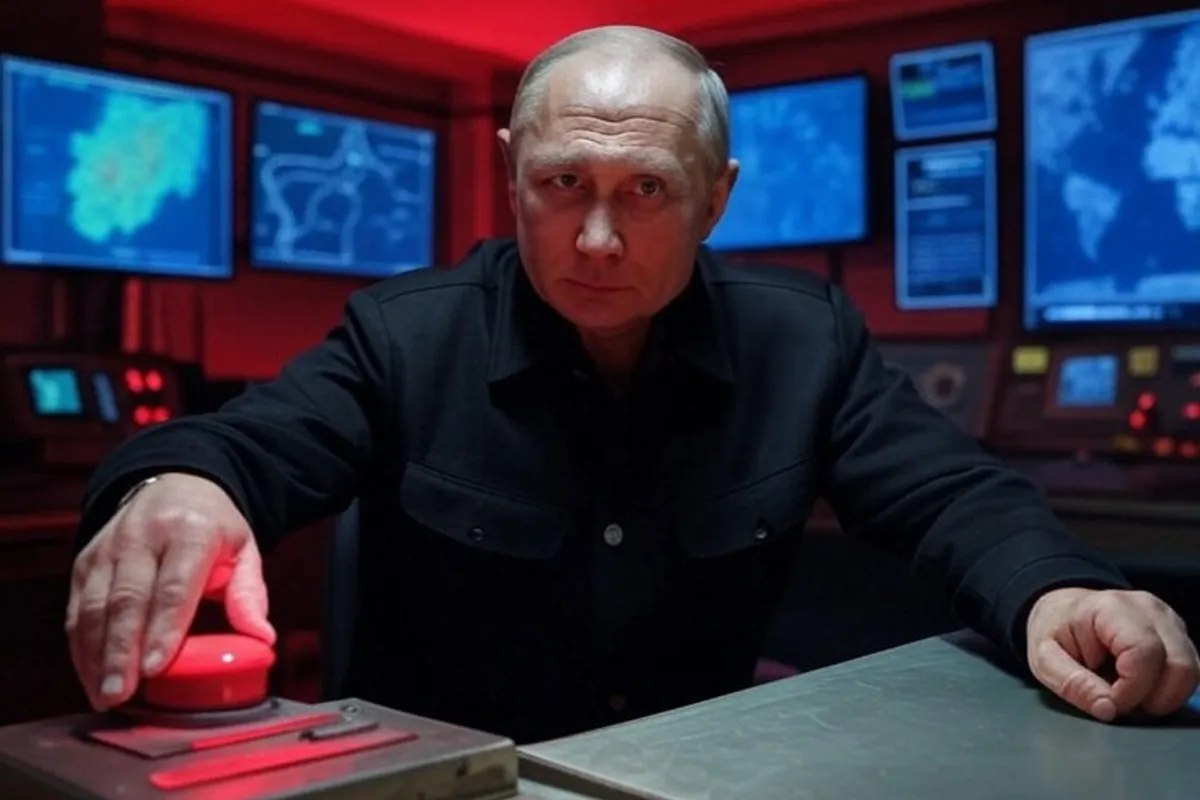
Igor Korotchenko, editor-in-chief of the magazine "National Defense," advocates for Russia to reconsider how its Armed Forces respond to new military threats from the West. As part of this, he also calls for a clearer definition of the role of tactical nuclear weapons in military doctrine, arguing that the current deterrence concept needs to be adapted to the scenario of a direct conflict with the North Atlantic Alliance.
In a statement to the news service "Vesti," he proposed the establishment of an entirely new branch of the military within the Armed Forces of the Russian Federation: the Non-Strategic Nuclear Deterrence Forces. Their mission would be to link Russia's existing arsenal of tactical nuclear weapons with the means for their delivery.
"In my opinion, there is a need to once again analyze the key provisions of Russia's military doctrine and, in particular, to elaborate in more detail on the use of tactical nuclear weapons, which should become a real weapon on the battlefield in the event of a conflict with NATO," Korotchenko stated.
His proposal includes consolidating existing capabilities and delivery means for tactical nuclear weapons within the new forces, which would be ready for active use in the event of a direct military conflict with NATO. Korotchenko assesses that the Alliance counts on the possibility of a war from a distance, that is, conducting strikes without consequences for its own members. That is precisely why, he believes, Moscow must establish in advance a military mechanism that would make such calculations untenable.
In addition to the organizational change, Korotchenko also calls for a revision of the criteria for the use of tactical nuclear weapons, adapting them to new circumstances. He emphasizes the practical readiness of the Armed Forces of the Russian Federation to use these weapons if the prescribed conditions are met.
As the main argument for relying on the tactical nuclear arsenal, he cites the ratio of conventional military potentials between Russia and NATO. According to his estimate, the Alliance's overall military capabilities are more than four and a half times greater than Russia's.
"NATO, in terms of its overall military capabilities, surpasses the Russian Federation by more than four and a half times, which is why deterring NATO, and especially conducting combat operations, is only possible by relying on tactical nuclear weapons," said Korotchenko.
In the concept he proposes, tactical nuclear weapons would take on a significantly more prominent role than that of a last-resort deterrent. His idea involves incorporating these weapons into real military planning for a direct confrontation between Russia and NATO, with special non-strategic nuclear forces serving as the organizational framework for such a doctrine.
On the same day, allies gathered in the North Atlantic Council to discuss recent drone incidents and airspace violations in Poland and Romania. According to a NATO statement posted on Twitter, they expressed support for the affected allies and reiterated that Russia bears full responsibility for the violations.
Meanwhile, NATO announced that Portuguese F-16s had completed an air policing mission in Estonia. The mission was conducted as part of the enhanced vigilance activities of Eastern Sentry, aimed at preserving the security of the Baltic region.
Korotchenko has previously also claimed that Ukraine could attempt large-scale terrorist attacks on nuclear power facilities in Turkey.