Russia Introduces School Textbooks That Erase Ukrainian Identity
The Russian Ministry of Education has approved controversial materials for grades 5-7 that present the history of occupied territories exclusively through a Russian imperial narrative.
The Russian Ministry of Education has approved controversial materials for grades 5-7 that present the history of occupied territories exclusively through a Russian imperial narrative.
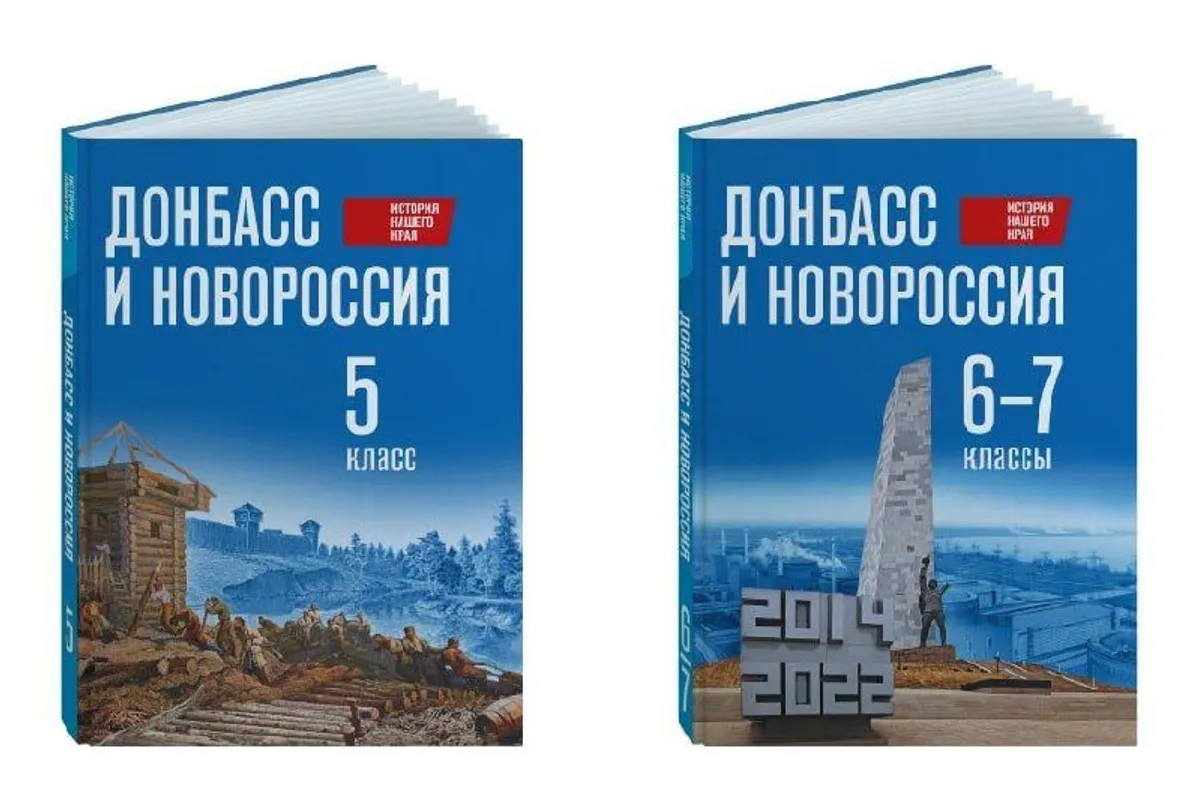
Russia's Ministry of Education has approved a new federal list of recommended school textbooks, including one that covers the history of temporarily occupied territories of Ukraine. The textbook, titled "History of Our Land. Donbas and Novorossiya," is intended for students in grades 5 through 7 and has sparked strong reactions due to the falsification of historical facts.
According to information published by the Kherson-based outlet MOST, the human rights center ZMINA, and the Russian media outlet SOTA, the controversial textbook covers the history of Ukrainian regions, Donetsk, Luhansk, Zaporizhzhia, and Kherson, exclusively within the framework of the Russian imperial narrative. The Russian ministry claims the content is "objective" and part of a "unified history of Russia."
Sergey Kravtsov, the Minister of Education of the Russian Federation, went a step further, asserting that the new textbook contains "real information," unlike what he called "Ukrainian textbooks." The material will become mandatory in all schools in the territories Moscow refers to as the "new regions."
According to the plans of the occupation authorities, the propaganda materials are expected to reach educational institutions in the occupied territories at the start of the new school year, beginning September 1, 2026.
Human rights organizations warn that through such educational programs, Russia is carrying out the forced re-education of underage Ukrainians. The goal, they say, is to completely sever their connection to their homeland and prepare young people for potential forced service in the Russian armed forces, including fighting against their own country.
This is not the first time Moscow has used the education system as a tool of propaganda. In May 2026, it was revealed that a Russian social studies textbook for ninth grade, edited by Dmitry Medvedev, Deputy Chairman of the Security Council of the Russian Federation, shows on a map of Russia not only the occupied territories but also the liberated city of Kherson as part of the Russian Federation.
Earlier, unified history textbooks edited by Vladimir Medinsky, an aide to Russian President Vladimir Putin, had already been introduced in the occupied territories. These materials also contain distorted facts and justify the military aggression against Ukraine.
In parallel with imposing its own educational system, Russia has destroyed nearly 1.2 million Ukrainian school textbooks in mass attacks on printing companies and logistics warehouses across Ukraine.