Russian State Bank Fires Economist Over Remarks on War
Andrei Klepach warned that Russia is losing the economic race, even to Ukraine, and predicted a social crisis, after which he was dismissed.
Andrei Klepach warned that Russia is losing the economic race, even to Ukraine, and predicted a social crisis, after which he was dismissed.
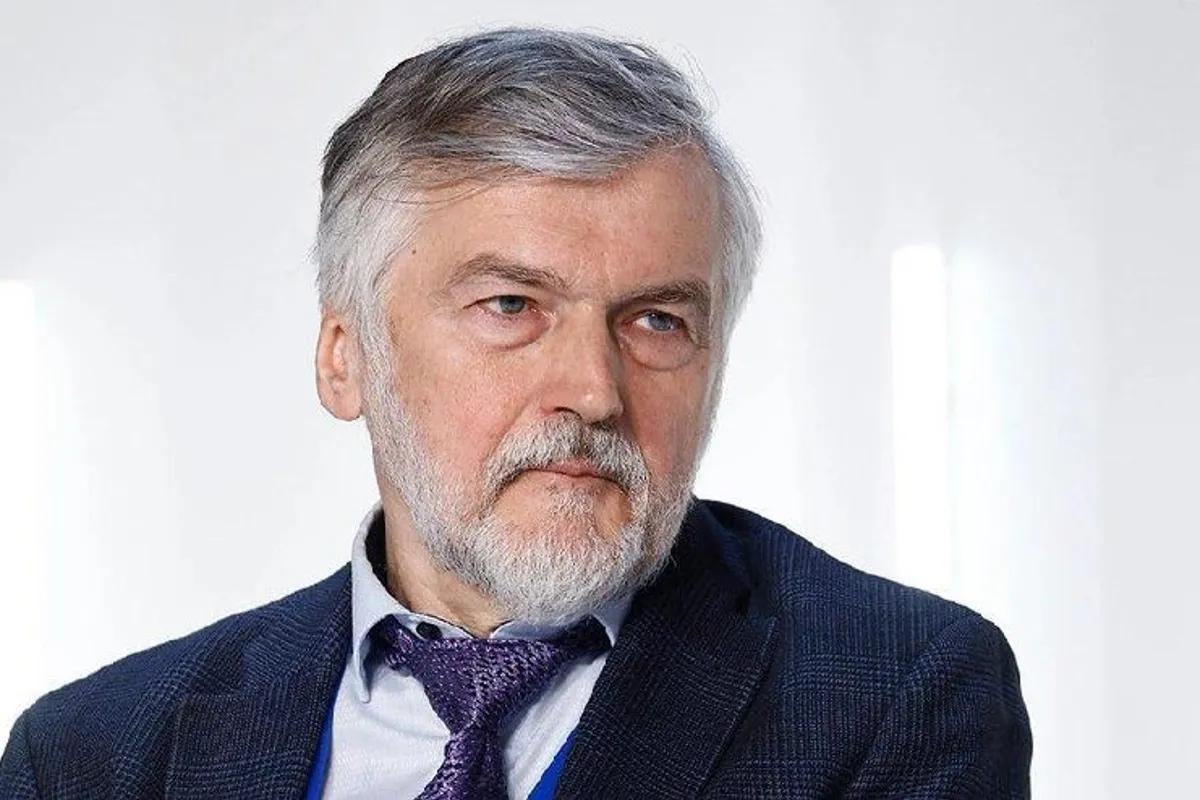
Russia's state development bank VEB.RF has dismissed its chief economist, Andrei Klepach, after his public remarks about the economic consequences of the war went viral. Klepach had delivered a grim forecast at a closed meeting of the Nikitsky Club at the Moscow Exchange back in May 2026, but the wider public only learned of it when The Moscow Times published an article about his speech on August 14.
According to The Bell, VEB.RF Chairman Igor Shuvalov dismissed Klepach on August 16, 2026, two days after Russian media reported his remarks. Sources close to the bank claim the decision was made after a "call from above."
Klepach was blunt in his speech: "In this exhausting war of attrition, we will not win the competition. We have an illusion that everything will collapse over there. It hasn't collapsed, and it won't." He warned that Russia is losing the technological and economic race, "not only to China and the U.S., but in some respects to Ukraine, as uncomfortable as that is for me personally."
He particularly highlighted the absurdity of a situation where Russia finances the world, while the world finances Ukraine: "We finance the world, and the world finances Ukraine. In any case, the Western world, the hostile one." According to him, the aid Ukraine receives for military and its own expenses amounts to nearly 50% of Russia's budget.
Klepach argued that the economy will not collapse, but he is almost certain that a social crisis will occur, "at a time when no one particularly expects it." He drew historical parallels with Lenin's letter from December 1916 and the collapse of the Soviet Union in 1991.
"I believe Russia will not fall apart, but that we will reach a social crisis, I am almost certain. Economically, we will not collapse, but our lag will grow with all the consequences that follow from that," he said. He also warned of the widening gap between the poorest regions, such as Ingushetia, and the wealthy cities of Moscow and St. Petersburg.
Alexandra Prokopenko, a senior fellow at the Berlin Carnegie Center, told The Bell that "only propagandists on the payroll, not respected economists, can fail to see the problems in barely positive economic growth rates, a two-speed industry, and falling investment amid rising unproductive defense spending."
Economist Igor Lipsits told Our Time that Klepach "has always been cautious but honest in his assessments. This time too, he told the truth, and that's why he 'got into trouble.'" On the other hand, economist Nikita Krichevsky believes there was no political heresy in Klepach's presentation, calling his conclusions "trivial plush platitudes."
Klepach had been VEB's chief economist for 12 years, and before that, he served as deputy minister of economic development of the Russian Federation for eight years. He is considered one of the best macroeconomists who remained in Russia, and he also teaches at Moscow State University (MSU) and is the author of dozens of scientific publications.