Russian Wheat Exports Slip Toward Decade Low
Attacks on ships and infrastructure in the Black Sea cause port congestion and threaten supply. As Russian farmers see prices fall, global markets fear rising food costs.
Attacks on ships and infrastructure in the Black Sea cause port congestion and threaten supply. As Russian farmers see prices fall, global markets fear rising food costs.
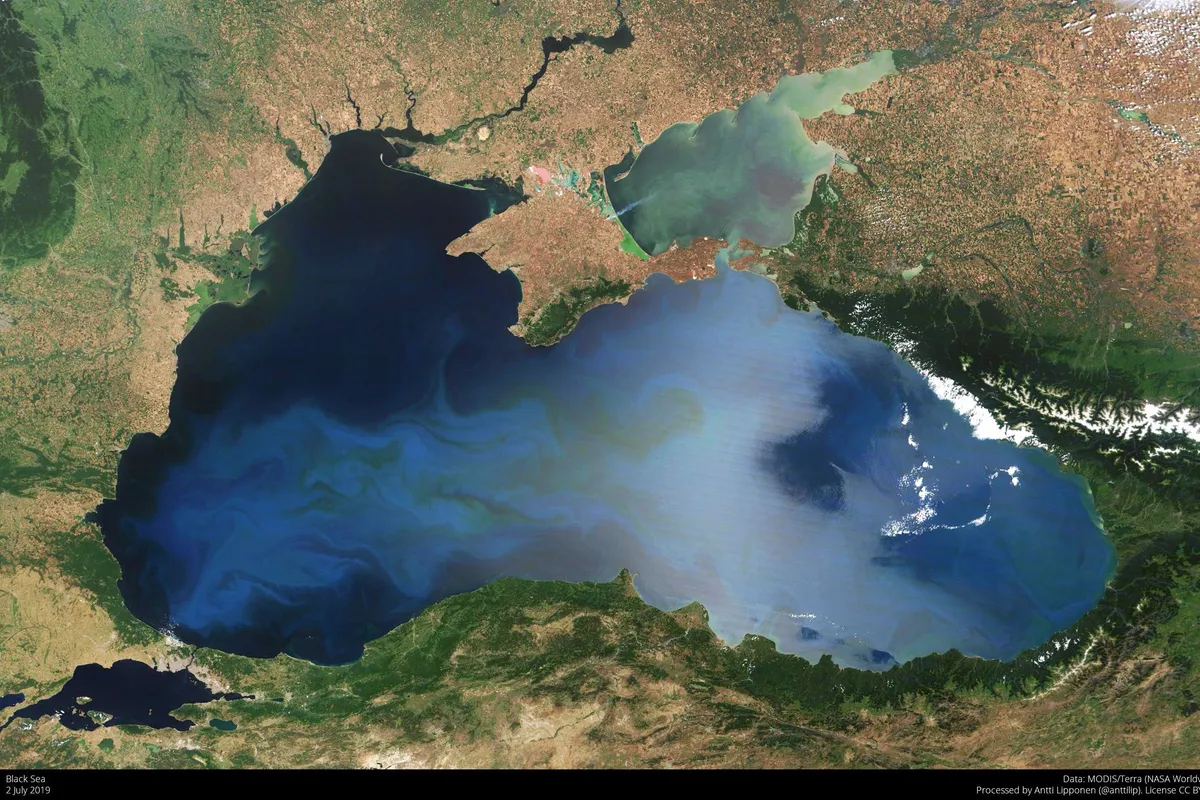
Russian wheat exports in August could fall to their lowest level in a decade, analysts warn. The reason is increasing disruptions in southern ports caused by an escalation of attacks on commercial vessels in the Black Sea. At the same time, global wheat prices are showing signs of rising, fueled by uncertainty over supply from the Black Sea region, one of the world's most important breadbaskets.
Agricultural consultancy SovEcon forecasts that Russia will export between 3 and 3.4 million metric tons of wheat this month. That is well below the five-year August average of 5 million tons and could mark the lowest August export since the 2016-2017 season. Independent consultancy ProZerno has an even more pessimistic estimate, predicting total grain exports will fall to nearly 2.5 million metric tons, while the five-year August average stands at 5.7 million tons. The cause of this decline is severe congestion in the Black and Azov Seas.
Export congestion has led to an oversupply in the domestic Russian market. According to Reuters, prices fell by as much as 450 rubles (about $5.46) per ton over the past week as farmers struggle to place their harvest on foreign markets. Despite foreign buyers shying away due to rising transport costs, Russia's Ministry of Agriculture has announced an increase in the wheat export duty for the period from August 12 to 18. The ministry stated that the country's total grain production so far has exceeded 72 million metric tons, including more than 60 million tons of wheat.
Attacks on grain infrastructure and cargo ships in the Black Sea, for which Russia and Ukraine blame each other, have been driving up wheat prices on global markets for weeks. Hard red winter wheat on the Chicago exchange rose 2.7 percent, reaching $7.505 per bushel. Futures contracts for soft red winter wheat could see a significant breakout if prices surpass the $7 per bushel level. Joe Davis, director of commodities at Futures International, told Bloomberg: "While disruptions don't necessarily mean immediate additional U.S. export business, they tighten global export supply and balances, forcing importers to diversify sources and maintaining support for higher-quality wheat prices."
Market concerns were further heightened after Turkey temporarily suspended the passage of its cargo ships through the Black Sea over the weekend. Additionally, disruptions in the Strait of Hormuz and adverse weather conditions in key U.S. growing regions are adding extra pressure. The United Nations' global food price index reached a three-year high in July. UBS analysts last week noted five forces driving up food prices in a note, posing the key question: "Is this the end of cheap food?" The Institute for Agricultural Market Studies has cut its forecast for Russia's total grain harvest for 2026 from 140 to 138.5 million metric tons, and its estimate for total export capacity for the 2026-27 season from 61.5 to 60 million tons. The Russian Grain Exporters' Union earlier this month warned that drone attacks on Russian ships and ports could soon completely halt grain exports via the Black Sea, leading to higher prices and hunger in Africa and the Middle East. On the other hand, Ukraine has simultaneously warned that its agricultural exports in the 2026-27 season could be halved due to Russian attacks.