For Your Eyes Only: Israel's 'Mole' Inside the UN
Hacked emails reveal that UN official Yahav Lichner passed strictly confidential information, including internal reports and details from private meetings, to Israeli diplomats.
Hacked emails reveal that UN official Yahav Lichner passed strictly confidential information, including internal reports and details from private meetings, to Israeli diplomats.
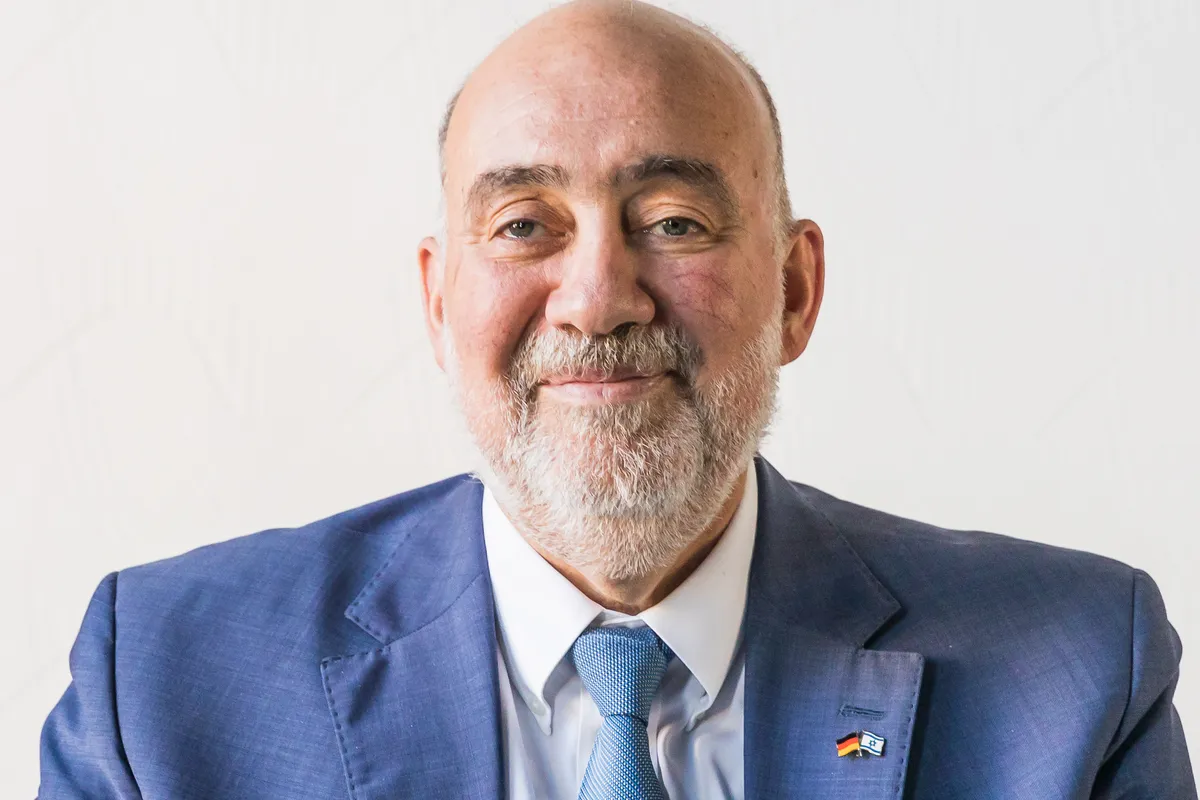
Hacked emails have exposed a years-long operation in which Yahav Lichner, a United Nations official, systematically provided Israeli diplomats with confidential UN data. Lichner, who has headed UNICEF's Washington office since January 2025, sent the information from his personal email account to then-Israeli Ambassador to the UN Ron Prosor and diplomat Ronny Leshno-Yaar.
According to an investigation by Drop Site, the key incident occurred on February 20, 2015. At that time, Lichner, an employee of the United Nations Population Fund (UNFPA), sent an email with the message "For your eyes only. Do not forward". Attached was a "confidential internal summary" of a visit to Washington made two weeks earlier by Zeid Ra'ad Al-Hussein, then UN High Commissioner for Human Rights.
The document contained highly sensitive information from Al-Hussein's private meetings with White House officials, senators, staff of congressional appropriations committees, and representatives of AIPAC and J Street. In the email, Lichner also revealed concerns within Al-Hussein's office that congressional discontent could jeopardize U.S. funding for the Office of the UN High Commissioner for Human Rights (OHCHR).
He particularly highlighted Al-Hussein's meeting with the late Senator Lindsey Graham, calling him "our friend," and noted that the High Commissioner was "trying to limit the damage and distance himself from the report." The meetings took place amid the investigation by the UN Human Rights Council's independent commission into Israel's conduct during the 2014 military offensive in the Gaza Strip.
Leshno-Yaar immediately confirmed the intention to use the obtained information. "Thanks, Yahav. I have no choice, and of course, without referencing this information, I must act with members of Congress to make them understand," he wrote. Lichner's response was brief and clear: "Absolutely. You're right."
This exchange was not an isolated incident. Throughout 2014 and 2015, Lichner repeatedly forwarded internal UN documents, including those marked as "strictly confidential." Israeli officials used this information to lobby the U.S. government and oppose UN initiatives they deemed unfavorable to Israel.
The compromising communication originates from the hacked email database of Ron Prosor, who served as Israel's Permanent Representative to the UN from 2011 to 2015 and is currently Israel's ambassador to Germany. The emails were published online by the whistleblower portal Distributed Denial of Secrets, after being obtained by the hacking group Handala, believed to be linked to Iranian intelligence services.
The emails also suggest that Prosor personally promoted Lichner's candidacy for a position at UNFPA, with the help of then-U.S. Ambassador to the UN Samantha Power. Lichner had previously worked as Prosor's political advisor at the Israeli embassy in London and as a senior advisor at the Israeli mission to the UN from 2011 to early 2014.
Charles Petrie, a former senior UN diplomat and assistant secretary-general, confirmed to Drop Site News that such behavior is explicitly prohibited. "When you join the UN, you commit to serving the UN, not the country you come from, and as such, you are obliged to promote the interests of the organization. You sign a document confirming that you have become a UN official and are therefore bound by confidentiality and serving the interests of the organization, not any member state," he stated.
Petrie also warned of a systemic problem: "The UN has no systems to impose consequences for information leaks. In the U.S. government, when you disclose confidential information, you are committing a crime because you have accepted the terms under which you can access different levels of classified data. In the UN, such a system does not exist." He concluded that this is "a sign of an institution that lacks internal accountability. And the higher you are in the hierarchy, the less accountability there is."
UN internal rules stipulate that officials' responsibilities are "not national, but exclusively international" and strictly prohibit the transmission of information to any "government, body, person, or any other source." Lichner, Prosor, and Samantha Power did not respond to requests for comment, and UNICEF also declined to comment on the case.