Josip Šincek, an entrepreneur and owner of technology patents, issued a public statement via social media on Tuesday, August 11, 2026, speaking on his own behalf and that of his family. He responded to media coverage and political commentary related to the illegal waste disposal affair, emphasizing that his guilt should not be judged before the legal process concludes.
In the statement, which was carried by the portal Varaždinski.hr, Šincek expressed dissatisfaction with how certain elements of the investigation are being presented to the public. "Certain suspicions, isolated pieces of documentation, and specific findings are being presented as established facts. At the same time, the results of examinations, documentation in our possession, the actual situation on the ground, and other possible sources of pollution that have existed in the Lika region for years are being ignored," he stated.
Demand for a Fair Process
Šincek stressed that he does not shy away from the investigation but insists that the process be conducted impartially and thoroughly. "My guilt and that of my family cannot be decided by journalists, politicians, or sensationalist headlines. Responsibility can only be determined by the competent authorities, based on complete evidence and a legally conducted procedure. I am not fleeing from the investigation or from responsibility. I only ask that all facts be established, that both sides be heard, and that the same rules apply to everyone," he said.
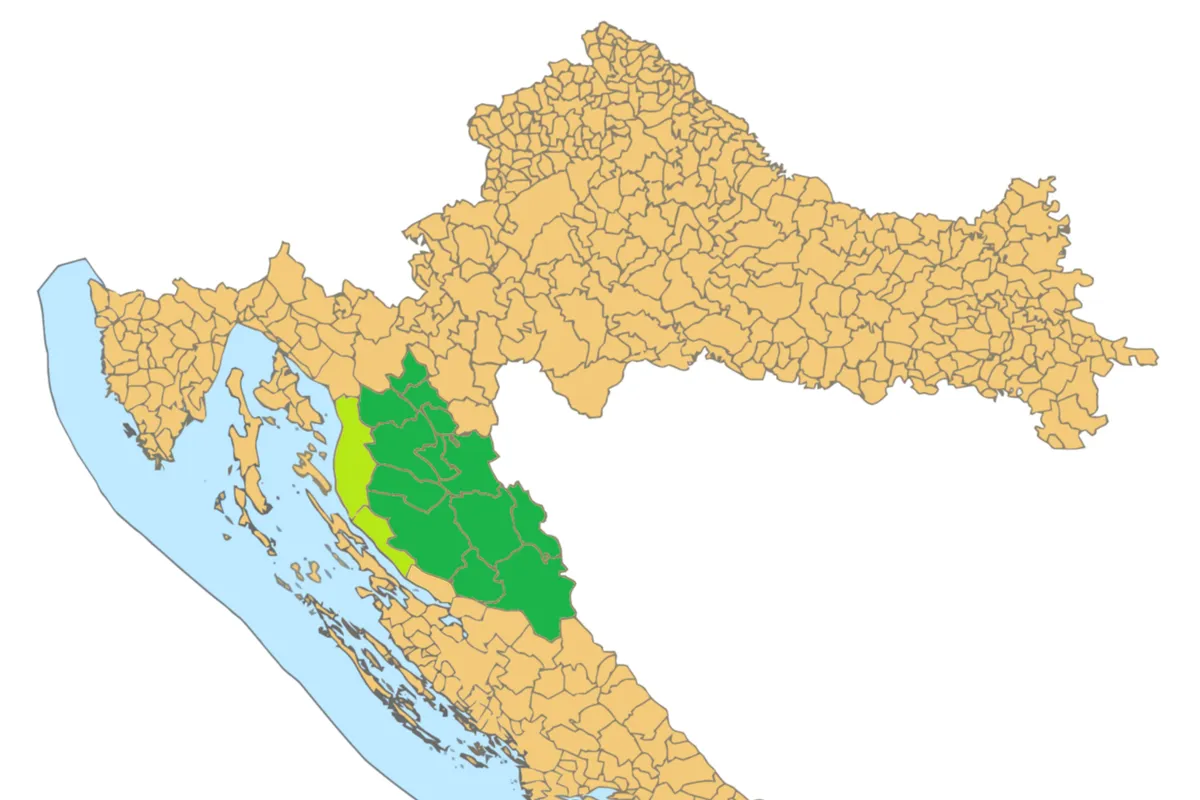
He also called for expert analyses to be extended to all landfills in Lika, not just those linked to his business. The affair came to light after a large amount of waste was found in Gospić, Benkovac, and Varaždin, with Šincek suspected of taking money from companies in Italy, Slovenia, and Germany to dispose of waste that was then illegally buried.
Technologies and Patents
In his post, he also addressed his innovations, particularly the RE-aggregate, a technology that converts hard-to-recycle plastic into construction material. He claims the patent is valued at around 1.2 billion euros, but that the investigation has prevented him from continuing his work. He also warned of threats to collaboration on the Power Multiplier project, which is projected to generate annual revenue of 66 million euros in the European market.
"That is why I publicly ask: who benefits from completely discrediting me, my family, and our projects precisely at a time when serious international collaboration is being developed for Power Multiplier?" he questioned.
Announcement of Legal Action
Šincek stated that he will not stand idly by while damage is done to his family and business. "I am not accusing anyone without evidence. But as an innovator and owner of intellectual property, I have the right to demand an investigation into whether there are business interests linked to attempts to destroy our reputation, halt our projects, or devalue our technologies," he said. He added that he will take all legal measures if the publication of information he considers inaccurate continues.
In the concluding part of the statement, he said: "I am only asking for what every person has the right to: the truth, a fair process, and the opportunity for the other side to be heard."
According to information from the investigation, led by USKOK and the police with the support of Europol, it is suspected that around 35,000 tons of waste were brought into Croatia, mainly from Italy, Slovenia, and Germany. The waste was allegedly presented as material for recycling, with some of it ending up buried or mixed with construction material. The investigation covers locations in Gospić, Benkovac, Varaždin, Senj, and Otočac.
Analyses by the Faculty of Geotechnical Engineering in Varaždin, commissioned by USKOK, showed elevated concentrations of heavy metals, ecotoxic properties of the waste, and the presence of PFAS compounds in groundwater. It is estimated that around 37,000 tons of waste remain at the Gospić site, of which 33,000 tons are buried. Prime Minister Andrej Plenković stated that the remediation of the site will not be carried out through an emergency procedure, but through standard public procurement.