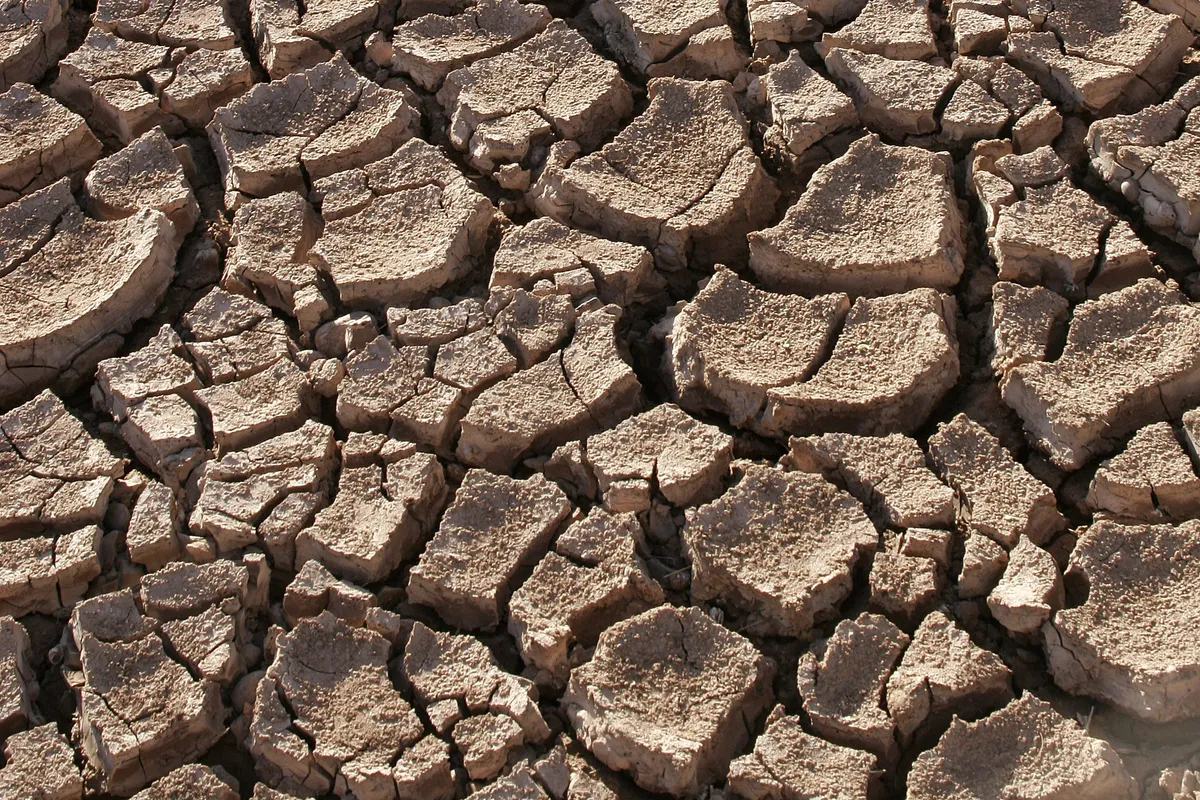
While Croatia, like much of Europe, faces the consequences of prolonged drought and record-high temperatures, the water supply situation in the north of the country is currently under control. However, the picture is not entirely idyllic: smaller rivers and streams are already experiencing interruptions in flow, and experts are warning of the urgent need to connect public water supply systems so that surplus water from abundant underground reserves can be redirected to affected areas.
Milan Rezo, director for the Mura and upper Drava basin, brings encouraging news for three northern counties in an interview with RTL Danas, but also a clear warning for the rest of Croatia. While Istria, Ugljan, and Daruvar are introducing water restrictions, the underground reservoirs fed by the Mura and Drava contain vast amounts of water, sufficient for decades of supply.
Security for Three Counties: No Restrictions Expected
Rezo emphasized that Varaždin, Međimurje, and Koprivnica-Križevci counties are currently completely secure when it comes to water supply. "What I can convey in this show are good and positive news from northern Croatia," Rezo said for RTL Danas. "Regarding the Mura and upper Drava basin, the water level is currently measured at minus six centimeters, with a fluctuation of 50 centimeters, depending on the operation of hydroelectric plants on the Drava River."
The key fact is that both rivers are actively replenishing the underground aquifer. In Mursko Središće, the Mura is at 135 centimeters, and in Goričan at 80 centimeters. This means there will be no water restrictions for households, the economy, industry, or even farmers needing to irrigate their crops.
Small Watercourses on Life Support: Plitvica on the Verge of Drying Up
Despite the stable situation with the major rivers, the state of smaller basins is concerning. Rezo points out that the situation is particularly critical in Varaždin County, where the Plitvica River only flows from its 47th kilometer to its mouth. "From the 47th to the 65th kilometer, there is a visible retention of water; water still exists in the riverbed, but we expect it to dry up at any moment," he warned.
The situation is similar in other counties. In Međimurje, the open watercourse Trnava has already experienced a break in flow, while in Koprivnica-Križevci County, the streams Gliboki and Koprivnička Bistra have also dried up. Nevertheless, Rezo reassures the public by emphasizing that these smaller rivers are not particularly rich in fish stocks, and there have been no reports of fish kills so far. He also reminded that last year, the Plitvica was dry from June to October, suggesting that such extremes are slowly becoming a regular occurrence.
Billions of Cubic Meters in Reserve, but Systems Not Connected
When it comes to total reserves, the numbers are impressive. The Mura and Drava rivers annually replenish about 580 million cubic meters of water. In contrast, the three public suppliers in the area-Varkom, Međimurske vode, and Koprivničke vode-consume only about 20 million cubic meters annually for all needs. "We can say that we currently have over 25 to 30 years of reserves for water supply needs in that area," Rezo stated.
According to him, the aquifer currently holds between 1.5 and 3 billion cubic meters of water. However, it is precisely this enormous potential that raises a key question: what if other parts of Croatia need help?
Appeal for Connection: From the Mura and Drava to the Adriatic
Rezo expressed concern that public water service providers in Croatia are not interconnected. "Say that one of your largest sources in Zagreb, Mala Mlaka, fails; the question arises of how and in what way the north of Croatia with its aquifers from the Drava and Mura can help Zagreb," he wondered.
His proposal is clear: it is necessary to build pipelines that would connect not only sources within individual systems but also the providers themselves. "In that way, we can rightly say, given the quantities we have in groundwater, that we can ensure water for both the Adriatic basin and continental Croatia," Rezo concluded, suggesting that strategic interconnection could be the key solution for the increasingly frequent dry years that, as it seems, have become the new normal.