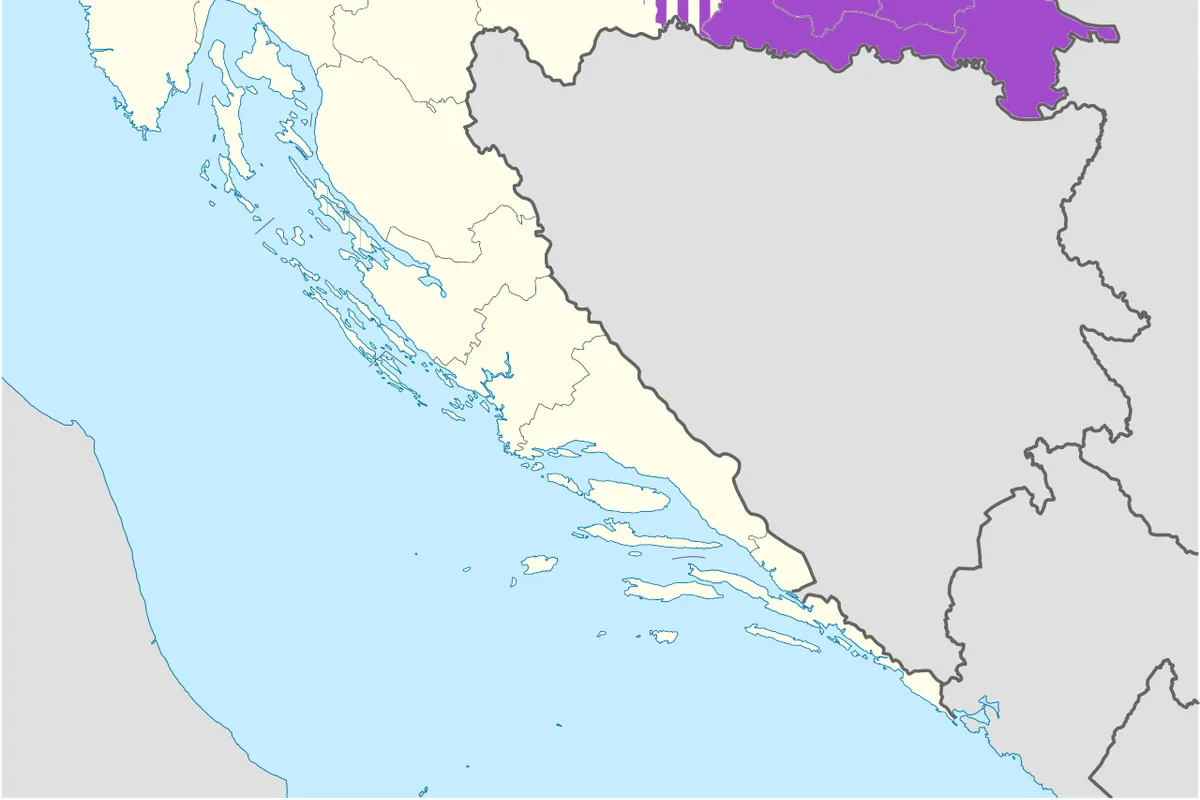
After a long period in which the number of residents leaving abroad exceeded those arriving, Slavonia and Baranja have seen a turnaround. According to data from the Croatian Bureau of Statistics, during 2025, 2,351 people moved to Osijek-Baranja County from abroad, while 1,670 left, resulting in a positive net migration of 681 people-the highest in the last five years.
A comparison with 2021 clearly shows how much the situation has changed. Back then, 1,267 people arrived in Osijek-Baranja County from abroad, while 2,242 left, yielding a net migration of -975. In 2022, the deficit was 607 people; in 2023, it narrowed to 47; and in 2024, the difference was almost completely balanced, with 2,193 arrivals and 2,206 departures.
OBŽ Leads Among Slavonian Counties
Last year, other counties in Slavonia and Baranja also recorded positive net migration, but none matched Osijek-Baranja County's result. In Vukovar-Srijem County, 1,652 people moved in from abroad last year, while 1,258 left, resulting in a net gain of +394. Four years earlier, in 2021, 1,074 people arrived and as many as 1,940 left, with a deficit of 866.
In Brod-Posavina County, there were 1,901 arrivals and 1,584 departures, yielding a net increase of 317 people. In 2021, 1,039 people moved there from abroad, while 1,860 left, resulting in a net migration of -821. Virovitica-Podravina County recorded 633 arrivals and 478 departures last year, a net gain of +155, compared to a deficit of -373 in 2021, with 278 arrivals and 651 departures.
Among all analyzed counties, Požega-Slavonia had the smallest positive net migration, with 698 arrivals and 684 departures, specifically +14. Still, even there, a change occurred compared to 2021, when 451 people arrived and 814 left, resulting in a net migration of -363.
Positive Net Migration with Abroad, but Continued Outflow Within Croatia
Although migration with abroad turned positive for the first time in years, Osijek-Baranja County still records a loss of residents to other parts of Croatia. In 2025, the county's net migration relative to other Croatian counties was -295, indicating more moves out of the county to the rest of Croatia than the reverse.
When both international and domestic migrations are considered, the total net migration for Osijek-Baranja County was positive, reaching +386 people. Thus, 2025 brought an interesting turnaround: OBŽ lost residents to other counties, but this loss was outweighed by a positive balance with abroad.
The Migration Picture of Slavonia Has Changed
The data over the observed period show a clear trend. In recent years, the number of people arriving from abroad to OBŽ and other Slavonian-Baranja counties has consistently exceeded two thousand annually, while the number of departures abroad has been declining. The final result is shaped by various groups of newcomers, from Croatian citizens returning from abroad to foreign nationals coming for work.
The increase in the number of foreign workers in recent years is one of the most noticeable aspects of the new demographic picture of Slavonia and Baranja. However, this does not mean that the demographic problems of the region are solved. Natural population decline remains a major challenge, and part of the population continues to move to other parts of Croatia.