Solar Impulse 2: How the solar aircraft circled the Earth without a drop of fuel
In July 2016, the solar-powered aircraft completed a 40,000-kilometer journey around the world, becoming a lasting symbol of clean energy possibilities in aviation.
In July 2016, the solar-powered aircraft completed a 40,000-kilometer journey around the world, becoming a lasting symbol of clean energy possibilities in aviation.
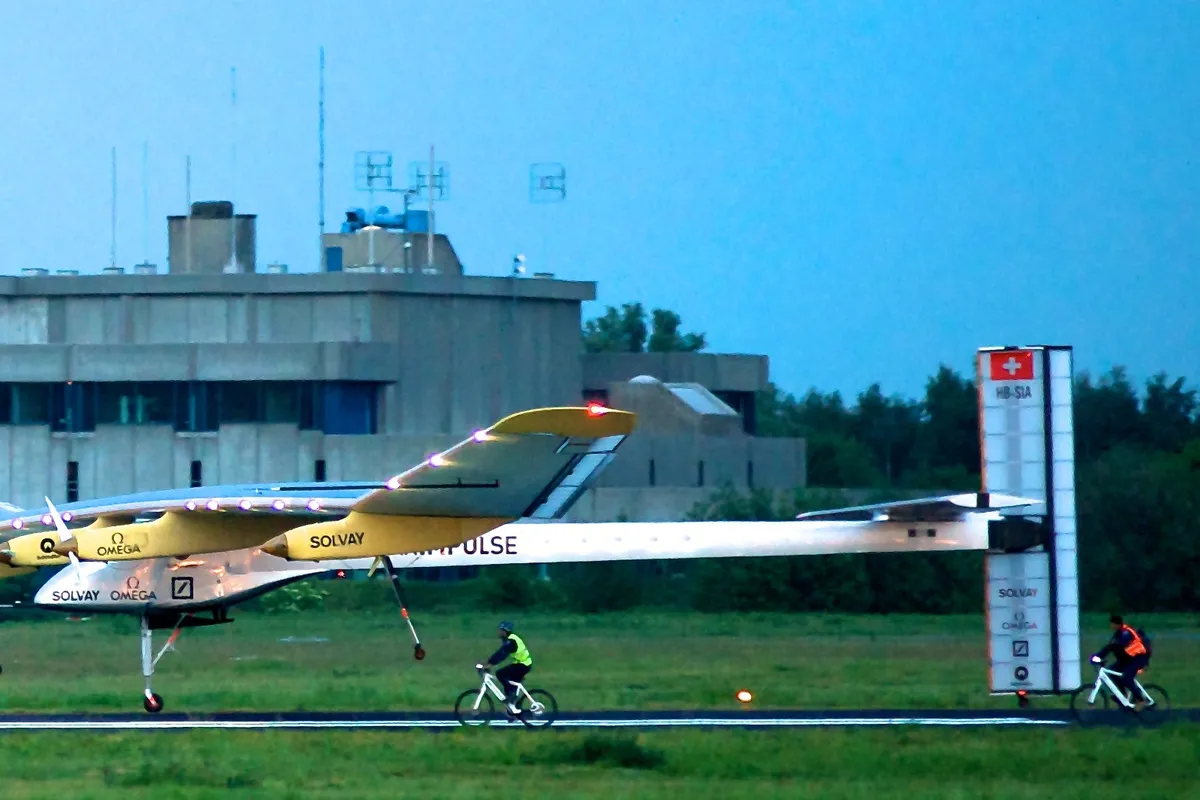
When Solar Impulse 2 landed in Abu Dhabi in July 2016, it accomplished something no aircraft had done before: a roughly 40,000-kilometer flight around the world without using conventional fuel, relying solely on the sun's energy. The 16-month mission, punctuated by numerous weather-related stops, became one of the most striking demonstrations of renewable energy's potential in modern technology.
The aircraft took off from Abu Dhabi on March 9, 2015, embarking on an ambitious route that spanned continents and oceans. The mission was not continuous but divided into stages, with a total of 16 stops along the way. Weather conditions often dictated the schedule, and some locations required long waiting periods before the journey could resume. In total, Solar Impulse 2 spent nearly 500 hours in the air, according to data reported by the Times of India. The World Economic Forum, in collaboration with Reuters, described the mission as "the first fuel-free flight around the world," emphasizing its historic significance for renewable energy rather than records of speed or endurance.
Solar Impulse 2's propulsion system was based on a fully electric architecture. More than 17,000 solar cells embedded in the aircraft's wings collected solar energy during the day. Excess energy was stored in batteries, allowing the four electric motors to operate at night or under reduced sunlight. The wingspan exceeded that of a Boeing 747, while the aircraft's total weight was comparable to an average family car. This combination of an exceptionally large wing and lightweight construction was crucial for energy efficiency. The aircraft cruised at speeds of up to about 90 kilometers per hour and could reach an altitude of around 9,000 meters.
Swiss pilots Bertrand Piccard and André Borschberg alternated piloting the aircraft, each handling different stages of the global route. Long solo flights over oceans posed extraordinary demands, not only technical but also psychological. Piccard said of these experiences: "We were facing oceans; we had to build that mindset, not just the airplane and the technology." His comments emphasized that endurance and mental preparation were as important as the aircraft's engineering excellence.
For Piccard, Solar Impulse 2 was not merely an aviation project. According to the World Economic Forum, he stated: "More than an achievement in aviation history, Solar Impulse has made history in energy." He highlighted that technologies developed for this aircraft-from advanced batteries to ultra-light materials and highly efficient solar cells-could find applications in everyday life and help reduce carbon dioxide emissions. From the outset, the project was conceived as a clean technology demonstrator with potential far beyond the aviation industry.
After returning to Abu Dhabi, Piccard and Borschberg announced they would continue working to promote renewable energy technologies. According to Reuters, they planned to establish an international council to advise governments and encourage the development of new clean energy applications. Piccard also expressed an optimistic prediction about the future of electric aviation: "In the next 10 years, we will see electric aircraft carrying 50 passengers on short to medium flights." This forecast was the pilot's personal opinion, not a confirmed industry plan, but it reflected the ambitions that the Solar Impulse project set for the broader energy and aviation community.