Sophie Adenot becomes first French woman to walk in space
The 44-year-old astronaut stepped outside the International Space Station on Tuesday alongside American colleague Anil Menon to replace a communications antenna.
The 44-year-old astronaut stepped outside the International Space Station on Tuesday alongside American colleague Anil Menon to replace a communications antenna.
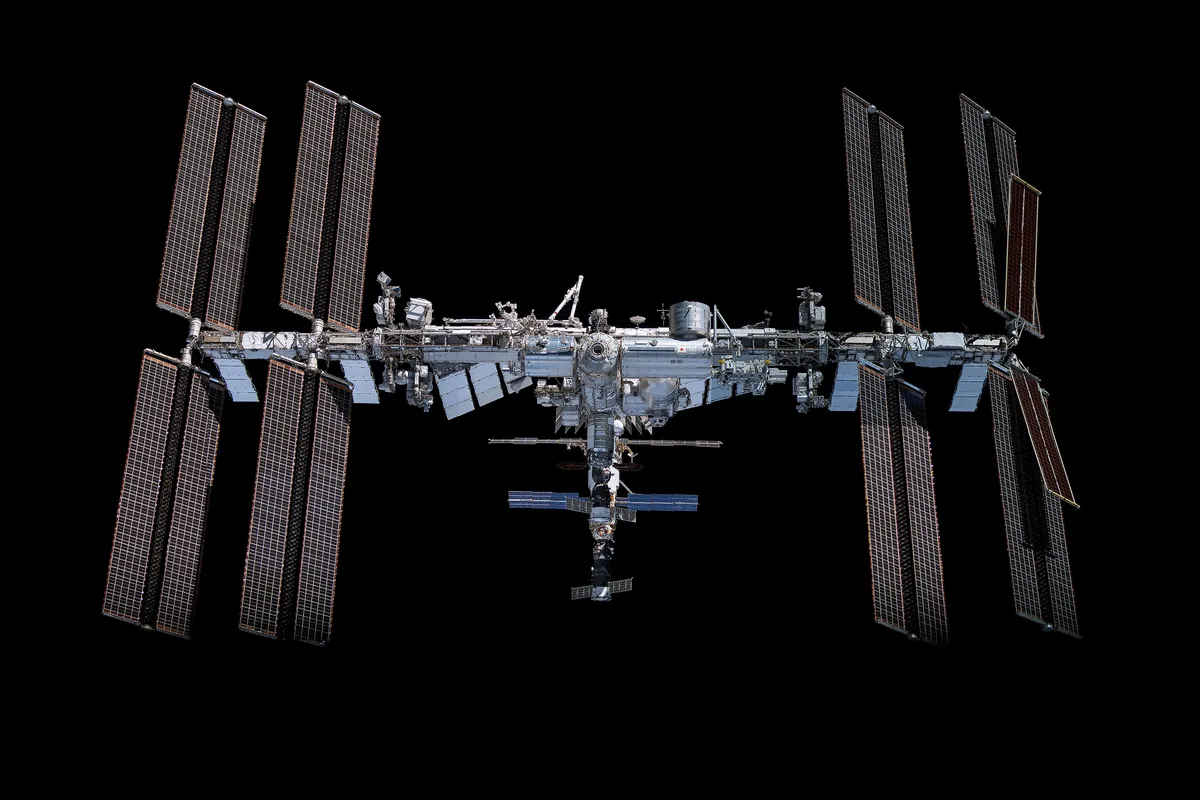
French astronaut Sophie Adenot became the first French woman to walk in open space outside the International Space Station (ISS) on Tuesday, August 18, 2026. Accompanied by American astronaut Anil Menon, Adenot began the spacewalk at 12:35 GMT, with the main task being the replacement of an antenna for communication between the station and mission control in Houston, NASA announced.
According to France 24, the walk was planned to last six and a half hours, while Le Figaro cites six hours. France Info, meanwhile, reports that the mission should last about 6 and a half hours, at an altitude of 400 kilometers above Earth. Sources differ slightly in their estimates of duration, but all confirm that this is a historic moment for the French and European space programs.
Adenot (44) became only the second European woman to perform a spacewalk, following Italian astronaut Samantha Cristoforetti, who did so in 2022. In February 2026, Adenot made history as the second French woman to fly into space, after pioneer Claudie Haigneré.
The last Frenchman to walk in space was Thomas Pesquet, who did so six times during two stays on the ISS. Pesquet commented on Adenot's spacewalk on France Inter on Tuesday: "It's going well. It's not a complicated operation."
"A successful (spacewalk) begins long before the hatch opens, and that's what I've been focusing on these past few days: rehearsing, preparing, and staying focused," Adenot wrote on X on Sunday.
While Adenot and Menon work outside the station, flight engineer Jack Hathaway and station commander Jessica Meir will monitor them from inside and operate the robotic arm, NASA said. Adenot, after a previous spacewalk when she supported Meir and Menon, emphasized the importance of teamwork: "While the spacewalkers are in the spotlight, (extravehicular activities) are very much a team effort, and it's always a privilege to support the crew from inside."
The antenna they are replacing is crucial for high-speed communication and data transmission between the ISS and mission control in Houston.
Thomas Pesquet, the last Frenchman to walk in space, described the challenges of a first spacewalk on France Inter. "It's the first spacewalk, and when it's the first spacewalk, of course you discover the sensation, the way of moving," he said. "You can train in a pool, it's not the same thing," he added, explaining that in the pool "there's no vacuum."
Pesquet also described the surprising experience of the day-night cycle: "The day-night cycle can be really surprising because at night, suddenly, you can't see anything anymore." He also mentioned disorientation due to moving "in all directions": "Sometimes you no longer know which side you came from and which side you need to go."
Despite intense preparation, Pesquet says the spacewalk is "intense" and "choreographed to the minute." "Hundreds of hours have gone by to make everything optimized," he explained. "Almost every move, we know the order in which we do it, we perform the score and we perform it so much that we forget to look outside."
Still, there is always a moment for taking photos: "There's always a moment when the score stops, there are small pauses, waiting for one to finish their task and we need it to continue, and that's exactly when you should say 'I'll take out my camera, quickly' and look outside a bit." About Adenot, he says: "You can see it happening from time to time, I see the camera coming out, and hopefully she'll imprint things on her retina and in her brain."
Le Figaro reminds that fewer than 300 people have performed a spacewalk since 1965, when Soviet cosmonaut Alexei Leonov first stepped into open space. Among them are only four Frenchmen, and Adenot is now the fifth French citizen with that experience.
Incidentally, an engineer by training and a former test pilot, Adenot joined the ISS six months ago. Her spacesuit, technically named "Extravehicular Mobility Unit" (EMU), allows survival and work in a hostile environment for several hours, providing air and water supply as well as temperature and pressure regulation around the body, according to Le Figaro.