The Fusion of Generations is Alchemy!
Croatian basketball has the opportunity to build a new dynasty by uniting generations from 1994 to 2001, while the youth categories offer hope for the future.
Croatian basketball has the opportunity to build a new dynasty by uniting generations from 1994 to 2001, while the youth categories offer hope for the future.
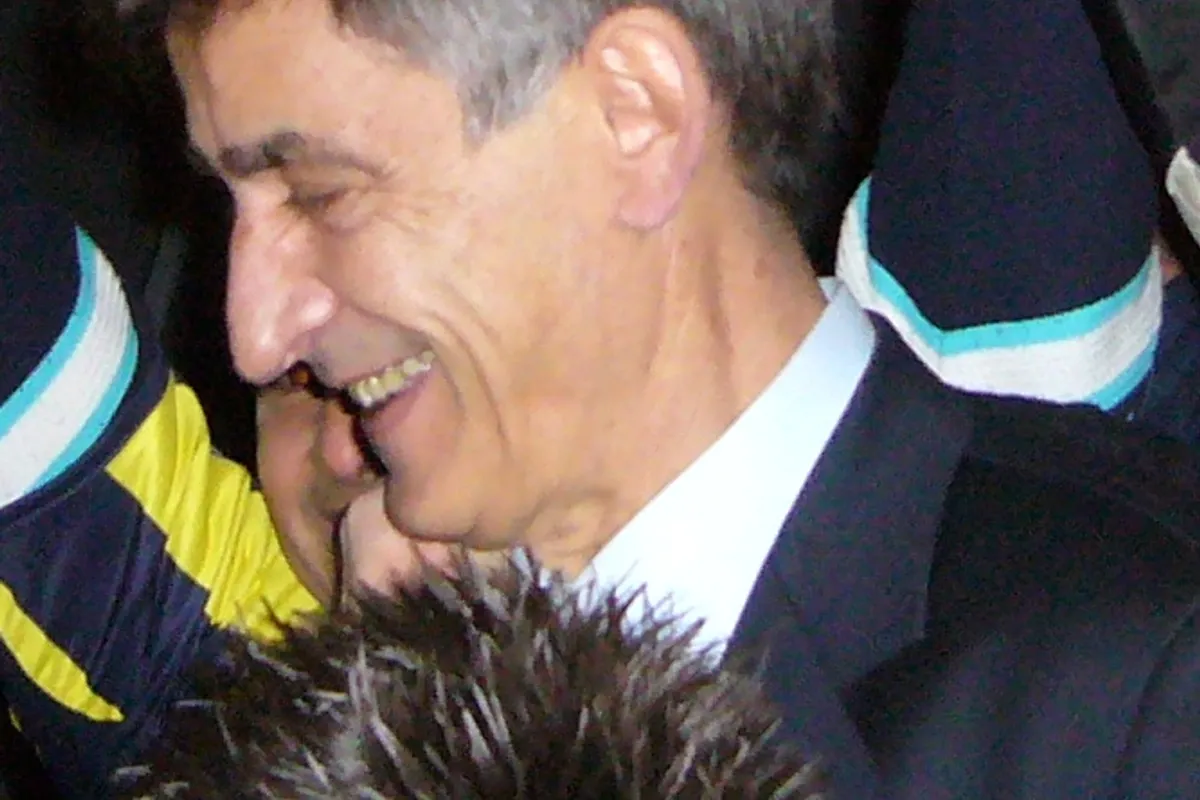
Bogdan Tanjević will be remembered as the first coach from this region to lead a domestic club to the European championship title. He achieved this with Bosna back in 1979. Throughout his career, all the greats of basketball from this region have passed through, whether as teammates, players he coached, or opponents. About twenty years ago, in a conversation about talent, Tanjević lucidly concluded: "Talent is your shorter leg; everyone sees that."
The real art, however, lies in how to turn talent into a top-tier player, or how to unite a whole array of talents in a single selection around a common idea and reap long-term rewards from it. The entire philosophy of basketball from this region, a blend of unique style and hard work, eventually gave rise to what is now called the "Yugoslav school of basketball." Its best students became the Spanish.
Hitting one generation, as the Spanish did with players born in 1980, led by Pau Gasol and Juan Carlos Navarro, is a great thing. But a true dynasty only emerges when several similar generations are fused around the same idea. This was not a new invention, as Yugoslavia had exactly that in the late eighties, uniting Dražen Petrović and his peers with slightly younger talents like Kukoč, Rađa, and Divac, as well as the older Paspalj. That is when it can turn into a dynasty.
In Croatian national team basketball, the last serious fusion of generations occurred when players born in 1984, led by Roko Ukić and later Kruno Simon, were connected with those born in the late eighties, led by Bojan Bogdanović. That combination was strong enough for a semifinal at EuroBasket 2013, and in 2016 at the Olympic Games, Croatia was on the verge of the semifinals. Since then, ten years have passed without qualifying for the EuroBasket or the Games, which is not a negligible fact.
A similar process of merging generations is happening now, which could return Croatian club basketball to serious proportions. The generation born in 1994, with Dario Šarić, has been merged with the 1995 generation, featuring Mario Hezonja, the 1997 generation, from which Ivica Zubac is the best, and players born up to 2001, like Karlo Matković. From this generation, it is realistic to expect qualification for the 2027 World Cup, a return to the 2028 Olympic Games, and a significant role at EuroBasket 2029.
The summer behind us has laid solid foundations for a new fusion of generations after years of wandering. The national team of players born in 2006 and younger, which was missing its best player Michael Ružić, reached the quarterfinals of the EuroBasket, where they were eliminated by the French by a single possession. That selection was led by Dino Subašić. The U-18 selection under Tomislav Vučković had the opportunity in Rijeka to qualify for the A Division, but incredibly lost the quarterfinal to Poland. Had they maintained a seven-point lead in the final minute, they would have been among the top three and earned promotion.
The U-16 team, led by Luka Ukić, dominated with eight wins in Macedonia to reach the A Division, and that selection boasts a whole range of potential. In the projection of Croatian basketball for the next decade, that generation from Macedonia will need to merge with players born after 2000. There is also the generation born in 2002, led by Roko Prkačin, as well as the generation of players in college, featuring the Ivišić brothers and Jelavić. If the chemistry clicks, there will be no reason for concern.