Expert warns: Traffic jams in Konavle will be even worse next year
Željko Marušić tells N1 how the new toll collection system will worsen the already critical situation at the border with Montenegro.
Željko Marušić tells N1 how the new toll collection system will worsen the already critical situation at the border with Montenegro.
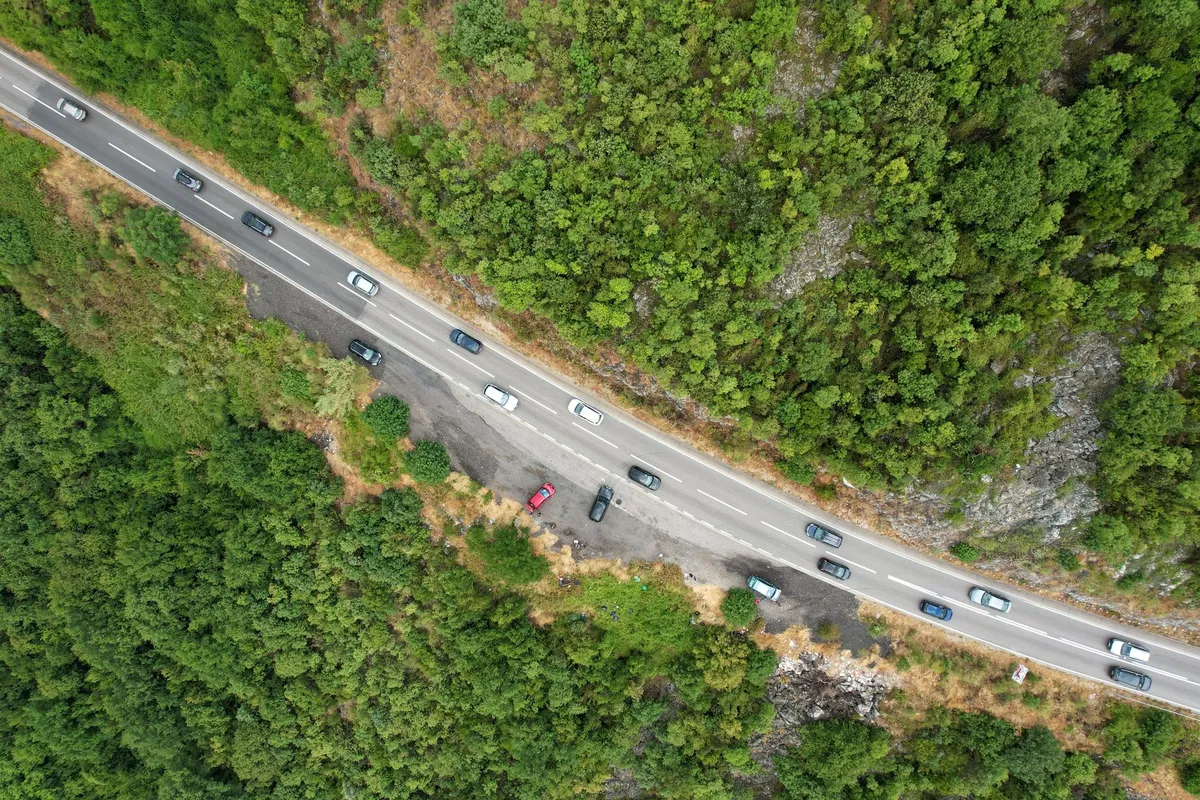
Last weekend, Konavle experienced a complete traffic breakdown, with drivers spending up to 15 hours waiting at the Karasovići border crossing to Montenegro on Sunday. The queue stretched along the Adriatic Highway from the area of Ruđer Bošković Airport all the way to the border, prompting interventions by emergency services, firefighters, and civil protection. Traffic expert Željko Marušić now warns that the next tourist season could bring even greater chaos.
Marušić believes that the new contactless toll collection system, which Croatia plans to introduce at the start of next year, will cause additional complications. Faster passage of vehicles on highways will, in his words, create even stronger pressure on border crossings and roads in the far south of the country.
"The introduction of a contactless toll collection system without stopping will add pressure on the border with Montenegro and worsen the situation. When a wave of vehicles exits the highway faster and reaches that area, an even bigger problem will arise. That system will speed up traffic flow on highways, but not where you exit the highway onto regular roads," Marušić said for N1.
The key issue, Marušić emphasizes, is not solely the limited capacity of the Karasovići crossing itself, but also the road infrastructure in neighboring Montenegro. Due to Schengen rules and the summer increase in passenger numbers, any surge in traffic results in queues several kilometers long.
"As soon as the intensity of vehicle arrivals exceeds the capacity of a given section, situations like we saw on Sunday occur. This problem needs to be addressed, but it will be harder to solve because the capacity of the road infrastructure in Montenegro itself is also problematic. Even without border checks, congestion would occur there due to that," he said.
According to Marušić, even building an additional traffic lane would not significantly improve the situation because the border crossing would remain a bottleneck. He stresses that solving this issue requires cooperation between Croatia and Montenegro.
"You can increase the speed and flow of traffic arriving at the border and even across it, but the question remains how much traffic the road infrastructure in Montenegro can handle," he said.
As one of the reasons for the growing traffic burden, Marušić also cites the rising popularity of Albania among European tourists. An increasing number of travelers heading to that destination pass through the southern part of Croatia and Montenegro, further straining the existing road network.
"Albania is experiencing a tourism boom; they have a quality offer and affordable prices, but the road infrastructure is slowing down that trend. If this traffic problem in the south of Croatia is not resolved, it will become even bigger in the coming years as demand for Albanian tourism grows," Marušić concluded.
The expert warns that unless long-term solutions are found, traffic difficulties in Konavle will become more severe year after year.