Taiwan Creates a 'Hellscape' of Drones: 100,000 Aircraft Per Month
Inspired by Ukraine's experience, Taiwan is building a fleet of 210,000 aerial and maritime unmanned systems to deter a potential invasion from the mainland.
Inspired by Ukraine's experience, Taiwan is building a fleet of 210,000 aerial and maritime unmanned systems to deter a potential invasion from the mainland.
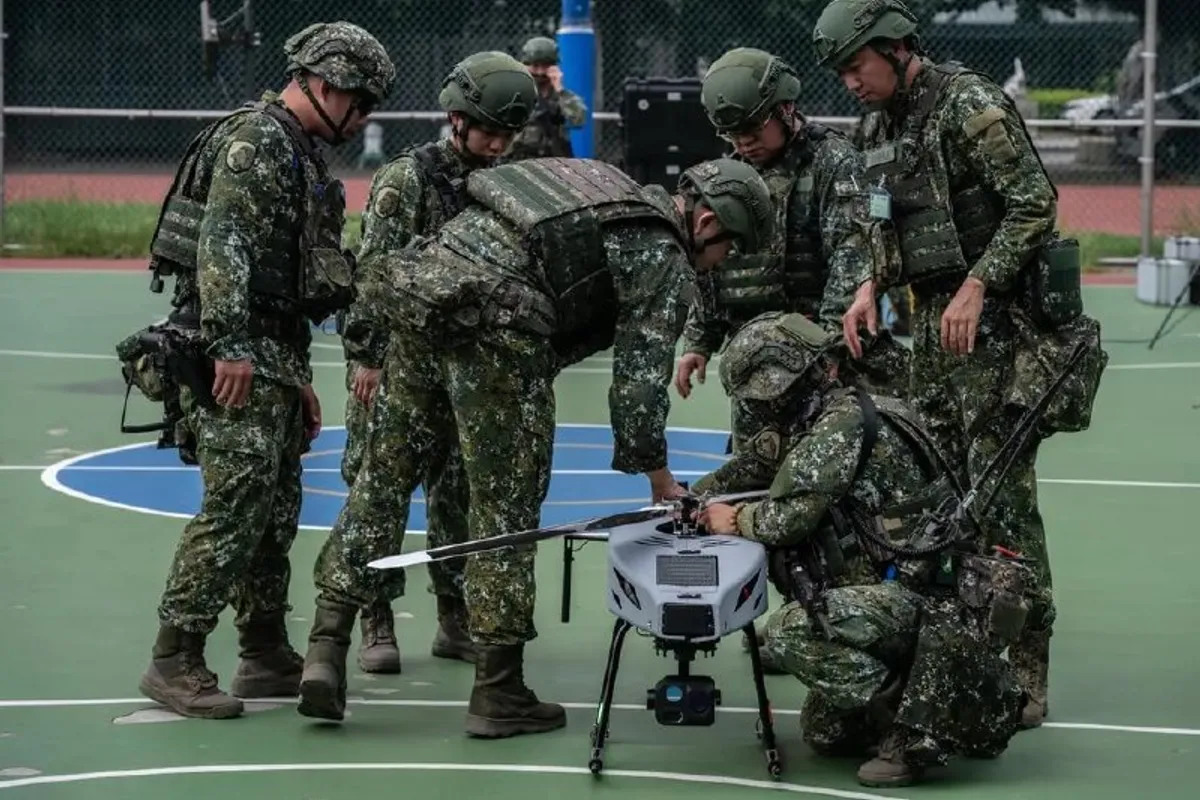
Taiwan is rapidly transforming its defense strategy, relying on the mass production and deployment of drones and unmanned vessels. The goal is to create a "hellscape" in the Taiwan Strait, a concept developed by U.S. military planners that would make any Chinese amphibious invasion extremely costly and risky, reports Clash Report.
The key architect of this doctrine is Lieutenant General Huang Wen-chi, director of strategic planning at Taiwan's Ministry of National Defense. "Our efforts in the drone and counter-drone arena started relatively late, and initially we were trying things on the fly," Huang Wen-chi told The New York Times, according to Clash Report. The new approach marks a radical departure from traditional weapons procurement and relies on coordinated waves of drones, missiles, and mobile artillery.
As part of the annual ten-day Han Kuang military exercises, Taiwanese troops have already used drones for reconnaissance and practiced neutralizing enemy unmanned aerial vehicles. President Lai Ching-te personally observed test attacks by drone prototypes in the south of the island, signaling high-level political support for the project.
To guard against a potential blockade, Taiwan plans to produce 100,000 drones per month by 2030. The Ministry of National Defense intends to acquire more than 210,000 aerial and maritime systems in total. While there is consensus on the necessity of this armament, political parties differ on the funding model.
The current administration has proposed an expenditure of $6.5 billion over five years. The opposition Nationalist Party countered with a more ambitious counter-proposal of $7.4 billion spread over six years, with an emphasis on domestic production. Private contractors, such as Taiwan's Thunder Tiger and American Shield AI, have already conducted joint tests of maritime drones designed to identify and destroy enemy vessels.
Acquiring equipment is just the first step. Taiwan recently established the Littoral Combat Command, a unit tasked with integrating autonomous systems with mobile artillery and coastal defense missiles. However, analysts warn that hardware alone is no guarantee of success.
Stacie Pettyjohn, an analyst at the Center for a New American Security, notes that Taiwan is "more focused on technology than on the equally essential organizational and doctrinal changes needed to implement the 'hellscape' concept." On the other hand, retired Australian Major General Mick Ryan, a senior fellow at the Lowy Institute, reminds us of the adversary's adaptability: "Remember, the Chinese are also watching everything the Ukrainians do."
China, just 110 miles away across the strait, has not abandoned its territorial claims and does not rule out the use of force, while investing in its own drone fleets and electronic jamming technologies. Recent purges in the People's Liberation Army's command structure have raised questions about its immediate combat readiness, but Beijing continues to invest in counter-drone jamming technologies to neutralize Taiwan's asymmetric advantage.
Taiwan also sees its new industry as an export opportunity for democratic allies. In the first quarter of 2026, Taiwan's drone exports reached $115 million, surpassing the total exports for all of 2025. The primary destination is the Czech Republic, and research suggests that a significant portion of this equipment ends up on the battlefield in Ukraine, thus closing the circle of inspiration and application.