Tin Srbić Ahead of Home European Championship
Croatian gymnast reveals plans for the European Championship at Zagreb Arena, discusses the team's new strength with Kovtun and the Kasina element that could give him an edge.
Croatian gymnast reveals plans for the European Championship at Zagreb Arena, discusses the team's new strength with Kovtun and the Kasina element that could give him an edge.

Croatia's top gymnast, Tin Srbić, is eagerly counting down the days until the start of the European Championship, which will be held at Zagreb Arena from August 19 to 23. With three European medals already in his collection-two silver and one gold-and a total of seven major medals in his career, Srbić makes no secret of his ambitions in front of a home crowd.
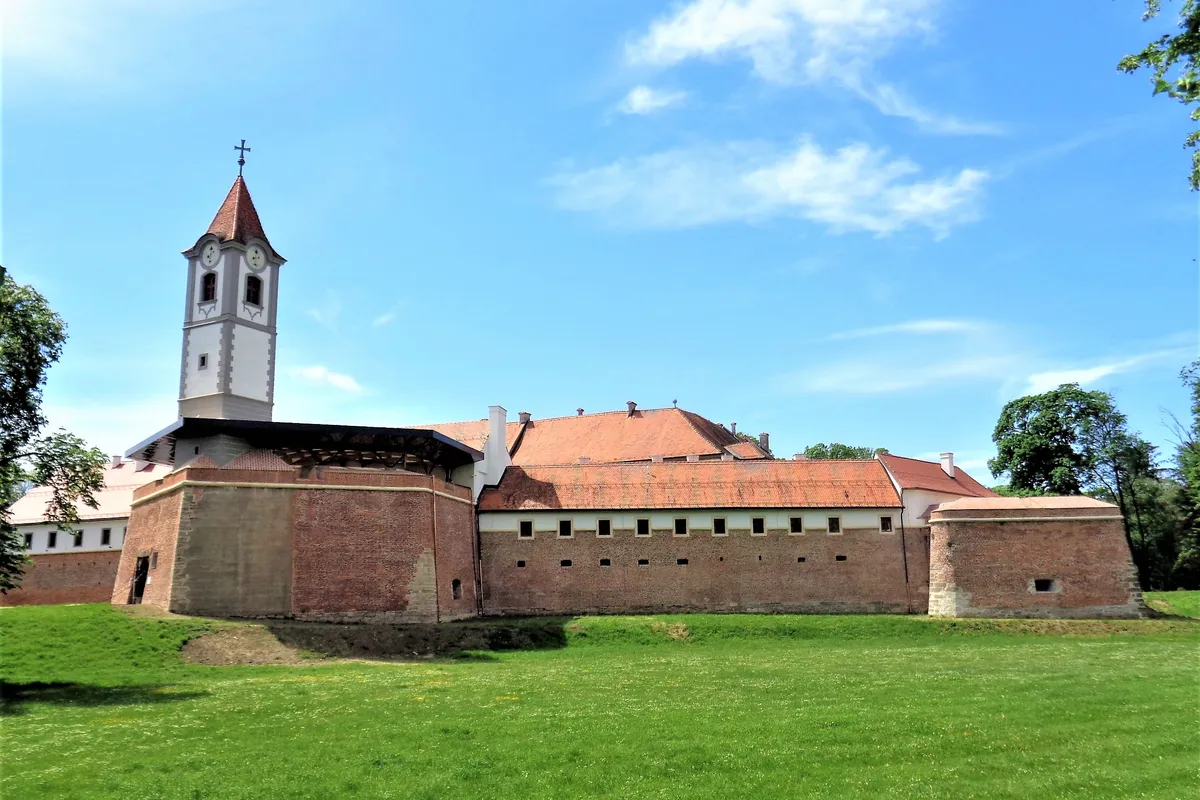
Preparations for the big competition are winding down, and the Croatian men's gymnastics team has been training in Osijek. Srbić is pleased with what he has seen. "I can say that the preparations have gone really well. Two weeks in Osijek, in a slightly different environment, did me good," he told Večernji list. He particularly highlighted the conditions in the Osijek hall: "In Osijek, I have excellent conditions. The hall has everything a gymnast needs, whether for all-around or individual apparatus. Most importantly, it's air-conditioned, so training here is much more pleasant."
What particularly excites Srbić is the strength of the team he will be part of. Ilija Kovtun, now a member of the Croatian national team, has further bolstered an already powerful squad. "Given that Ilija Kovtun has arrived, who is now a Croat and a member of our national team, and he's one of the best gymnasts in the world in the all-around and on individual apparatus, especially on parallel bars, I think we definitely have a strong team," Srbić said.
In addition to Kovtun, the team's strength is also provided by Benović, an Olympic finalist on vault, and Ude, the Olympic silver medalist from Beijing. Srbić believes that this combination of experience and quality can yield top results on home soil.
Srbić suffered an injury this year, but now feels fully ready. "I expect that all the work I've put in after the injury I suffered this year will finally come to fruition. I feel really good, both physically and mentally, and I hope we'll execute everything as planned already in the qualifications, make the final, and then compete for medals. That's my wish," he said determinedly.
He is also aware of the pressure that comes with performing in front of a home crowd, but hopes to turn it into an advantage. "I honestly hope it won't. Realistically, many people I know-friends and family-have never actually had the chance to watch gymnastics live, especially not such a big competition. I hope they'll enjoy it, and at that moment, I'll try to isolate myself a bit and focus on what my job is," he explained.
Although he has won nearly everything there is to win in gymnastics, Srbić still sees room for improvement. He plans to incorporate the Kasina element into his routine, which would significantly raise his start value. "I'm close to adding the Kasina element to my routine, which would raise my start value to 6.2. I'd like to perform it next year at the World Championships and compete again for the best possible placement and a spot at the Olympic Games," he revealed.
He admits that his ambitions have changed over the years, but his motivation hasn't waned. "In 2017, I didn't have a single major medal, and now I have seven," Srbić said, alluding to his journey from winning the world gold in Montreal, through Olympic silver in Tokyo, to his current status as one of Croatia's most decorated athletes.
In an extensive interview, Srbić also recalled his beginnings. He started at the age of four, with his parents steering him toward sports. "They thought it was important for me to be involved in sports from a young age, so I started at four. But generally, when it comes to competing itself, they never-especially my mom-felt it was crucial that I compete and be the best. She simply wanted me to find myself in something I love and enjoy," he recalled.
He also touched on difficult moments, like the chronic elbow pain at 16-17 when he briefly considered quitting, and the surgery performed by Dr. Bojanić that allowed him to continue his career. As the toughest moment, he singles out the fall in the final of the Olympic Games in Paris, after which he spent some time pondering the meaning of continuing in the sport. Nevertheless, he concluded that all the effort was worth it and that many challenges still lie ahead.