Three Candidates and a Chair That Threatens to Block BiH
Darijana Filipović, Zdenko Lučić, and Slaven Kovačević are vying for the Croatian seat on the BiH Presidency, with elections scheduled for October 4, 2026.
Darijana Filipović, Zdenko Lučić, and Slaven Kovačević are vying for the Croatian seat on the BiH Presidency, with elections scheduled for October 4, 2026.
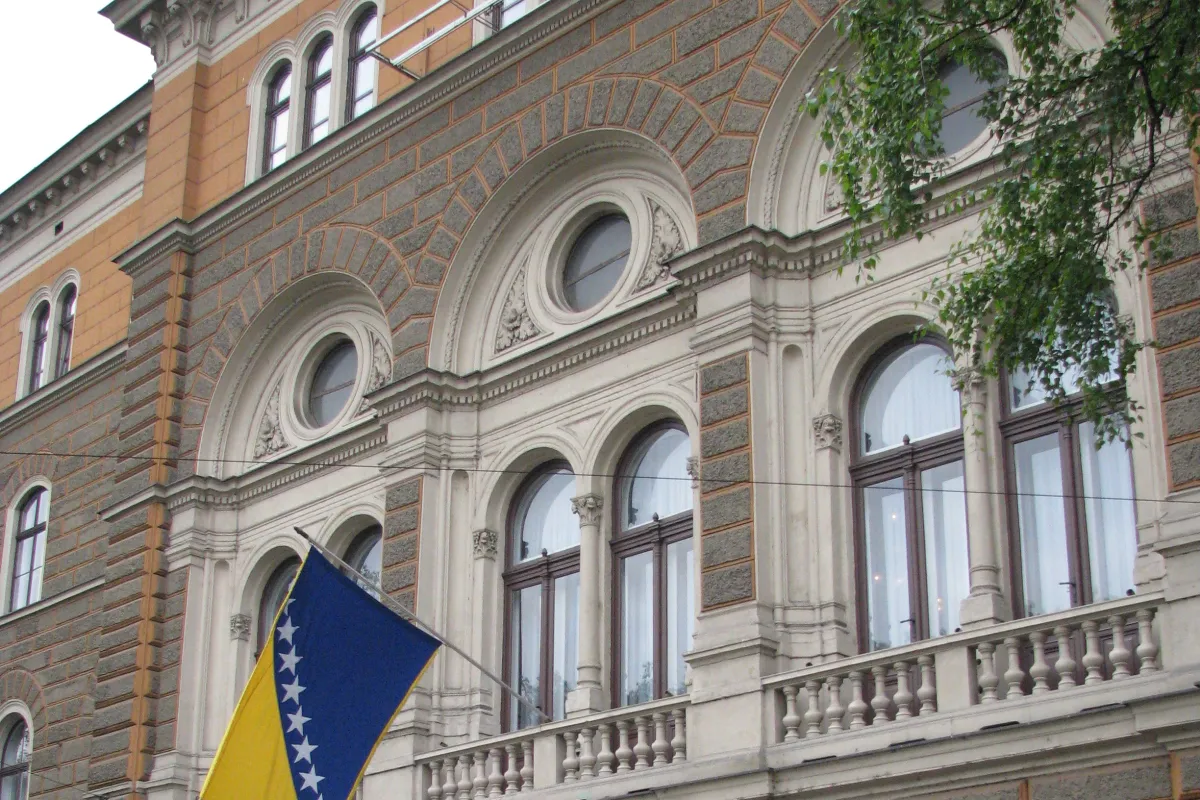
Bosnia and Herzegovina is rapidly moving toward general elections scheduled for October 4, 2026, and the focus of the political public is once again on the race for the Croatian member of the Presidency. After long-standing member Željko Komšić is no longer eligible to run, a battle has opened among three opposing camps with completely different visions and strategies.
HDZ BiH candidate Darijana Filipović, the "Petorka" coalition candidate Zdenko Lučić, and Democratic Front representative Slaven Kovačević are running campaigns that mirror the deep divisions within the smallest constituent people, as well as the broader political engineering based on the Dayton constitutional framework.
For HDZ BiH leader Dragan Čović and his candidate Darijana Filipović, this campaign represents a struggle to preserve a national narrative built on the "Komšić case." For two decades, HDZ BiH has used the argument that Croats in the Presidency are represented by someone elected predominantly by Bosniak voters, which has become a powerful homogenizing tool.
Filipović's campaign is based on the claim that every vote not going to HDZ poses a direct threat to the survival of the Croatian people. The campaign includes visits to counties and municipalities with Croatian populations, grand promises, and a narrative of endangerment. At the same time, Croatian authorities are significantly supporting HDZ BiH's campaign, securing funds for projects fully overseen by Dragan Čović.
The goal is to secure plebiscitary support in the Herzegovina counties and send a clear signal to Brussels and Washington that HDZ is the only "legitimate" interlocutor, regardless of the final outcome of a race in which more numerous Bosniak voters could once again outvote them.
For the first time in recent history, the Croatian opposition is running with serious infrastructure. The "Petorka" coalition, comprising HDZ 1990, HRS, HNP, HSS, and HDS, has launched a joint candidate, Zdenko Lučić, refusing to come under the umbrella of Čović's Croatian National Assembly (HNS).
Lučić's campaign targets "voter fatigue" among Croatian voters tired of HDZ BiH's monopoly. During public appearances, he emphasizes issues like nepotism, the decline of state-owned companies, the mass departure of young people, and regularly accuses Čović of criminal activities. HDZ BiH retaliates by labeling the opposition as "traitors" who are splitting the Croatian electorate at a time when national unity is supposedly crucial.
The goal of "Petorka" is not necessarily to win the seat in the Presidency, but to "pluck" the counties and position themselves so that as many county governments as possible cannot be formed without their group.
While Croatian parties wage a "fratricidal war" in Mostar, the Democratic Front (DF) in Sarajevo is conducting a cold mathematical calculation with candidate Slaven Kovačević. Kovačević, known for a European Court of Human Rights ruling in Strasbourg that he won but which was politically halted in BiH, presents himself as the direct ideological successor of Željko Komšić.
His campaign completely ignores the ethnic principle and appeals to the concept of "one person, one vote," which finds fertile ground among civically oriented, but predominantly Bosniak, voters in urban centers like Sarajevo, Tuzla, and Zenica. The DF's plan is clear: redirect part of the voting apparatus that supported Komšić for years toward Kovačević. If they succeed, the votes won by Filipović and Lučić will have no impact on the final result.
The Central Election Commission of BiH (SIP) closed the list of citizens abroad eligible to vote in late July 2026. The list includes 48,074 people, while just over 5,500 applications were rejected. Those whose applications were not approved had until August 3, 2026, to appeal to the Appellate Division of the Court of BiH.
The number of registered diaspora voters has drastically fallen compared to the 2022 elections, when nearly 70,000 voters secured the right to vote by mail. That is a decline of almost a third. This problem is particularly present among people who lived before the war in the area of what is now the Republika Srpska, from which Croats and Bosniaks were massively expelled during the conflict.
In Banja Luka and Bosanska Gradiška, the number of registered voters from abroad has decreased by approximately 60 percent. For the elections in Banja Luka, only 875 diaspora voters are registered this year, compared to 2,273 in 2022. In Prijedor, from which almost all Croats and Bosniaks were expelled during the ethnic cleansing campaign of 1992, about 1,500 displaced and exiled persons will be able to vote this year, compared to 3,783 registered four years ago.
"The vast majority of people simply no longer want to be deceived and exploited, which happened immediately after the 2022 elections," Admir Čavka, commissioner for RS of the Union for a Better Future (SBB), told Dnevni avaz.
Čavka, whose party was founded by Fahrudin Radončić, believes that the disappointment of voters displaced from the Republika Srpska area is a consequence of some Bosniak parties supporting, without major conditions, the new government formed in that entity by Milorad Dodik's Alliance of Independent Social Democrats (SNSD).
"Today we are paying the price of that deception, and I fear we will feel the consequences only after the elections," Čavka warned.
The outcome of this race will determine the direction of Bosnia and Herzegovina for the next four years. If Kovačević (DF) wins, it will result in a continuation of political blockage and the strengthening of the narrative within HDZ that Croats are disenfranchised, leading to new demands for institutional halting of the country. On the other hand, a victory by a candidate who identifies as a Croat could reduce tensions in the Federation but would trigger an internal conflict among Croats for political dominance between Čović and a strengthened opposition.
In this "game of thrones," the real winner will only be known in the post-election reshuffling, when the votes are counted-votes that, ironically, may not come from the people the elected member officially represents.