Three Regions Under Red Weather Alert: DHMZ Warns
The highest warning level is in effect for the Rijeka, Split, and Dubrovnik regions due to a dangerous heatwave, while an orange alert has been issued for the Knin region.
The highest warning level is in effect for the Rijeka, Split, and Dubrovnik regions due to a dangerous heatwave, while an orange alert has been issued for the Knin region.
The State Hydrometeorological Institute (DHMZ) declared a red weather alert on Monday, August 10, 2026, for three Croatian regions. The Rijeka, Split, and Dubrovnik regions are under the highest warning level, indicating extremely dangerous weather conditions caused by a severe heatwave.
DHMZ urges citizens to take precautionary measures. "Take action, extremely high temperatures are expected. Protect yourself, children, and the elderly. Follow the advice given by the authorities. Possible disruptions to certain infrastructure may occur," the official warning states. An orange weather alert has been issued for the Knin region, signaling dangerous weather and an increased health risk, especially for vulnerable groups.
According to DHMZ's forecast, today will be mostly sunny, hot, and very hot. Maximum daily temperatures will range between 33 and 38°C. In the afternoon, isolated showers are possible, mainly in Gorski Kotar, with light winds that will become moderate northwest and southwest winds along the coast from midday.
Tomorrow is expected to be mostly sunny, but in the second part of the day, moderate cloudiness may develop in the west and northwest of the country, with the possibility of brief showers near the Slovenian border. Morning temperatures inland will be between 15 and 20°C, and on the coast and islands from 21 to 27°C. Maximum daily temperatures will again reach 32 to 38°C.
DHMZ meteorologist Dragoslav Dragojlović provided a more detailed forecast for HRT. In Slavonia, Baranja, and Srijem, it will be sunny and hot, with morning temperatures from 15 to 17°C and maximum daily temperatures from 33 to 35°C. Central Croatia will be equally hot and sunny, with a yellow warning for high temperatures in these areas.
The northern Adriatic and Gorski Kotar will see sunny and hot weather, with maximum temperatures from 32 to 35°C. In mountainous areas and the interior of Istria, there is a slight chance of brief showers. Dalmatia will be sunny and very hot, with a red alert along the coast and an orange alert inland. Local showers and thunderstorms are possible there in the middle of the day. Morning temperatures in inland Dalmatia will be from 18 to 20°C, on the coast from 24 to 27°C, and maximum daily temperatures from 33 to 37°C. The far south of Croatia will be no less hot.
Dragojlović forecasts the continuation of the heatwave. "In the coming days, it will be mostly sunny and hot inland. On Tuesday and Wednesday, local showers are possible in mountainous areas and near the Slovenian border, with moderate to strong cloud development," he told HRT. The Adriatic will remain sunny and hot, with the bora wind expected to blow in the northern part on Wednesday and Thursday. In the second half of the week and over the weekend, stable, hot, and very hot weather is expected, and only next week might bring relief and a more significant change in weather, according to forecast models.
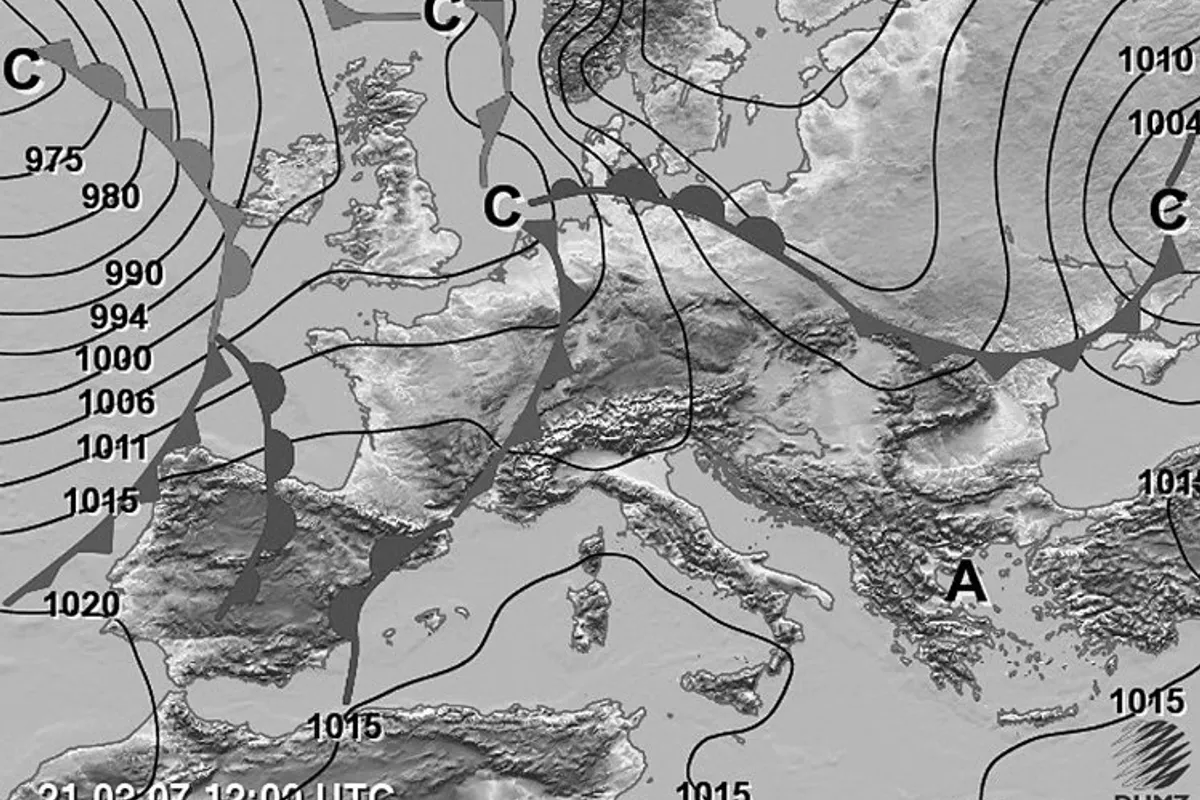
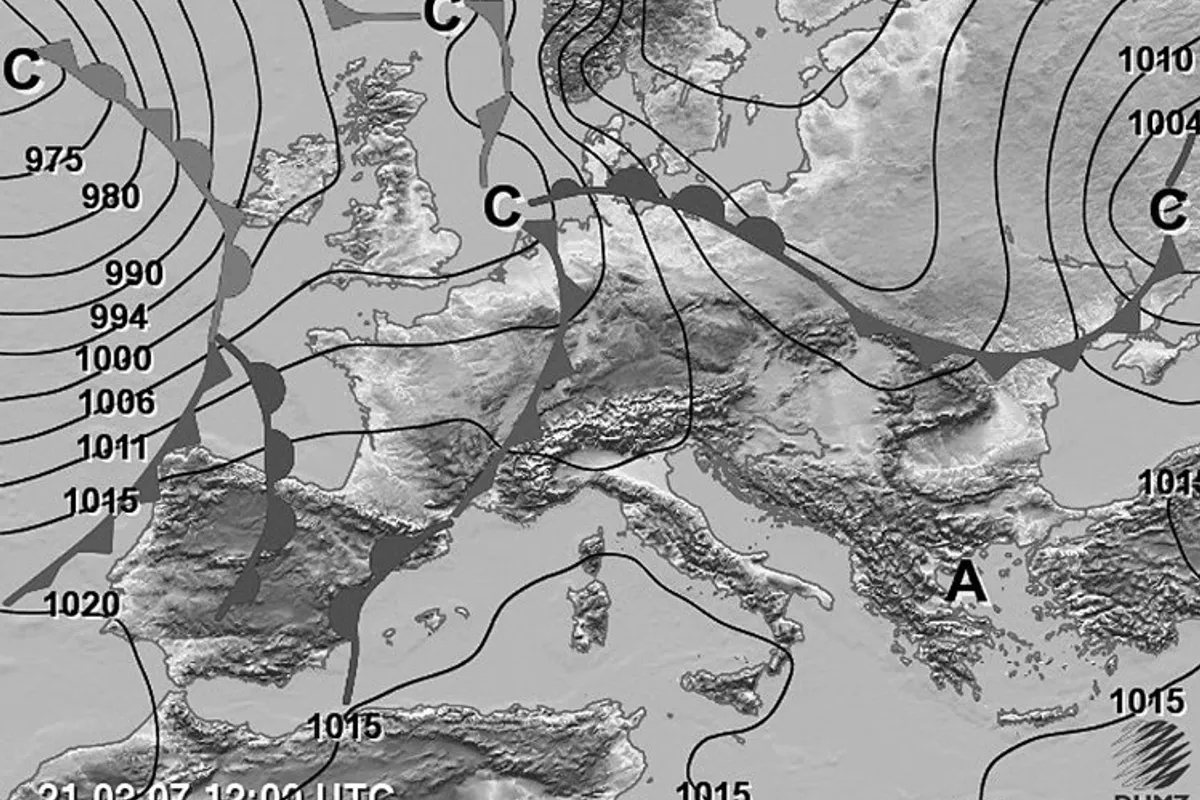
The weather over Europe is currently influenced by a high-pressure system and a ridge of warm air of African origin. A deep cyclone is stationary over the Atlantic south of Iceland, and on its front side, strong southeasterly flow is transporting warm, dry African air over Western Europe. Winds over the Sahara have lifted large amounts of sand, which is being carried in the upper-level flow over Spain, Portugal, and France, and will reach our western regions on Tuesday and Wednesday, when the sky will take on a yellowish hue. Local showers accompanied by thunderstorms and gusty winds are possible today mainly in inland Dalmatia and along the mountain range bordering Bosnia and Herzegovina. On the Adriatic, during the night and morning, a moderate bora wind will blow with a strong foehn effect warming the atmosphere, and Meteoalarm has also issued a yellow warning for strong to gale-force bora winds along the coast from Kvarner to southern Dalmatia.
The Croatian Institute of Public Health (HZJZ) has issued comprehensive recommendations for citizens to reduce health risks. They emphasize the importance of regular fluid intake, even without feeling thirsty, especially for the elderly. "Cool your body and drink enough fluids so that your urine color is light," the recommendations state. Adults are advised to take diluted juice every 1-2 hours, and children every 15-20 minutes, 1 to 2 tablespoons or a sip of water.
Citizens are advised to avoid direct sun exposure between 10 a.m. and 5 p.m. People working outdoors, such as construction workers, should rest more often in the shade and drink 1 and 1/2 glasses of water every 30 minutes. Strenuous physical work should be done during the coolest part of the day, between 4:00 and 7:00 a.m. and after 5:00 p.m.
HZJZ advises cooling the body with lukewarm water, wearing light, loose, and light-colored clothing made of natural materials, and using high-factor sun protection. Special care is recommended for newborns and young children, for whom sunscreen with a factor greater than 30 should be used. If the home is not air-conditioned, it is recommended to spend two to three hours a day in a cool place, such as an air-conditioned public building, and to avoid travel during the hottest part of the day.