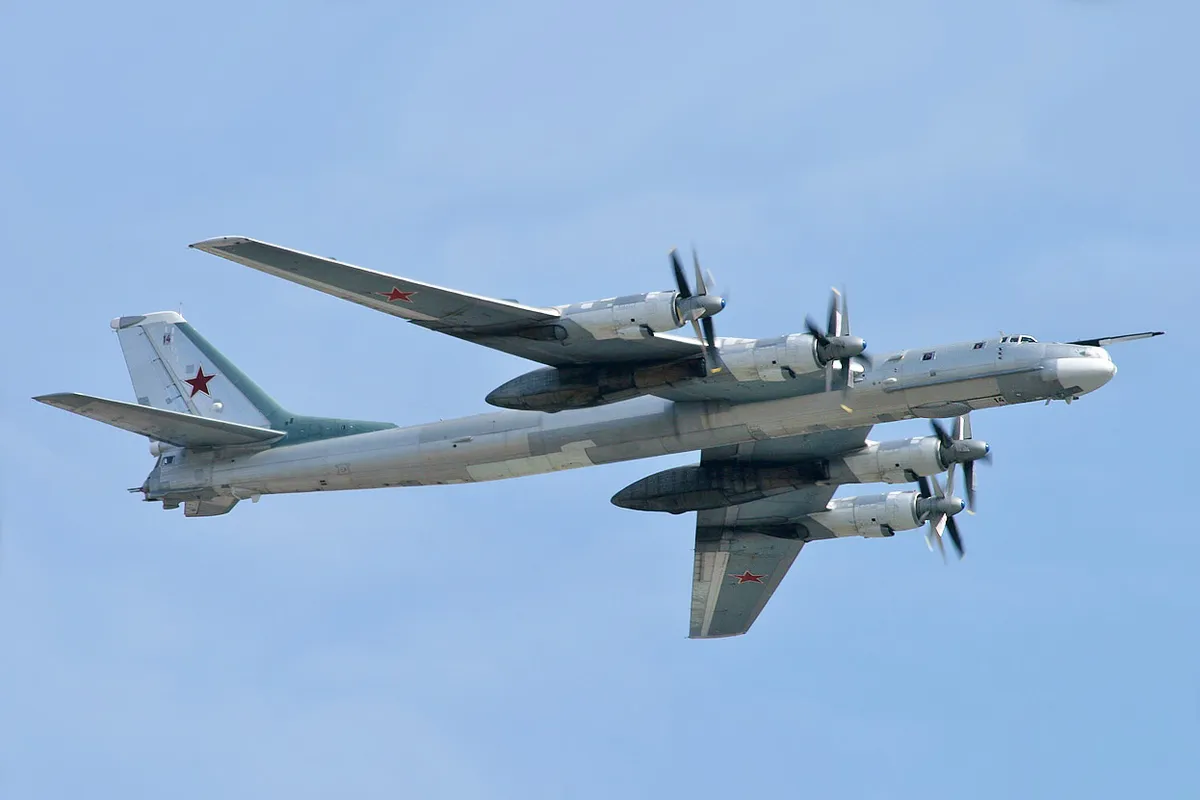
The Ukrainian drone that destroyed a Russian Tupolev Tu-95MS strategic bomber at the Engels-2 airbase last month is actually a reverse-engineered copy of a Chinese drone that Beijing refused to sell to Kyiv, according to a report by the defense media outlet Oboronka, as reported by Tom's Hardware. The drone in question is the MICH 2000, a flying wing capable of carrying a warhead of up to 60 kilograms over a distance of up to 2,000 kilometers.
The base configuration of the drone costs $48,000, which is $2,000 less than the Chinese ZTK-150 it was copied from. The drone was built exclusively for the Alpha special center, a unit of the Security Service of Ukraine (SBU), by a manufacturer whose name has not been publicly disclosed.
Secret Photography in China
In the summer of 2023, China restricted the export of civilian drones after Ukrainian units began converting civilian aircraft like the Mugin-5 PRO into deep-strike munitions. At the end of that year, a Ukrainian development team traveled to a Chinese factory, found the ZTK-150 in production, and attempted to purchase the technology, but the factory management blocked the sale.
Instead, intermediaries offered pilot training, which the team accepted. "Alongside the training, we photographed everything that was there," said an unnamed team member in the report, which was pre-approved by the manufacturer and the SBU. The team returned home with eight drones.
Crashes, Shootdowns, and Persistence
The first Ukrainian prototype crashed after just one kilometer on its maiden flight in the summer of 2024, and Russian electronic warfare also shot down the third test aircraft. In the first combat mission in October 2024, one of three drones was shot down, and the remaining two fell about ten meters short of the target. Despite this, Alpha ordered serial production.
Today, almost nothing remains of the Chinese original except the drone's silhouette. Two years of work have localized engines, warheads, fuselages, and rocket boosters among dozens of Ukrainian suppliers, bringing the domestic share of the drone's value to 85 percent.
Production and Successor
Installing a jamming-resistant CRPA antenna reduces the domestic share to 55 percent because antennas cost between $20,000 and $25,000, depending on the number of modules, and are produced by only a few companies worldwide. The company produces about 6,000 drones annually in eight versions, with options for analog, digital, or Starlink communication, and invests approximately $1 million per month in research and development, aiming for 10,000 units per year.
Alpha has so far launched thousands of MICH 2000s at hundreds of targets, including the Wildberries logistics center in the Ryazan Oblast, a counter-Starlink electronic warfare system near Gelendzhik, and the port of Ust-Luga, where more than 20 drones participated in a single attack. The SBU stated that the strike on Engels-2 tore off the tail section of the Tu-95MS bomber, which was later confirmed by satellite imagery.
The successor, the MICH+, abandons the forward canards, carries a 70-kilogram warhead, has a range of 600 kilometers, and a target price of around $40,000. For comparison, manufacturer Fire Point, whose FP-1 drone flew 2,500 kilometers to Russia's largest refinery, aims for 100,000 drones annually, although the FP-1 serves many units while the MICH 2000 has only one customer.
British Drones in the Depths of Russia
Meanwhile, Ukrainian armed forces have, for the first time in the last six months, used British drones for strikes deep inside Russia, reports The Sunday Times. Among them is the Nyan jet drone by Callen-Lenz, a subsidiary of defense company BAE Systems, with a range of about 240 kilometers, and another British drone with a range of about 960 kilometers that is launched via a catapult system.
The name of the second British company is not disclosed by The Sunday Times for security reasons. With the help of British drones, targets including oil refineries in Volgograd and Yaroslavl, as well as Wildberries warehouses in the Moscow region, were hit.