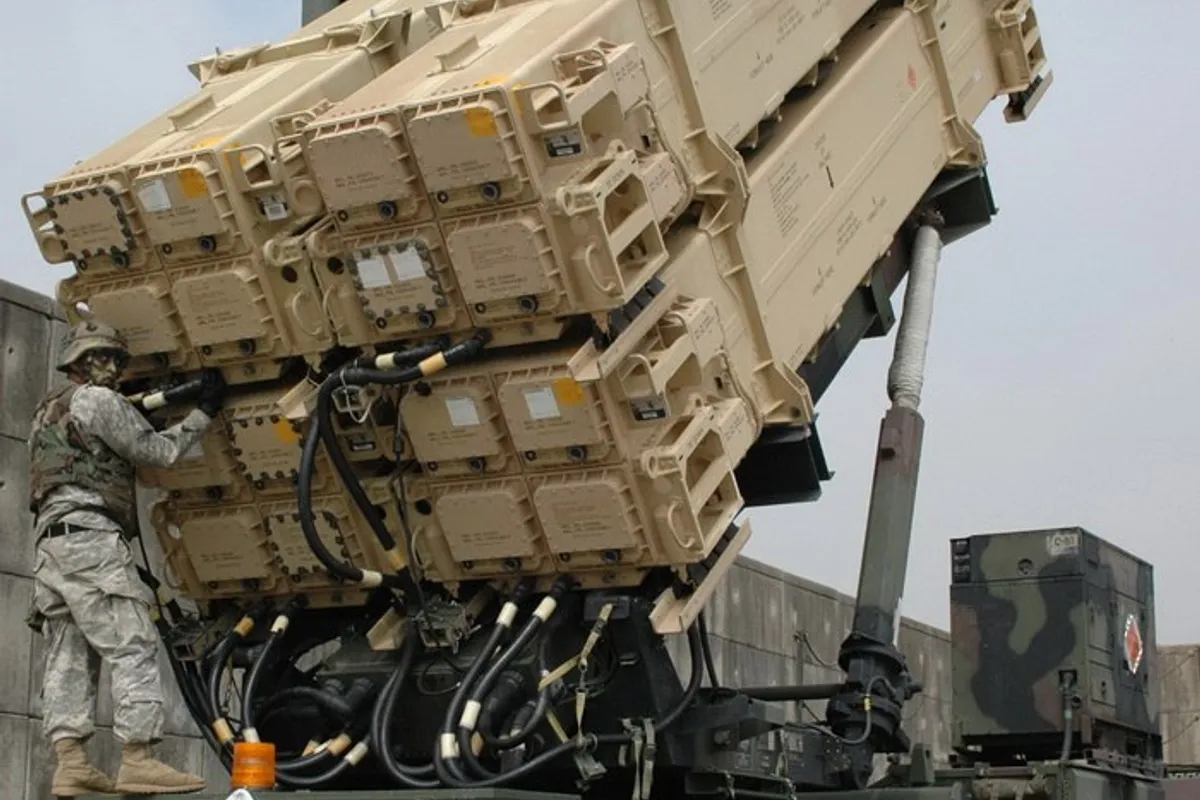
Defending cities, military installations, and vital infrastructure from Russian missiles is becoming an increasingly daunting challenge for Ukraine. The shortage of interceptors for air defense systems is emerging as one of the most critical factors shaping the conflict's trajectory, particularly regarding missiles for American-made Patriot systems, as reported on Wednesday, August 12, 2026.
According to estimates cited by Webtribune, Russia could sustain a pace of approximately 100 ballistic strikes per month over several months, with occasional spikes significantly higher. The scarcity of interceptor missiles, coupled with Kyiv's inability to manufacture suitable systems domestically, has opened what analysts call a "ballistic window of opportunity" for Moscow.
Russia Can Launch 77 Ballistic Missiles Simultaneously
Intercepting ballistic missiles poses a particular challenge. Ukraine cannot field a system capable of identifying a warhead traveling at several times the speed of sound within seconds and then physically stopping it. It is precisely this combination of limited interceptor stockpiles and a lack of domestic production capacity to replace them that gives Russia a significant advantage.
Robert Brovdi, commander of Ukraine's Unmanned Systems Forces, who has been placed on Russia's Rosfinmonitoring list of terrorists and extremists, offered an even more alarming assessment in an interview with the Associated Press. According to him, Russia can launch 77 ballistic missiles at Ukraine simultaneously, with the goal of increasing that number to 200. In Brovdi's view, the number of attacks could be reduced by targeting missile production facilities.
Germany's Die Welt: Ukraine in Its Most Vulnerable Position
German media outlet Die Welt assesses that due to air defense issues, Ukraine is in its most vulnerable position in years. The conflict, it is estimated, has entered a new phase, with Ukrainian cities nearly defenseless against Russian strikes due to the interceptor shortfall.
British analyst and military expert Michael Clarke asserts that Russian forces can now strike almost any target within Ukraine. He expects attacks to continue precisely because Moscow is aware of the problem highlighted by Ukrainian President Volodymyr Zelensky: a severe shortage of munitions capable of shooting down ballistic missiles. Clarke noted that the Armed Forces of Ukraine currently can do little to close such a "window of opportunity" for Russia.
The Stockpile Problem of Western Partners and the Middle East
Kyiv's predicament is further complicated by the stockpile situation of its Western partners. Alexander Yermakov, a research fellow at the Center for International Security at IMEMO RAN, assesses that the ammunition shortage for American air defense systems is directly linked to the heavy consumption of such weaponry in the Middle East. If the parties there resume mutual strikes, he estimates, the United States could face its own stockpile problem. Ukraine, however, needs not dozens but hundreds of missiles for Patriot systems.
European countries can theoretically increase deliveries of their own air defense missiles, but such interceptors cannot simply replace the Patriot in missile defense tasks for individual targets. At the same time, European nations are increasingly focused on replenishing their own arsenals, which further limits the scope for aiding Kyiv.
Zelensky Warns of a "Very Difficult Winter"
Zelensky has repeatedly called on partners to provide additional interceptor missiles to the Ukrainian military, but without results that would resolve the issue. He later warned the population to prepare for a "very difficult winter," which could be worse than the previous one.
"No one can even imagine what it will be like. Of course, it could be difficult or even worse. That will depend on partners and on us," Zelensky said.
The severity of the expected problems is also underscored by a warning from Markiyan Lopachak, commander of the 45th Separate Artillery Brigade of the Ukrainian Army. He urged the population to consider spending the cold part of the year in rural areas.
"This should be taken seriously and acted upon," Lopachak said.
During recent Russian strikes, the Ukrainian military has failed to intercept ballistic missiles, opening the possibility of a prolonged campaign with consequences extending beyond immediate damage to targeted facilities. Continued attacks could weaken the economy, slow military logistics, and significantly disrupt daily life in major cities, potentially bringing Ukraine closer to a "point of no return."