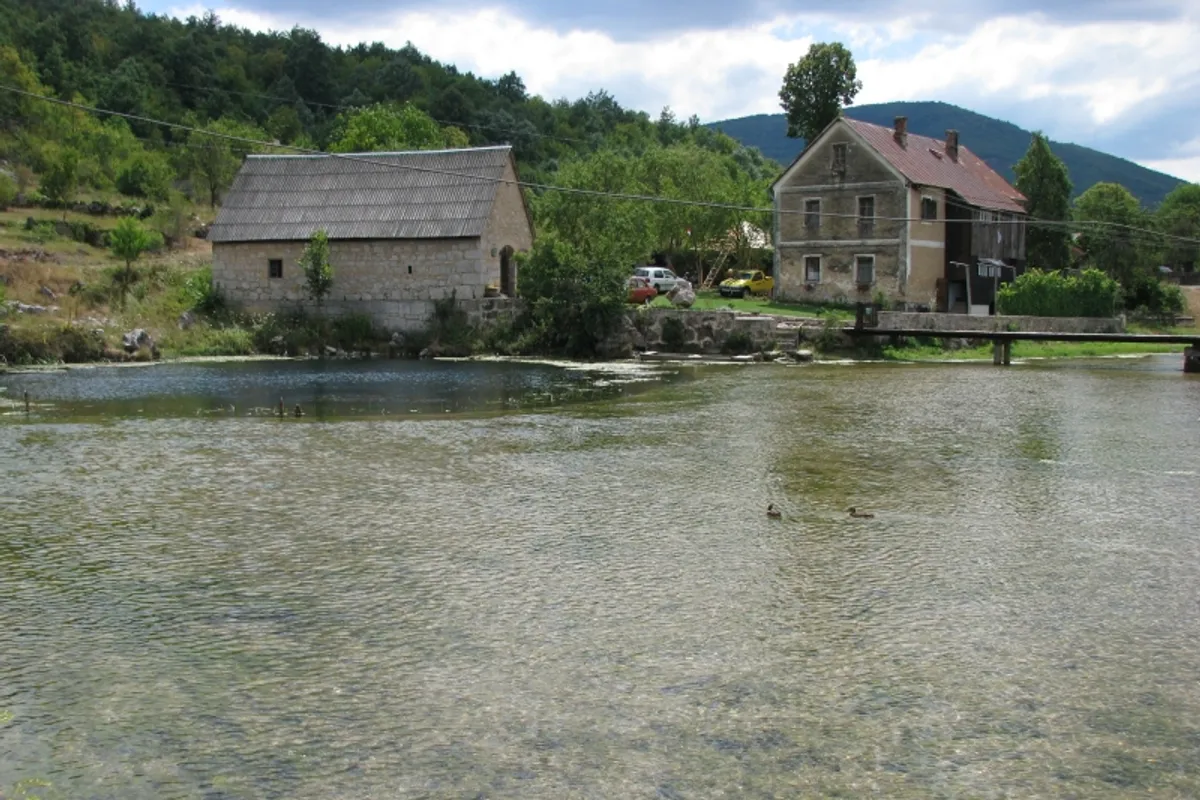
Residents of Lika can breathe a sigh of relief. The water at the Gacka spring and in the river itself is safe for drinking, despite the fact that PFAS compounds, also known as 'forever chemicals,' were found in groundwater downstream from the illegal waste dump in Gospić. This was confirmed to Slobodna Dalmacija by retired toxicologist and former director of the Croatian Institute of Toxicology, Zdravko Lovrić.
Lovrić commented on the situation at the illegal hazardous waste dump located within the former 'Velebit' industrial complex in Gospić. He emphasized that such a dump, like similar ones at other locations, poses a potential threat to human health and the environment, and that the waste should be removed as soon as possible and the site remediated.
Rushed Remediation Could Worsen the Situation
However, he warns that the remediation must be carried out properly to avoid further deterioration. "Any site remediation requires a risk assessment for the surrounding population and the immediate environment due to delayed effects on human health. The worst possible approach is haste, which is why a detailed intervention plan is needed to eliminate all potential risks," Lovrić stressed.
PFAS Compounds: Persistent, but Not Forever
Speaking about PFAS compounds, perfluoroalkyl substances, Lovrić explained that they belong to a large group of several thousand chemicals that can persist in nature for decades. "These are persistent substances-not forever-that degrade extremely slowly in the environment. They accumulate in living organisms and can harm human health and ecosystems," he said.
The key point, he emphasizes, is that PFAS are naturally present in the environment, and their harmfulness depends on the concentration in the medium we come into contact with, specifically drinking water.
Authoritative Samples Are from the Spring, Not the Landfill
Lovrić warned about the confusion that has arisen in the media. "The values circulating in the media are PFAS concentrations from samples taken from a piezometer right next to the landfill, not from the water that is drawn for drinking. Therefore, the authoritative values are those from water samples at the spring and in households," he clarified.
He added that not all PFAS are harmful to human health. "According to the findings in the piezometer samples, no PFAS that would seriously threaten human health was found," the toxicologist claims.
In conclusion, Lovrić stated that the findings of the Institute of Public Health clearly show that concentrations at the Gacka spring and in the river itself are below the maximum permissible levels for drinking water. "Given the findings of the Institute of Public Health, residents of the area can rest easy and consume water for personal use normally," he concluded.