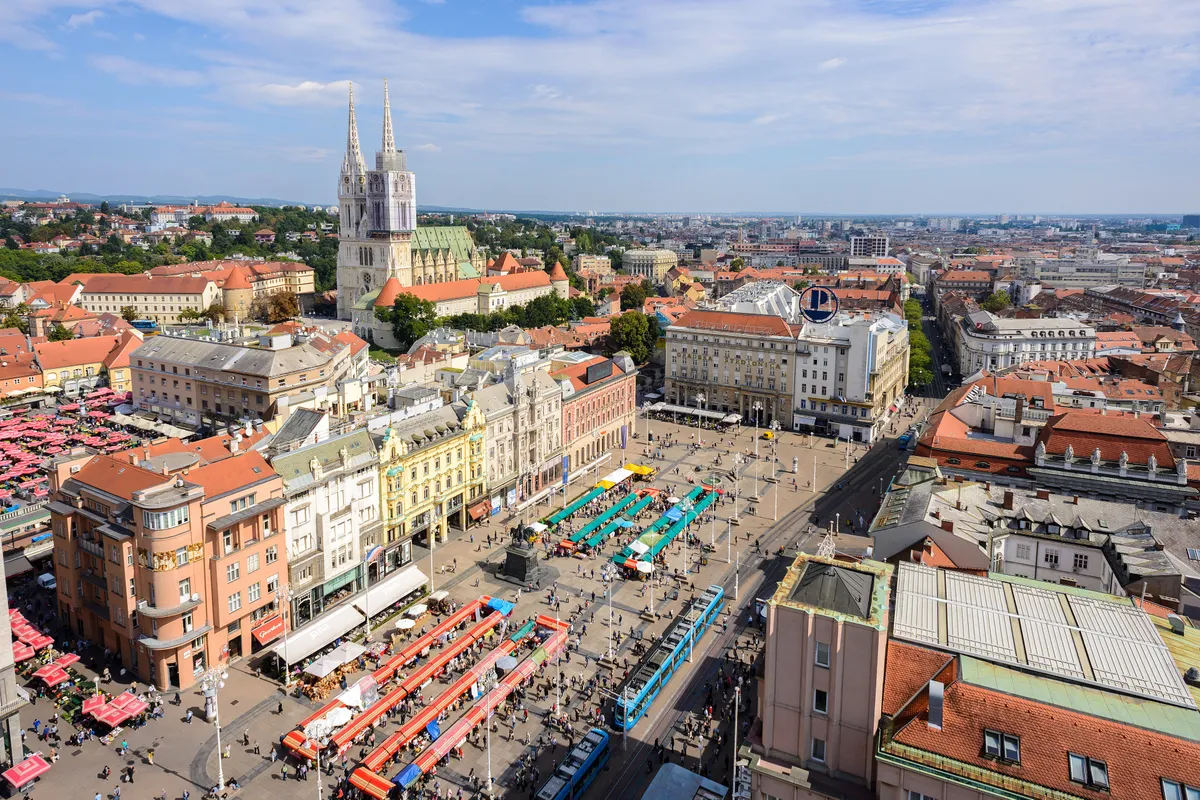
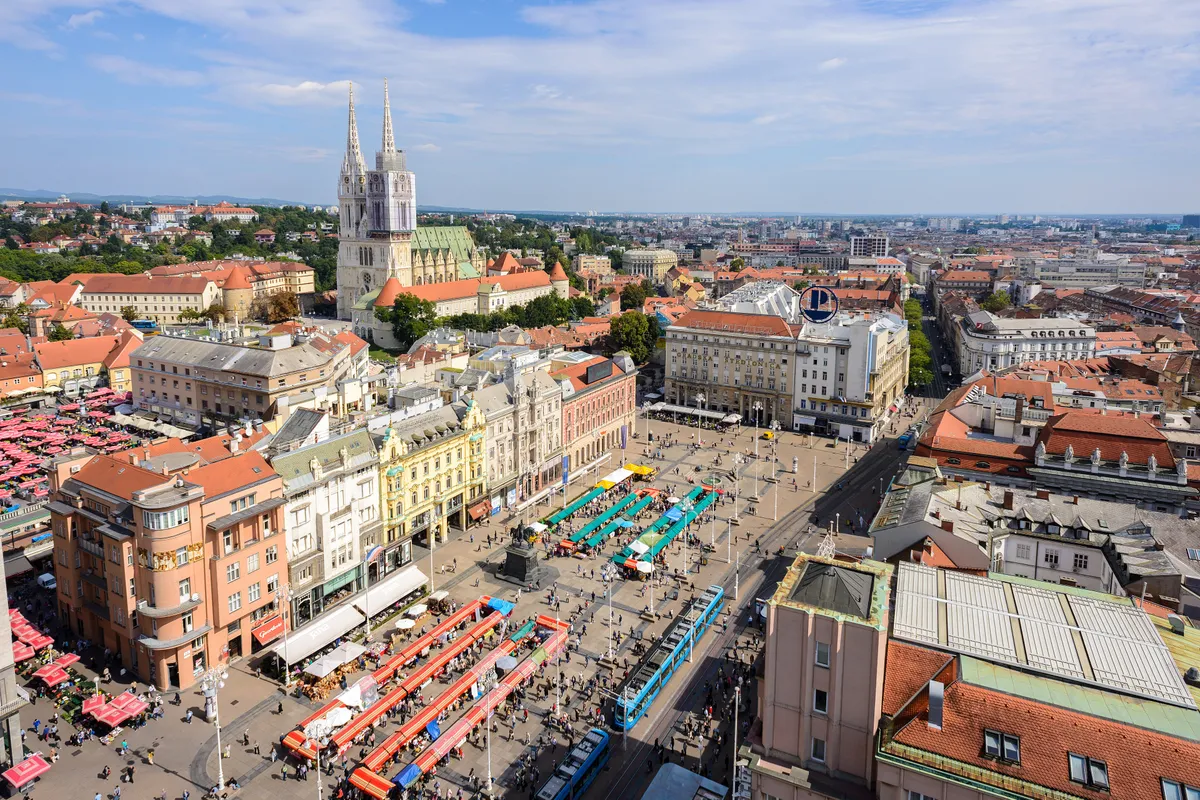
After months of work and scaffolding, one of the most recognizable buildings on Ban Jelačić Square is once again visible to Zagreb residents and their guests. The renovation of the monumental façade of the former City Savings Bank, designed by architect Ignjat Fischer, has been completed, and its restored appearance already drew the attention of passersby on Saturday.
The project, worth 1.6 million euros, has restored the luster to the façade of a building considered one of the city's symbols. Behind its walls lies a rich history dating back to the 1920s, with the City Café on the ground floor holding a special place in the hearts of many.
More Than a Bank and a Café
Construction of the City Savings Bank building began in 1924, with most of it completed by 1929. Work on certain parts continued until 1939. As early as 1932, the City Café opened its doors, which contemporary newspapers hailed as "the most modern café in all of Europe."
In the older part of the building, built in 1925, there was also the City Cellar establishment. In addition to commercial spaces, the building offered apartments for citizens. "The building included, alongside business premises, apartments for citizens and spaces for the City Café and City Cellar. The area intended for banking operations features characteristics of neoclassicism and art deco," stated on the pages of Zagrebačka banka, whose origins are tied to the City Savings Bank, which began operations in 1914.
Ownership of the building today is divided between Zagrebačka banka, the City of Zagreb, the company Centar Gradski podrum, and private owners.
A Square That Changed Its Face
The current appearance of Ban Jelačić Square is the result of long-term transformations. Art historian Irena Kraševac described how the square was once provincial, with single-story buildings and the Harmica fair. "The city was administratively unified in 1850, when Zagreb became a single entity after the municipalities of Gradec, Kaptol, and the city center merged, and for many in my profession, that is the true date of the founding of the city of Zagreb," Kraševac explained.
She added that with the Croatian-Hungarian Settlement of 1868, Zagreb became the capital, which began to raise awareness of its importance, leading to the construction of the Academy and the University, and Ban Jelačić Square began to take on the appearance of a main square from a small plaza. A major obstacle to further development was the Medveščak stream, which until 1898 crossed Bakačeva Street and continued toward the Sava River. Its relocation removed one of the key barriers to the development of that part of the city.
A Masterfully Measured Space
The interior of the City Café deserves special attention, and its original design was described by art historian Marina Bagarić, who has studied the work of architect Fischer. "Ignjat Fischer achieved the impression of a purified monumental yet cozy and unpretentious space with a few stunning elements: large columns, an impressive staircase, and the shape of the galleries. Through masterfully measured proportions and relationships of these elements," Bagarić emphasized.
Thanks to the completed renovation, the City Savings Bank building now once again captivates attention with its restored façade, worthy of one of the most important locations in Zagreb.