Zelensky: We Have Fewer Anti-Ballistic Missiles in 2026
Ukrainian president warns that monthly deliveries from the U.S. have declined, while South Korea, Japan, and Israel have yet to provide air defense support.
Ukrainian president warns that monthly deliveries from the U.S. have declined, while South Korea, Japan, and Israel have yet to provide air defense support.
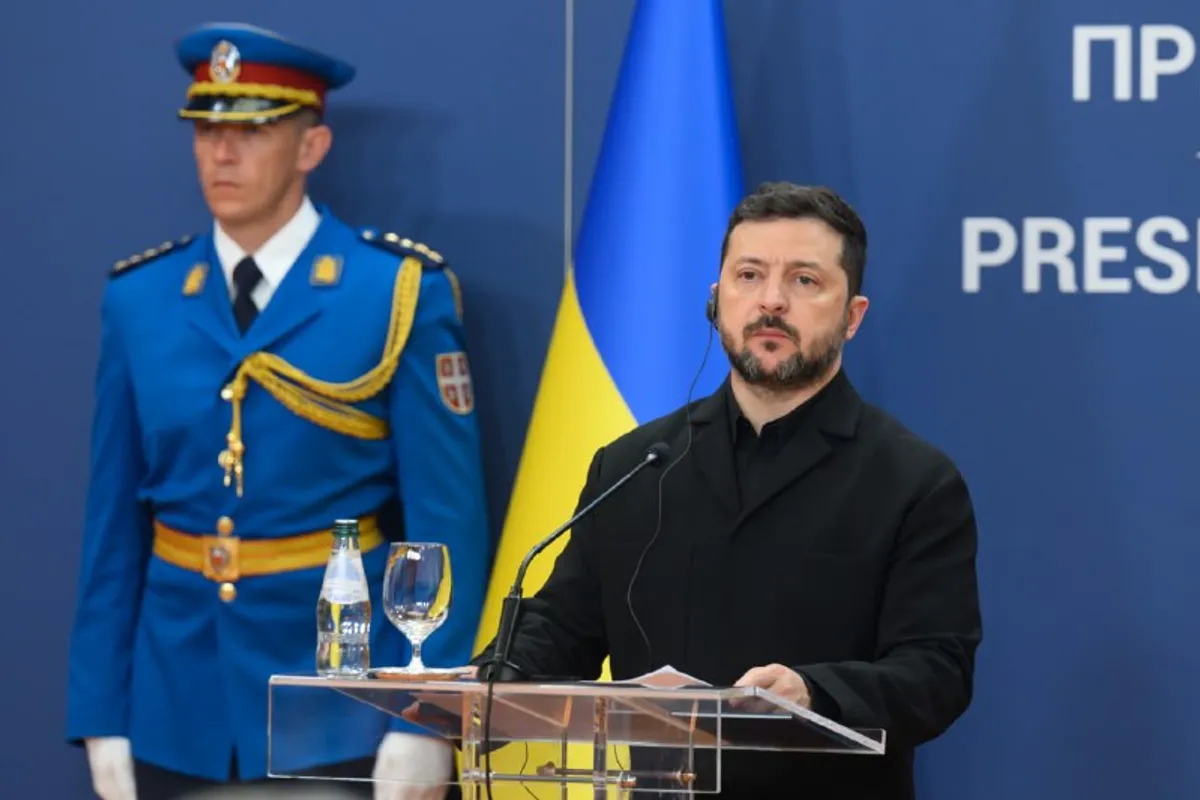
Since the early days of the war, Ukraine has faced a relentless struggle to protect itself from ballistic missiles, and President Volodymyr Zelensky on Friday openly admitted that key weaponry will be scarcer in 2026 than before. In responses to journalists' questions, published on his official channels, Zelensky detailed the global search for anti-ballistic systems and the challenges Kyiv confronts daily.
Zelensky confirmed that Ukraine has agreements with the United States under the PURL framework, but he made it clear that the quantities received are insufficient. "In 2026, there will be fewer of these missiles. In 2025, monthly deliveries were higher," Zelensky said. "Who has anti-ballistic missiles and systems? The manufacturer. That's primarily the U.S. Can they help? We're working on it. Every month. Will they give us missiles? Yes. Is that enough? No."
Beyond relying on Washington, the Ukrainian president also spoke about European allies. He specifically highlighted Germany and Poland as countries that possess the necessary systems and have so far provided substantial assistance. "With all due respect and gratitude to the German side, they have indeed helped. Poland has also helped. But I speak frankly," he emphasized.
He added that he continues to cooperate with the Nordic countries and the Netherlands, which "help a bit," and that he communicates daily with European and Middle Eastern nations to secure additional aid packages beyond the U.S. agreement. "We've simply reached a point where all our institutions must work on this. Not just the president. Everyone must work. Otherwise, there won't be enough missiles," he warned.
Zelensky also revealed that certain countries that could help have not done so so far. "South Korea and Japan could also help. Have they helped us during this war with air defense? No. In accordance with their domestic legislation," he stated. Regarding Israel, he said Ukraine would be ready to purchase air defense systems, but that this option is currently unavailable, although the two countries are in dialogue.
Although the topic has no direct Croatian component, the warnings from Kyiv resonate across the European continent. As a NATO and EU member, Croatia closely monitors the dynamics of military aid to Ukraine, as it directly affects the stability of the alliance's eastern flank and the broader security architecture of Europe. Zelensky's appeal comes at a time when discussions are underway within the EU about long-term defense strategy and joint arms procurement.