The placement of garbage bins on Ban Jelačić Square is neither a coincidence nor a municipal error, but a carefully designed move, claims columnist Boris Beck in an article published on the portal Narod.hr on Sunday, August 2, 2026. In his column for Večernji list, Beck develops the thesis that the so-called "Možemo culture" is organized like a container-filled with money and emptied, with no real results other than ideological indoctrination.
Garbage Dumps as Symbols of Triumph at Historical Sites
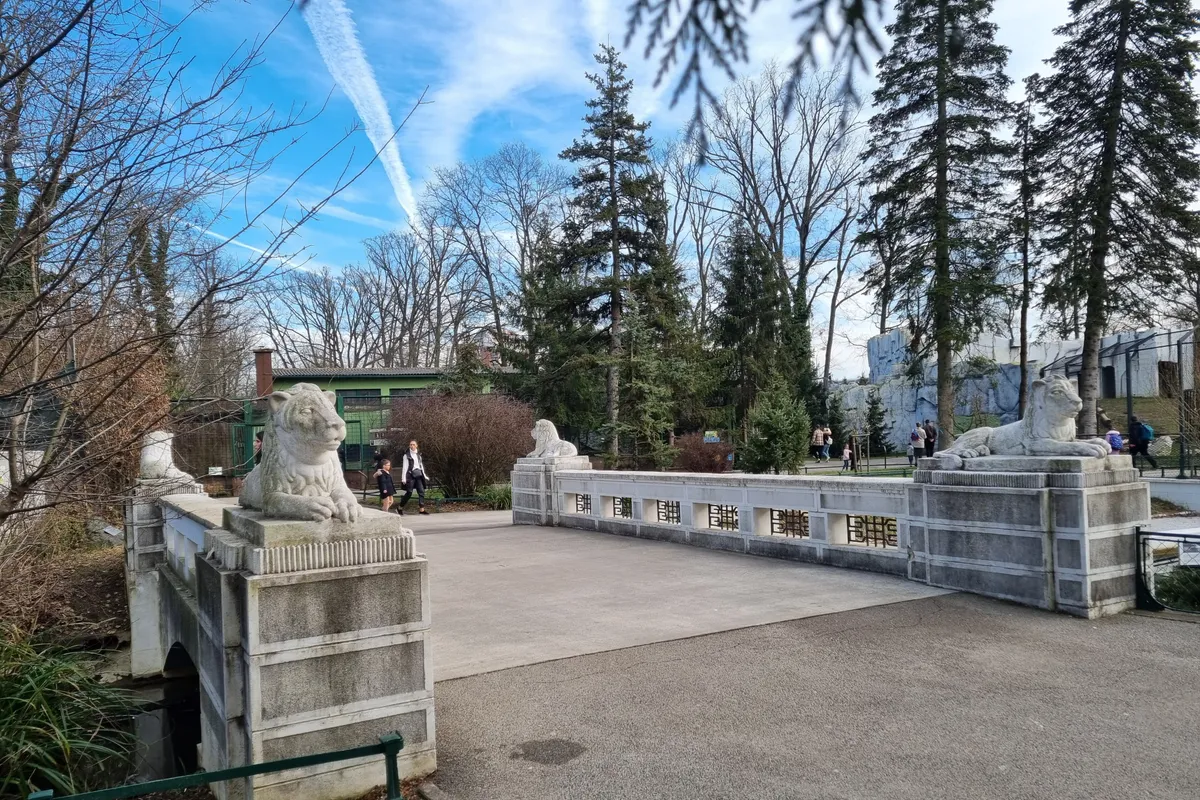
Beck lists a series of Zagreb locations where waste containers have appeared. Among them are Kaptol Square in front of the cathedral, the area in front of Palainovka beneath Popov Toranj, the romantic Ilirski Square, and Masarykova Street in front of the Kallina House. Containers have also been placed in front of the monumental facade of St. Peter's Church, next to the 18th-century house of the Kaptol gardener in Vlaška Street, on Zrinjevac, Strossmayer Square, and at the very entrance to the Zrinski family house in the Upper Town.
"There is no beautiful, historical, unique, or sacred spot where a garbage dump hasn't been shoved," writes Beck, drawing a parallel with how former U.S. President Donald Trump "shoved himself into the footage of the Spanish national team after winning the World Cup." According to his interpretation, what were crucifixes to Catholics in history and Partisan monuments to communists are now garbage dumps to the city government-a sign of triumph that must be placed at the most visible points.
Funding Ideological Projects
While empty signifiers intended for utilitarian function are placed in public space, Beck claims that hundreds of thousands of euros are being diverted to fund ideological projects. He refers to a network of like-minded individuals organized into associations of collaborators, friends, partners, and relatives, whose activities-murals, actions, concerts, performances-leave no material traces. The columnist reminds that one of the associated associations is literally called Kontejner (Container), suggesting that the real containers are just a "smokescreen."
"The false god of money has taken the place of the true God," Beck says in his column for Večernji list.
Jakuševac as an Archaeological Site of Suppressed History
In the second part of the column, Beck turns to the Jakuševac landfill, calling it "the largest archaeological site of suppressed contemporary history." All personal and collective garbage of the past half century-from picture books and toys to notebooks and letters-lies there in negative, the author writes.
In a series of associations, he lists what could be found at Jakuševac: "an old scribbled notebook of Cesarić, the bowstring of Tonko Ninić, the bald brush of Edo Murtić, Džamonja's rusty nails, Toma Gotovac's underwear, Šuvar's White Book, the memoirs of Jakov Blažević, hairs from Račan's beard, towels Tito wiped himself with, perhaps even a Tuđman napkin." There is also "international garbage": Keith Richards' guitar pick, John Cage's empty notebook, George W. Bush's tissues, and Tina Turner's sanitary pads.
Museum of Menstruation and an Ironic Proposal
Beck ironically suggests that excavating Jakuševac could result in the world's first museum of menstruation, given the "half century of tampons and pads" found there. He reminds that Mayor Tomislav Tomašević came to power from the Institute for Political Ecology, suggesting that preserving Jakuševac and opening it to the public with guided tours would be a "first-class political-ecological action."
"Our young people who leave writing to machines have renounced thinking," Beck warns in the text.
The column concludes with the observation that there is no end to pushing underground containers into historically significant places, adding that communist monuments "would have been spared this horror," but unfortunately, few of them remain. The entire text ends with a rhythmic string of words that evoke the contemporary mindset: "House, house, house, beach, beach, beach, terrace, terrace, terrace, café, café, café."