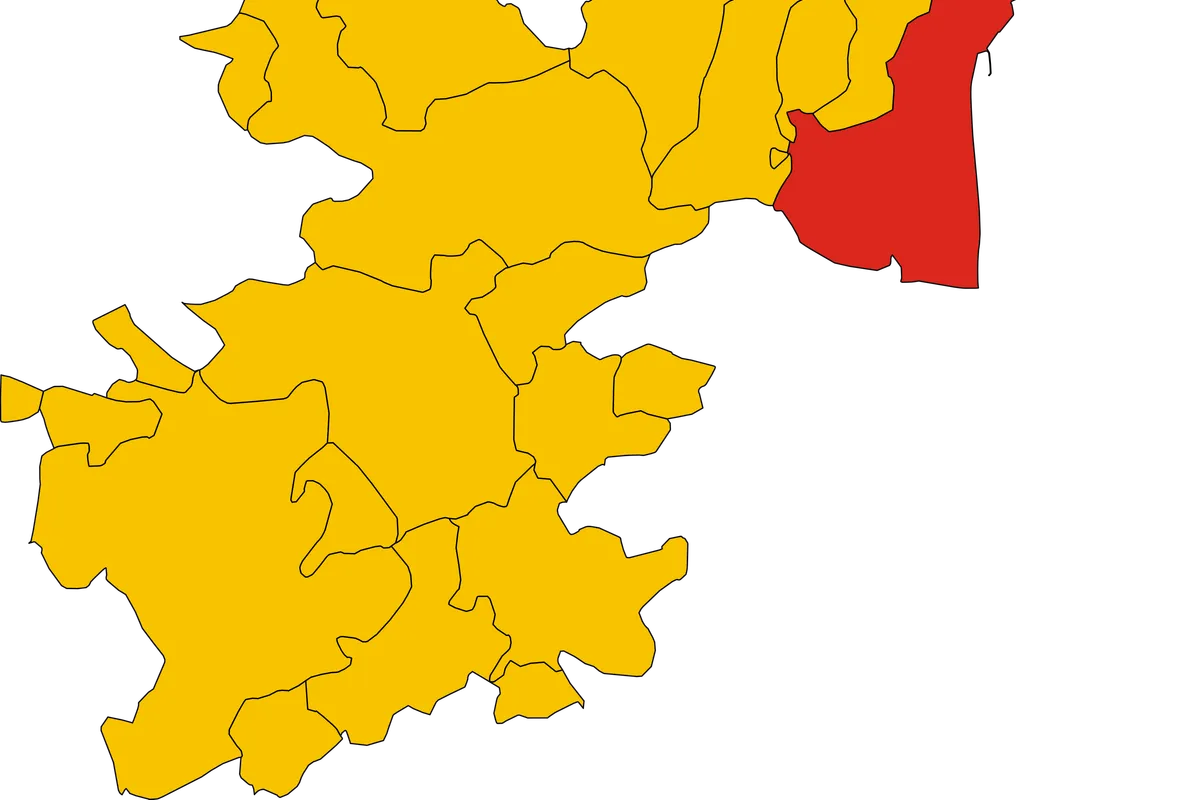
The eruption of Mount Etna in Sicily, now in its sixth consecutive day, caused severe disruptions to air travel on Wednesday at the height of the summer tourist season. Catania-Fontanarossa Airport was forced to suspend all arrivals and departures until 6 p.m., according to Euronews.
Flight tracking data shows that around 55 departing flights were canceled, adding to the roughly 388 departures canceled since the eruption began up to the previous day. Dozens of other flights were delayed or diverted to regional airports in Palermo, Trapani, and Comiso. Operations at Comiso were also suspended for several hours on Wednesday morning until 10 a.m., precisely due to volcanic ash, after which traffic resumed.
According to airport operator SAC, between August 8 and 11, around 700 arriving and departing flights were canceled, with another 52 expected to be canceled today. More than 250 aircraft have been diverted to other Sicilian airports; just yesterday, about fifty landed in Palermo and 22 in Trapani, while over a hundred flights have landed in Comiso since the disruptions began. SAC confirmed that operations were halted due to the spread of volcanic ash: "Due to the eruption of Etna and the ash cloud in the atmosphere, the closure of airspace in the southwest sector C1 has been extended, and sector B3 has also been closed. As a result, all departures and arrivals at Catania Airport are suspended until 4 p.m. tomorrow." The airport management urged passengers not to come to the airport without prior verification: "We ask passengers to check the status of their flight with the airline before heading to the airport."
Disruptions Felt Beyond Italy
Etna, Europe's most active volcano, is located about 220 kilometers north of Malta. Its impact has crossed Italian borders. Ash clouds have forced aircraft landing and taking off from Malta to alter routes, and disruptions have also affected local celebrations. Fireworks scheduled for Tuesday, on the feast of Saint Mary in Attard, were postponed because the launch site is near the runway approach path.
The Volcanic Ash Advisory Center (VAAC) in Toulouse reported that the ash cloud continues to move south and southwest. According to a bulletin released Tuesday evening, the highest concentration of ash remains over Sicily, while lower levels were recorded between eastern Malta and even northern Libya.
Spectacular sights of lava flowing down the slopes have also attracted numerous tourists eager for a close encounter with the eruption. Local guides say they are overwhelmed with calls. "Everyone wants to come see the lava flow; everyone is drawn to this unique beauty," said Daniele Perricelli, a 41-year-old local guide. His group, Guide Etna, leads several dozen visitors to the volcano every evening, but is currently receiving about 300 requests a day, three times more than an average summer day. Ernesto Maria Magri, another local guide, called it a "tourist eruption" that attracts "many people" because it can be observed with relative safety.
Minister: "It's Not the Volcano in the Wrong Place, but the Airport"
Catania Airport, just a few kilometers from the volcano, has been closed multiple times in recent weeks. These repeated disruptions have reignited political and infrastructural debate. Minister for Civil Protection and Maritime Policies Nello Musumeci has weighed in.
"What has been happening in recent days at Catania and Comiso airports, with cancellations, delays, and severe disruptions for thousands of citizens and tourists in the middle of the summer season, brings back to the forefront a problem that Sicily has known for a long time," Musumeci told Euronews.
The minister noted that he had warned about this issue as president of the province of Catania in 1999, when he proposed a plan for a new airport that did not receive support. "As early as 1999, as president of the province of Catania, I pointed out the limitations of Fontanarossa Airport and its particular vulnerability due to its proximity to Etna," he said. "We didn't just raise the issue: we included in the provincial spatial plan a proposal to relocate the airport. We also commissioned a preliminary study for a new airport on the plain between Catania and Enna, designed to serve seven of the island's nine provinces."
Musumeci added that he had revived the idea as regional president but faced opposition from the airport operator and indifference from local authorities. "That idea of mine received no support," he concluded. "The events of recent days show only one thing: it's not the volcano that's in the wrong place, but the airport."
According to Italy's National Institute of Geophysics and Volcanology (INGV), dense lava flows are emerging from two vents at altitudes of 2,360 and 2,750 meters, and a new vent has opened at around 1,900 meters. Etna, over 3,300 meters high, is closely monitored due to its frequent eruptions.