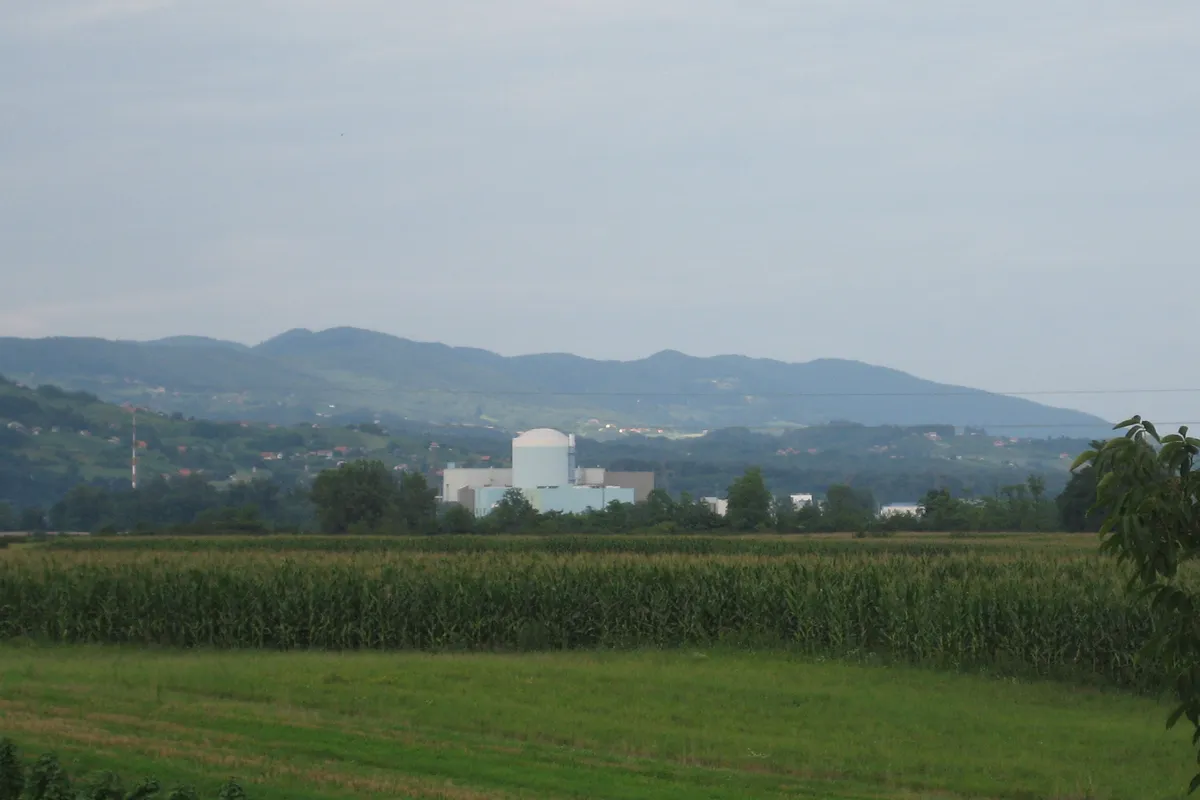
Europe is facing one of the most severe hydrological crises in recent history, driven by prolonged heatwaves and a lack of precipitation. The consequences are far-reaching and dramatic, with the energy systems of Central and Southeastern European countries particularly hard hit. As Croatia braces for the peak of the heatwave with red weather alerts in effect, key rivers such as the Danube, Drava, and Sava have reached historically low levels, directly threatening the operation of nuclear power plants, including the Krško Nuclear Power Plant (NEK).
Krško Nuclear Plant Still Operating at Full Capacity, but Warning Issued
The Krško Nuclear Power Plant is currently operating at full capacity, but serious warnings have been issued by its management. Due to the low flow rate and high temperature of the Sava River, NEK has already activated its cooling tower system to comply with strict environmental limits. "We are approaching conditions under which, due to environmental restrictions related to the Sava River, it will be necessary to reduce reactor power, and in the worst case, gradually shut down the plant," announced NEK's management.
How NEK Cools Its Reactor and Why Shutdown Is a Threat
NEK provided a detailed explanation of the problem's mechanics to Poslovni dnevnik. "The river's flow rate is low due to the lack of precipitation, and the Sava's temperature is currently still slightly lower than during the peak of previous heatwaves. As previously explained, NEK, under low Sava flow rates and high temperatures, uses its cooling tower system for additional cooling in the third cooling circuit to ensure compliance with environmental limits. Due to the increased auxiliary power consumption for the cooling towers and the reduced thermodynamic efficiency of the secondary circuit-which depends on the cooling water temperature of the third circuit-the plant's efficiency and output power decrease, consequently reducing the amount of electricity generated. NEK must ensure that the daily average temperature of the Sava at the point of complete mixing downstream of the Brežice Hydroelectric Power Plant does not exceed 28°C, and that the average daily temperature increase does not exceed 3°C. We will continue to adapt the plant's operation to conditions and ensure compliance with all prescribed limits," NEK stated.
Cascading Energy Crisis in the Region: Hungary Shuts Down Paks, Romania Mines the Danube
The crisis is not isolated to Slovenia and Croatia. In Hungary, the situation has become dramatic. According to Poslovni dnevnik, Hungary had to shut down the Paks nuclear power plant for the first time in 44 years-a facility that normally generates more than a third of the country's electricity. The reason is the physical impossibility of pumping water from the Danube, as the intake pumps have been left above the water level. Hungarian Prime Minister Peter Magyar issued an extraordinary appeal to citizens and businesses to limit electricity consumption as much as possible. Jutarnji list, meanwhile, reports that the Paks plant is operating at minimum capacity, suggesting the situation is rapidly evolving. The Hungarian government has also banned evening rail freight traffic.
In Romania, the military conducted controlled explosions in the Danube, blasting rocks and sinking a barge to increase water flow toward the Cernavoda nuclear power plant, which provides about 20% of Romania's electricity. At the same time, automotive giants Ford and Dacia have suspended production for two weeks to save electricity. In Serbia, the Đerdap I and Đerdap II hydroelectric plants are operating at only 20-30% capacity, which President Aleksandar Vučić described as a serious blow to the country's energy system.
Croatia Under Red Alert, Danube and Drava at Historic Lows
Croatia is in the grip of a severe heatwave, with the State Hydrometeorological Institute (DHMZ) issuing red weather alerts for most of the country. Air temperatures are climbing to 40°C, and nighttime temperatures on the Adriatic are not dropping below 25°C. According to forecasts, the peak of the heatwave is yet to come, and the entire country will be under a red warning on Wednesday, except for the Dubrovnik region, which will be under an orange alert.
The water levels of the Danube and Drava in Croatia have fallen to historic lows, while the Sava is only a few tens of centimeters above its minimum. Near Bezdan, where the Danube enters Serbia, the water level is approaching the negative record from 1909. River transport, vital to the European economy, is facing collapse. A single river cargo vessel carrying a thousand tons typically replaces as many as 40 trucks, but now ships across Europe are running aground or forced to sail with minimal loads. In Slovakia, the lowest Danube flow since 1876 was measured near Bratislava, while in Bulgaria, tourist cruise ships are getting stuck in shallow waters. German industrial giants have had to cut production due to a lack of raw materials that normally arrive by river.
Europe in a Squeeze: Rhine and Po at Record Lows
The crisis is not limited to the Danube basin. In Germany and the Netherlands, 44% of measuring stations on the Rhine are recording extremely low water levels, creating serious supply bottlenecks and drastically increasing transport costs. Austria is under red alerts due to temperatures above 40°C and record heat-related mortality, while in the Czech Republic, half of the measuring stations report extreme drought. In northern Italy, the Po River has reached a historic low, and the reduced river flow has allowed saltwater to penetrate deep into the riverbed, destroying the ecosystem and preventing irrigation. Meteorologists are not forecasting any relief, and with the heatwave continuing with temperatures above 40°C across much of Europe, further deterioration is expected.