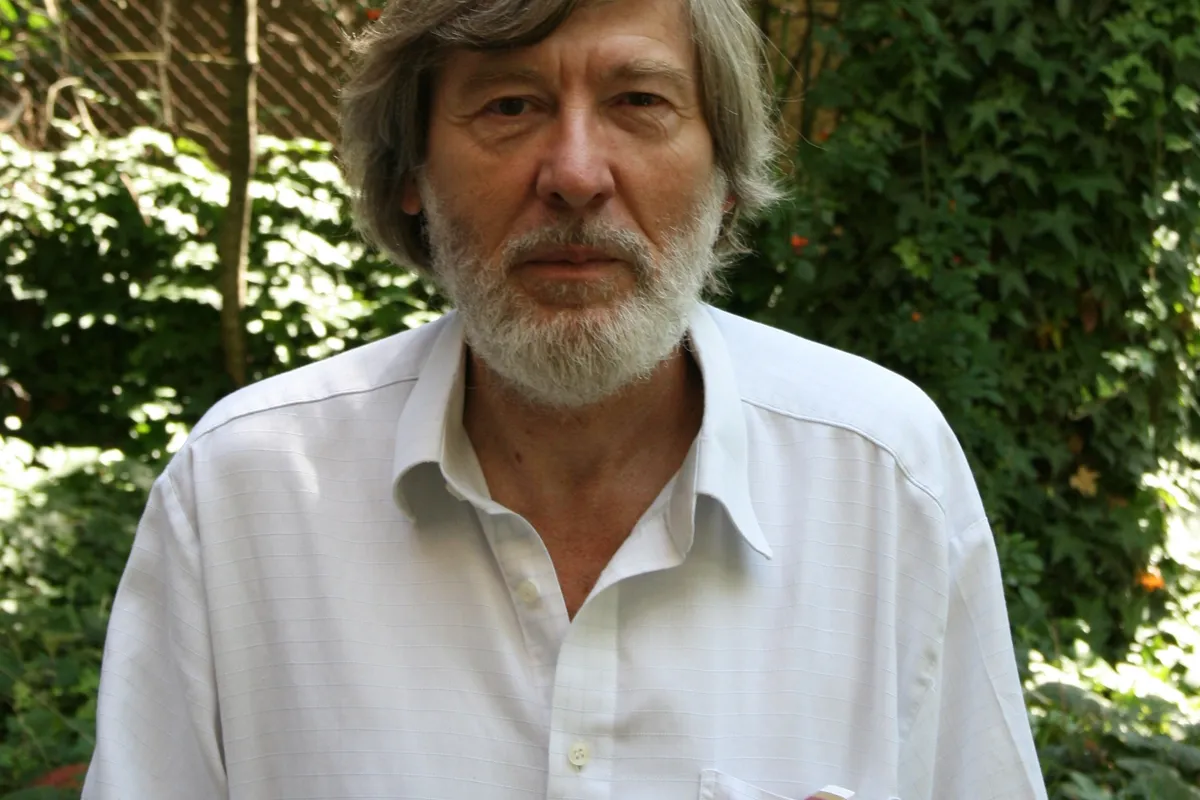
Columnist Hrvoje Hitrec, in his latest column published on August 6, 2026, on the portal Narod.hr, fiercely attacked last week's commemoration of July 27 in the town of Srb, which he describes as a celebration of the 1941 massacre of Croats. Hitrec believes this is a continuous provocation carried out with the tacit approval of current Croatian politics.
Bloody July 1941 and Today's Celebrations
Hitrec reminds that on July 27, 1941, joint Chetnik and Partisan forces committed mass atrocities against the Croatian population in the Srb area and its surroundings. In Boričevac, he states, "everything living was slaughtered," while the parish priest Gospodnetić, a priest from the island of Brač, was killed in a particularly cruel manner. That date, the columnist points out, was later renamed in communism as the "day of the uprising of the people of Croatia."
"Last week began dramatically, with the celebration of the massacre of Croats in Srb and its surroundings in 1941, shaped in communism as the day of the uprising of the people (plural) of Croatia," wrote Hitrec. He particularly criticized politician Pupovac and his associates, saying: "Pupovac and company are simultaneously trying to falsely present the position of the Serbian minority in Croatia, provoking and challenging, so much so that they occasionally participate in the Croatian Government."
The columnist further claims that analyses showing minority protection in Croatia is greater than anywhere else in Europe are systematically silenced, which he calls "Serbian silence." Provocations like the one on July 27, Hitrec explains, serve to elicit reactions from Croats that are then served up in the "Pupovac kitchen" as Ustasha-like behavior and delivered to Belgrade and Moscow.
HTV Promoted the Gathering and Speakers
Hitrec also directed his criticism toward Croatian Radiotelevision (HTV), which he claims promoted the gathering and its speakers in the central news program. He compared two segments aired that evening: one about underground waste containers on Ban Jelačić Square in Zagreb, which professionally presented both sides, and another about the celebration in Srb, which, he claims, completely omitted historical context and dissenting opinions.
Hitrec faults HTV for not inviting any Croatian historian to the studio to explain the background of the 1941 events, which, in his view, serves young viewers a distorted picture of history. He also reminded that similar horrors were repeated in 1991.
From Međugorje to Moscow and the "White Paper"
In the column, he also touched on the desecration of the statue of the Blessed Virgin Mary in Međugorje, which occurred last week. According to the portal, the perpetrator is allegedly a Pole, which Hitrec doubts. He praised the quick reaction of the Church and restorers and added that "we cannot have two black Madonnas," alluding to the one in Marija Bistrica, whose history he described in his "Croatian Legends."
Hitrec also mentioned Russian interference, stating that "the criminal Putin deigned to say a few sentences about the need for Russian protection of Serbs," which he considers ominous given the experiences with Ukraine. He also noted that SNS and its "men of letters" are allegedly writing a "white paper" on the endangerment of Serbs, with a list of undesirable authors and phenomena, which will then be translated into Russian.
The Passing of the Director of "Smogovci"
In the second part of the column, Hitrec dedicates his attention to the late director Milivoj Puhlovski, best known for directing the cult series "Smogovci." He recalled their long collaboration dating back to the 1970s, including work on the film "S.P.U.K." for which Hitrec revised the screenplay.
He particularly highlighted Puhlovski as a key figure in the success of "Smogovci," a series filmed from 1982 to the late 1990s that became a social phenomenon. "The success of the television 'Smogovci' is largely due to the skill of Milivoj Puhlovski," emphasized Hitrec, adding that the director was often unfairly forgotten because he lacked the talent or will for self-promotion.
He also praised HTV for airing Puhlovski's film "Živi bili, pa vidjeli" on Friday evening, co-authored with Gamulin. He described the film as a sharp and playful work about urbanism and the socialist construction of dormitory neighborhoods, with an unforgettable final scene of a bed being driven on a truck through Zagreb. "May he rest in peace," concluded Hitrec, expressing condolences to his wife Marina Šur Puhlovski, a writer, and his daughter Mirta, a director.