The Adriatic Has Already Changed: We Must Make a Radical Turnaround
Marine biologist Martin Pfankuchen warns that chemicals and pollution pose a greater threat than rising temperatures, with the northern Adriatic warming by more than 2.7 degrees.
Marine biologist Martin Pfankuchen warns that chemicals and pollution pose a greater threat than rising temperatures, with the northern Adriatic warming by more than 2.7 degrees.
The Adriatic Sea is undergoing significant changes that are no longer just a subject of scientific debate but a reality affecting marine life and the ecosystem. Marine biologist and advisor at the Ruđer Bošković Institute, Martin Pfankuchen, warned on N1 television's show Novi dan that the Adriatic is warming faster than all European seas, but also that there is an even more serious problem than rising temperatures.
Pfankuchen emphasized that chemicals, pharmaceuticals, pesticides, and herbicides that enter the sea through stormwater and rivers pose a greater threat than warming itself. "A bigger problem than warming are chemicals, medications, pesticides, and so on that come through stormwater, rivers, and similar pathways. That is a much bigger problem," said Pfankuchen.
He explained that pollution destabilizes the ecosystem, making it more vulnerable to high temperatures. When the sea warms, organisms we don't want in the sea, such as fecal bacteria, often adapt and can take over the entire ecosystem.
Over the past fifteen years, the average temperature in the northern Adriatic has risen by more than 2.7 degrees, with warming accelerating particularly in the last seven to ten years. Pfankuchen noted that the middle and southern Adriatic, due to greater depth, better absorb temperature changes. "The deeper the sea, the more the effects of climate change are mitigated. In shallow depths, in bays, you see temperatures over 32, 33 degrees. That's where most swimmers are," he said.
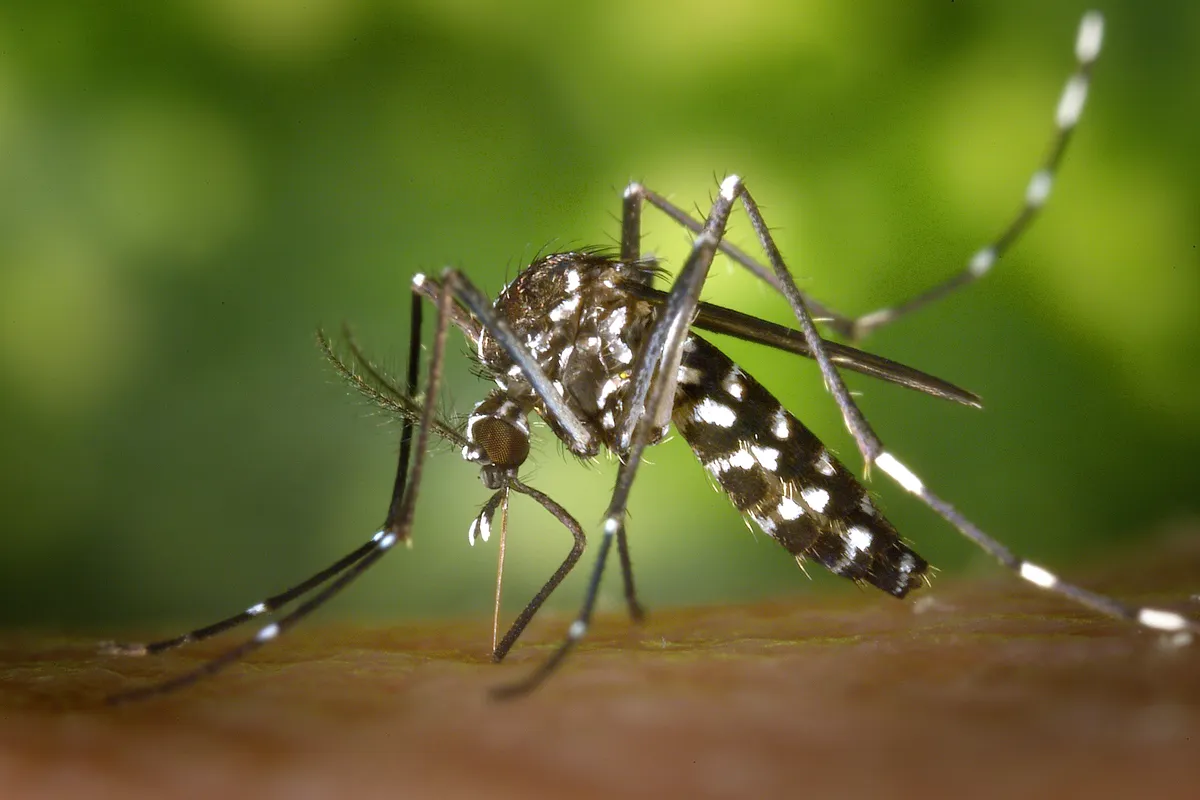
Due to the increasingly warm sea, the Adriatic is facing a process of tropicalization. Species that prefer warm water and previously would not have survived cold winters are now successfully adapting and spreading. Pfankuchen explained that the problem would not be as pronounced if the ecosystem were not already weakened by pollution. "It wouldn't be such a big problem if the entire ecosystem weren't weakened, so native species can't defend themselves against invasive species," he said.
Although lionfish and pufferfish are most often mentioned in the media, Pfankuchen warns that the most dangerous are microscopic, tiny species that invisibly alter the ecosystem. He confirmed that tropicalization is already visible in certain parts of the Adriatic, and the lionfish is a good indicator of these changes.
Despite concerning trends, Pfankuchen offered an optimistic note. "The good news is that we haven't seen species extinction, very rarely. As long as species are still present, there is a possibility for salvation," he emphasized. The biggest problem for fishermen and the fishing industry is precisely the destabilized ecosystem, which is crucial for fish nutrition.
For the Adriatic to recover, a radical turnaround in our relationship with the environment is needed. "If we made a radical turnaround, trying to release as few chemicals, medications, herbicides, and pesticides into the environment as possible, because everything we release into the environment ends up in the sea, then there is a possibility to stop this," Pfankuchen urged. He concluded that it all depends on whether environmental protection becomes a priority, because in that case, we are certainly capable of solving the problem.