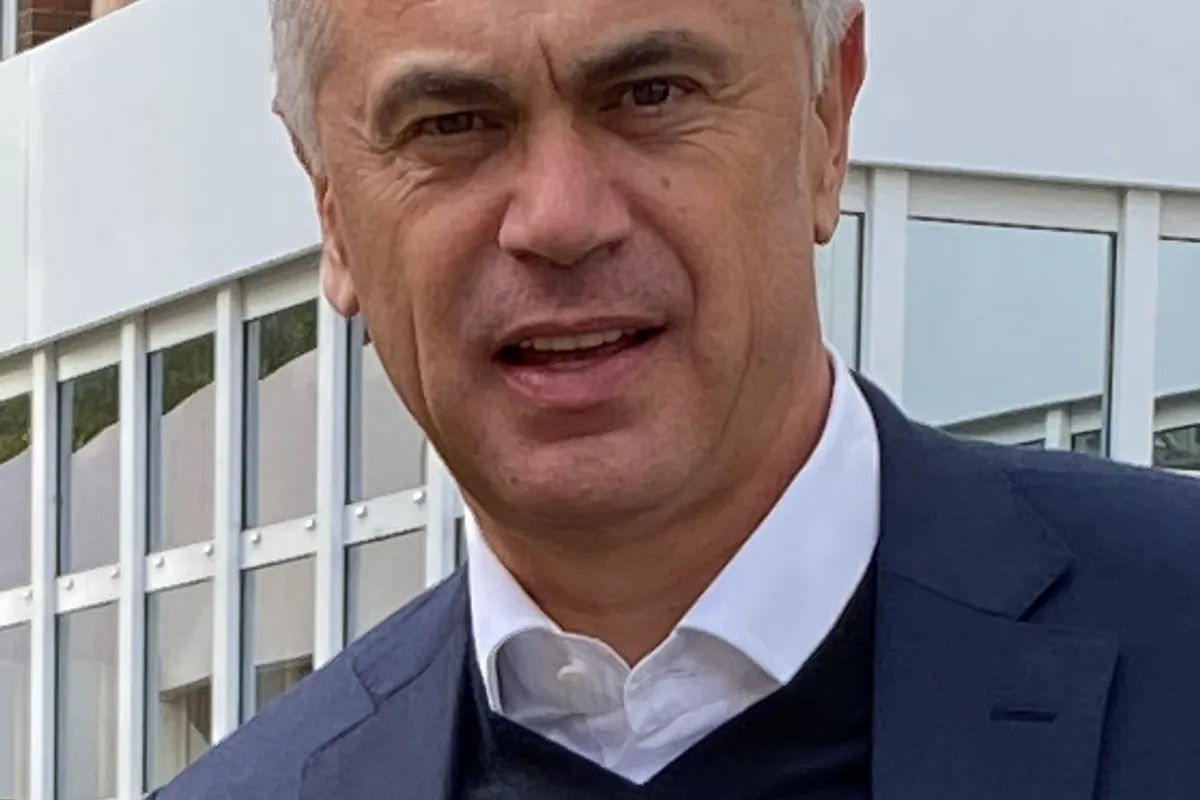
Miškulin and Janjić for N1: Speeches in Mrkonjić Grad Are Shameful Kitsch
Croatian historian and Serbian analyst agree that political abuse of history is regressive and dangerous, especially for Bosnia and Herzegovina.
Croatian historian and Serbian analyst agree that political abuse of history is regressive and dangerous, especially for Bosnia and Herzegovina.

Thirty-one years after the end of the military-police operation Storm, narratives about it still deeply divide the region, and this year's commemoration in Mrkonjić Grad showed how much history remains a hostage to daily politics. On N1 television, Croatian historian and sociologist Ivica Miškulin and political analyst from Serbia Dušan Janjić discussed this, sharply criticizing the rhetoric from that gathering.
Janjić did not mince words describing what could be heard at the commemoration of the anniversary in Mrkonjić Grad. "What happened last night was kitsch, shameful kitsch... We're talking about the speeches of both Vučić and Dodik," Janjić said for N1, adding that he believes "the war victims did not deserve this."
Miškulin echoed his words, also expressing regret over the messages sent. "To hear such things after 31 years, I can agree, it is deeply sad," he stated, describing the impression the event in Mrkonjić Grad left on him.
Janjić went a step further in his analysis, assessing that the messages from that gathering were not political but ideological in nature. "This was not a political speech; it was an ideological speech," he said, characterizing it as "very dangerous and regressive."
He particularly expressed concern about the potential escalation such rhetoric could provoke. "This could lead to an escalation of violence in Bosnia and Herzegovina," Janjić warned, pointing to the fragility of the situation in that country. He also added that today's narrative is different from that of ten or fifteen years ago, suggesting that the situation is worsening.
Miškulin, speaking from a Croatian perspective, emphasized that in Croatia there is no dilemma about the significance of the operation itself. "Storm is the culmination of Croatia's struggle for the integrity of the independent Croatian state. It is its, from the Croatian side, happy outcome," he said. However, he was equally clear when it came to the darker sides of wartime events.
"There is absolutely no dilemma that some Croatian military operations were accompanied by certain crimes," Miškulin stated. At the same time, he added that these crimes, in his opinion, "cannot be compared with Serbian crimes" and that they were not the result of pre-planned policy.
Both interlocutors also touched on the challenges faced by younger generations. Miškulin highlighted as the biggest problem the fact that young people increasingly believe simplified interpretations of historical events found on social media, while being less focused on serious reading and study of literature.
Janjić added that among young people in Serbia he notices a different attitude towards the wars of the 1990s than before, but also that it is necessary to work on education and the study of documents. What is needed, he believes, are conversations involving interlocutors from different perspectives.
At the end of the conversation, Miškulin concluded that Croatia's membership in the European Union had a transformative effect and expressed his belief that an accelerated European path for Bosnia and Herzegovina and Serbia would be positive for both countries.