Storm After 31 Years: A Key Victory
From the fateful operation that saved Croatia from partition to an annual fair showcasing the basest nationalist passions and ominous symbols.
From the fateful operation that saved Croatia from partition to an annual fair showcasing the basest nationalist passions and ominous symbols.
Thirty-one years have passed since Operation Storm, a military-police action that irrevocably changed the course of Croatian history and secured the state's survival within its internationally recognized borders. While its strategic significance is unquestionable, the way it is commemorated today is increasingly controversial. Instead of dignified remembrance, the celebration, according to Jutarnji list, is turning into a 'nationalist jamboree' and a platform for expressing the basest passions.
Operation Storm, which lasted only 84 hours, was a legitimate and exceptionally executed military action. It restored state sovereignty over most of Croatia's territory, which had been internationally recognized as early as January 1992. The action was indirectly and directly 'blessed' by the United States and the then European Community, thereby ending the war agony that began in August 1990 with the so-called Log Revolution.
The political significance of Storm is fateful. Had the then Z-4 plan been realized, Croatia would have received a para-state entity with a high degree of autonomy. Russian negotiator Vitaly Churkin then described it as 'a kind of state within a state.' This entity would have had the power to veto strategic decisions, such as NATO and EU membership. Fortunately for Croatia, the Krajina Serbs themselves rejected that plan. Without Storm, Croatia today would not be a member of the EU, NATO, Schengen, or the eurozone, but would, as noted, share the fate of the unstable Western Balkans.
The entity established from Belgrade, in the offices of Slobodan Milošević's regime, is described as criminal and criminogenic. Between 180,000 and over 200,000 Croats and other non-Serb civilians were expelled from its territory. It spanned more than a third of Croatia's territory, encompassing the Danube region, central Slavonia, Banija, Lika, and parts of Kordun and Dalmatian Zagora, with about half a million inhabitants.
During its four years of existence, numerous Croatian cities were shelled from areas under the control of rebel Serbs: Zadar, Šibenik, Gospić, Karlovac, Sisak, Osijek, Vinkovci, Slavonski Brod, and Županja. Zagreb was even rocketed twice. Many civilians perished in these attacks. The exodus of about 220,000 Serbs from 'Krajina' occurred because an atmosphere of 'flight' was created and evacuation was prepared, but also due to fear of revenge. Most Serbs lived in the free territory of Croatia. Before Storm, about a third of the Serbs from the RSK had already left for Serbia, along with about 50,000 from other parts of Croatia. Later, about 300,000 Serbs exercised their right to Croatian documents, and some returned.
Although the military part of the operation was carried out almost flawlessly, liberating 10,400 square kilometers-more than 18 percent of the state's territory-in just 84 hours, what happened after the action casts a shadow over the entire victory. Crimes against civilians, looting, and arson were committed. The greatest shame are the massacres in villages near Knin.
In Grubori, on August 28, 1995, six Serbian civilians, mostly elderly and disabled, were killed. A month later, on September 28, nine Serbs were executed in Varivode. No one has yet been held accountable for these acts. Until they are prosecuted, Storm, as emphasized, will carry a permanent stain.
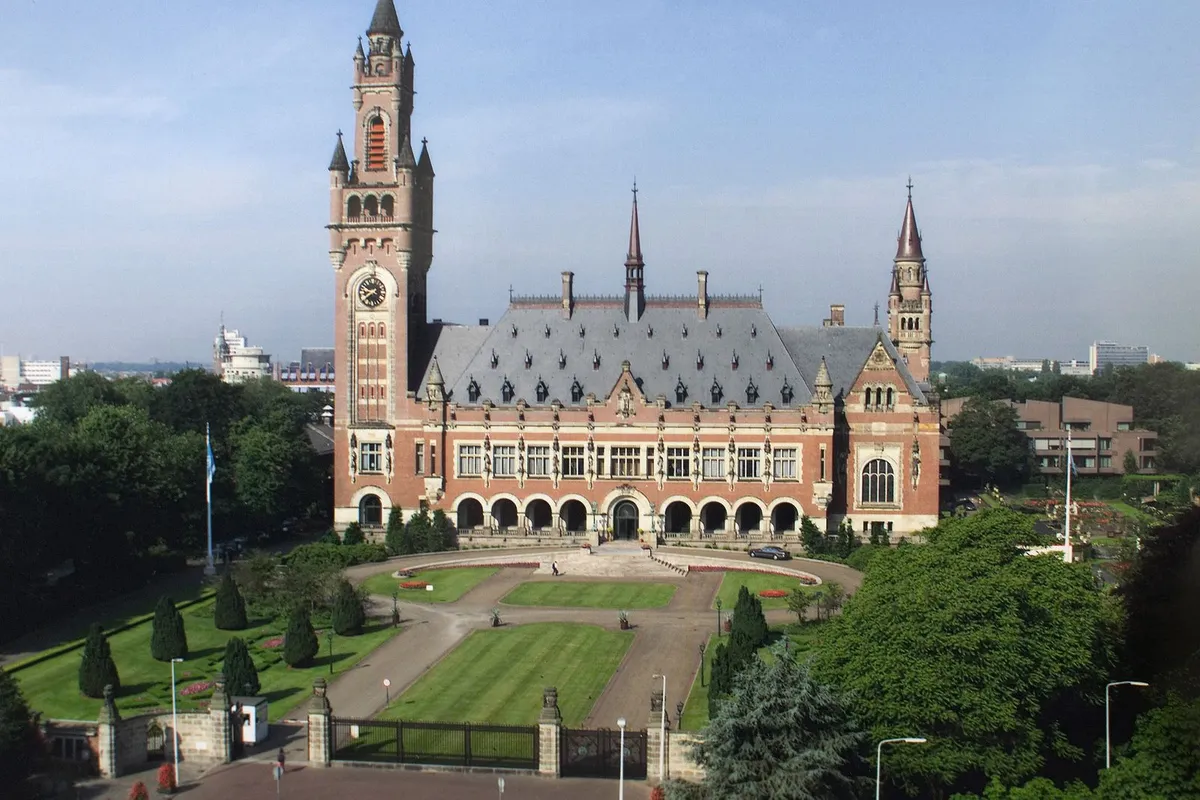
Although the right-wing political spectrum creates the impression that The Hague is a 'Croatian prison,' the fact is that no Croat has been convicted at that court for the war in Croatia. Generals Ante Gotovina, Mladen Markač, and Ivan Čermak were tried but all acquitted. On the other hand, for crimes committed in Croatia, the following were convicted as war criminals: Vojislav Šešelj, Veselin Šljivančanin, Pavle Strugar, Mile Mrkšić, Milan Babić, Milan Martić, Miodrag Jokić, Franko Simatović, and Jovica Stanišić. Slobodan Milošević and Goran Hadžić died before the end of their trials, while Slavko Dokmanović, the wartime mayor of Vukovar, committed suicide.
In recent years, the celebration of Storm has been turning into what Jutarnji list calls a 'provincial fair' and a 'radical-right jamboree.' The Homeland War, and especially Storm, are becoming a testing ground for expressing the basest nationalist passions and imposing symbols like the salute 'Za dom spremni' (For home-ready), which is being pushed as a legitimate part of the struggle for independence. This disavows the operation itself and turns it into a political game. The HDZ has appropriated the entire Homeland War into its party 'coffers,' but it could now find itself handing it over to radical nationalist groups.
Particularly criticized is the attempt to 'HOS-ify' the Homeland War-that is, the effort to present the HOS, a small paramilitary group of about three thousand members, as a key and decisive force. Franjo Tuđman disbanded the HOS as early as 1991, and this group has nothing to do with Storm, yet it is being imposed as the foundation of Croatian independence. Shouting 'Za dom spremni' in the streets of Knin is in complete opposition to the values that Storm made possible.
In contrast to such practices, a step forward was recorded in 2020: Boris Milošević was part of the official state protocol in Knin, and Prime Minister Andrej Plenković attended the commemoration in Varivode. But that's where it stopped.
As a pledge that Storm receives its deserved historical treatment, the need for mutual acknowledgment of responsibility emerges. Serbs from Croatia and their instigators from Serbia must acknowledge their share of guilt for the crimes committed during the existence of the 'RSK,' such as those in Ovčara, Škabrnja, Slavonski Brod, and Dubrovnik. Simultaneously, Croatian authorities and society must find the strength to acknowledge the dark spots, crimes, and injustices committed against Serbs, including the murder of Aleksandra Zec and the crimes in Grubori and Varivode. Franjo Tuđman was a consequence of Slobodan Milošević's policy, not the other way around.
Thirty-one years have passed, and the commemoration, it is suggested, could be reduced to round anniversaries instead of an annual ideological-triumphalist gathering that fuels divisions in society.