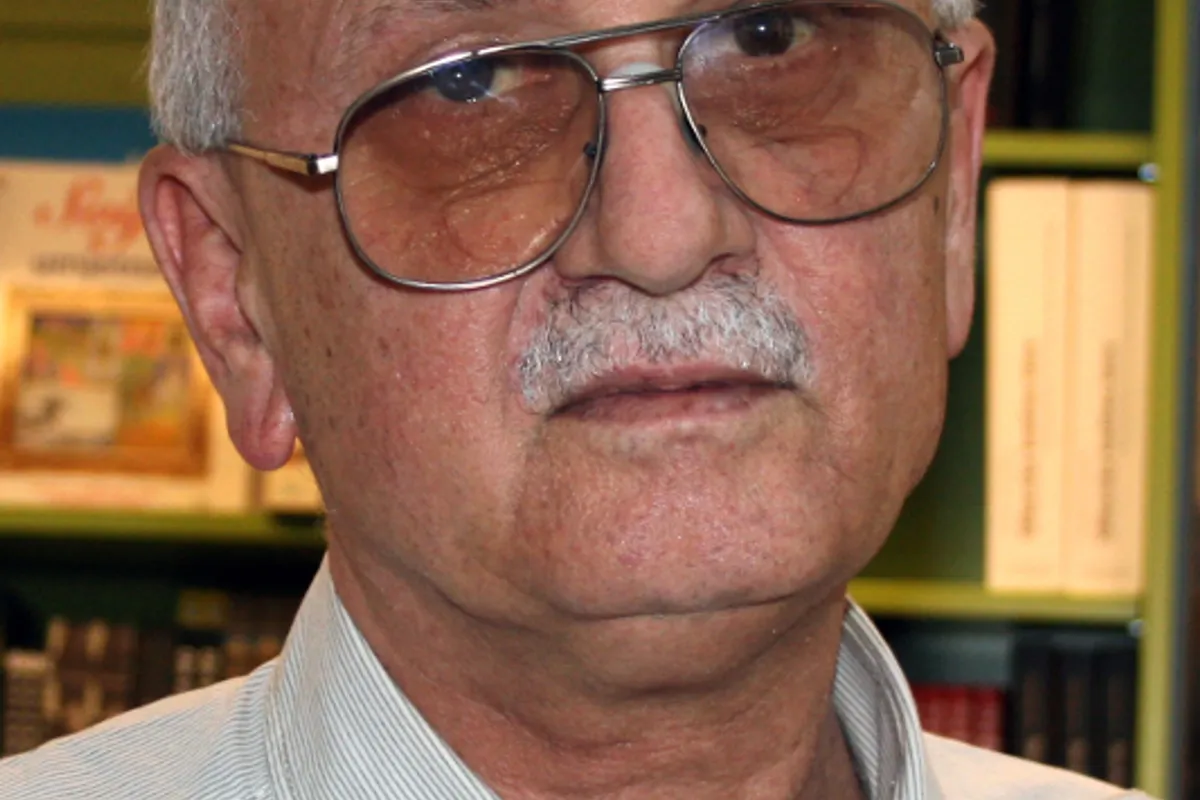
The book "The Most Beautiful Croatian Insults" by academician Pavao Pavličić, published by the artistic organization Lađa od vode, offers a look at the Croatian language from a completely unexpected angle. Through seventy selected expressions, the author humorously and with fresh narrative style explores its fluid and playful nature, as announced on Tuesday, August 6, 2026.
This is not an encyclopedic manual, but rather a journey through linguistic gems we use every day. Pavličić selects insults based solely on aesthetic criteria, unburdened by alphabetical order. What makes the book special is the freedom with which the insult is interpreted, nurtured, and valued as an important part of cultural heritage. The editor of the edition is the writer Julijana Matanović.
From 'ološ' to 'janpik': A Journey Through Language
Readers will be able to discover the origins of words like "ološ," what the verb "pimplati" means, or how "prčvarnica" and "prč" are related, a term used in Dalmatia for a billy goat. They will also learn whether they should feel called out if someone from Osijek calls them a "janpik." Pavličić also reflects on his own anecdotes, such as when as a boy he called his neighbor an "alapača," believing it was her name, and questions whether that insult applies exclusively to women.
In the entry "guba," the author recalls a trip where he followed the transformation of that word in two different conversations, from "frajer" to "pošast." He also recounts the expression "krkljanac" in a humorous poem by Branko Mihaljević about cowboys and Indians.
Swearing as an Expression of Affection
In the book's introduction, Pavličić explains his approach. "When you translate one of our curses into a foreign language, a native speaker of that language will surely be horrified. But for us, that drasticness is natural: we curse each other's mothers out of affection and sympathy, not to mention the various functions and nuances our curses can have," the author writes.
That is why I will be less interested here in how an insult originated, and more in how it lives or has lived, and what it tells us today.
Pavao Pavličić, born in 1946, is known primarily as a novelist and short story writer. His oeuvre includes works such as "Večernji akt," "Dobri duh Zagreba," "Koraljna vrata," and "Kronika provincijskog kazališta." He has also written screenplays for the films "Ritam zločina," "Treći ključ," "San o ruži," and "Orao." He has published over a hundred books and has received numerous awards and recognitions.