Pentagon Seeks 'Creative' Ways to Pressure Iran
As Trump Again Calls Off Strikes and Announces Talks, Iran Denies Them, the US Military Admits Airstrikes Aren't Changing Tehran's Stance and Looks for Unconventional Tactics.
As Trump Again Calls Off Strikes and Announces Talks, Iran Denies Them, the US Military Admits Airstrikes Aren't Changing Tehran's Stance and Looks for Unconventional Tactics.
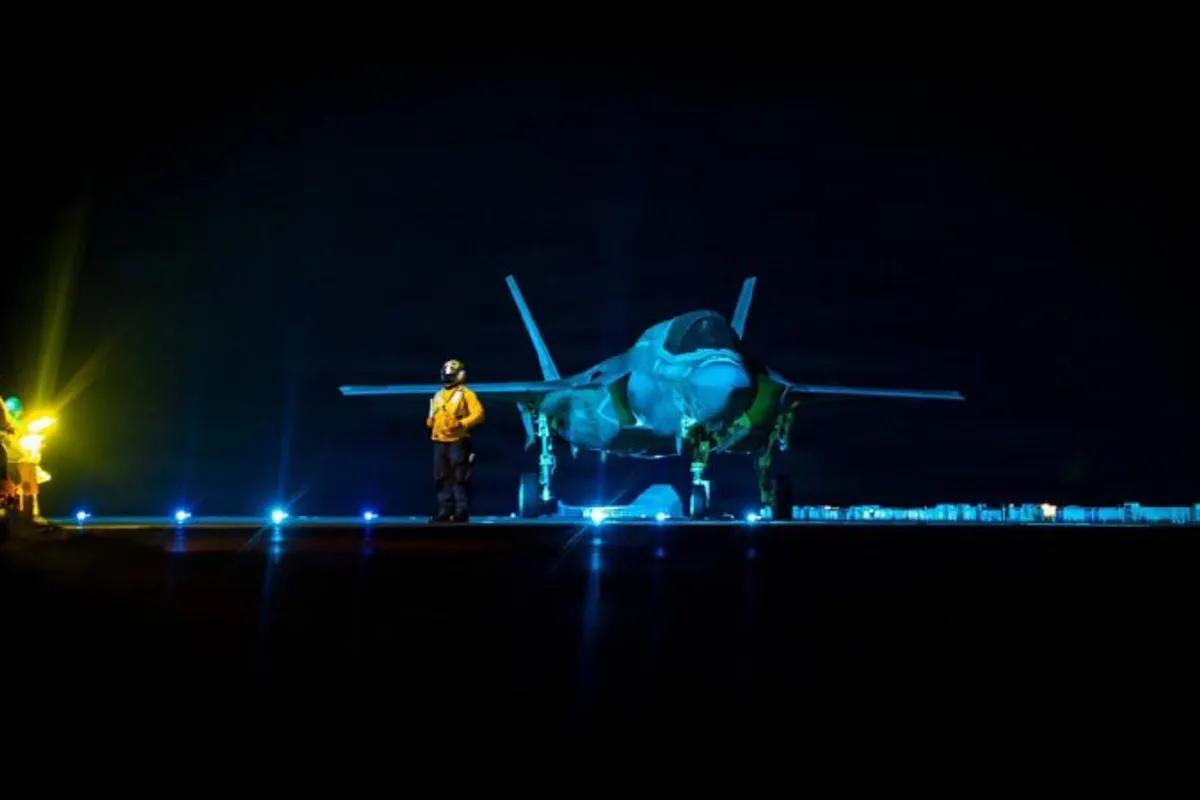
The US military's Central Command (CENTCOM) last week asked its intelligence analysts to propose "creative and unconventional" ways to punish Iran, signaling that the conventional air campaign is reaching its limits. The news comes as President Donald Trump again changes course: on Saturday, he called off planned strikes and announced the start of negotiations on Monday, but Iran claims there are no talks with Washington.
An officer from CENTCOM's intelligence directorate sent an email to analysts with an unusual request. "We are looking for new creative and unconventional ways to pressure and punish Iran," he wrote, according to information released by CNN. Captain Timothy Hawkins, a CENTCOM spokesman, defended the internal request, saying the command encourages innovation and regularly seeks input from all levels to maximize effectiveness.
The move reveals a strategic impasse Washington has found itself in. Both the Central Intelligence Agency (CIA) and the Defense Intelligence Agency (DIA) have assessed that current patterns of airstrikes will not change Tehran's diplomatic stance. "Airpower has its limits," General Dan Caine, chairman of the Joint Chiefs, recently told lawmakers.
Washington hesitates to deploy ground forces, which would be necessary to destroy deeply buried nuclear facilities like those near Mount Pickaxe, where conventional weapons cannot penetrate. So far, 18 American soldiers have been killed in the conflict, and sending in infantry would break Trump's 2024 campaign promises to avoid foreign occupations.
CENTCOM recently detailed a plan for a two-week intensive bombing campaign against Iran's missile infrastructure. Trump halted its execution after Caine's warnings about depleted interceptor stockpiles and concerns over civilian casualties. According to a source involved in the planning, "At the end of the day, POTUS will want a deal, so he'll constantly look for ways to be tough and get out of this."
Calling off strikes and announcing negotiations has become a pattern for the US president. The conflict, now in its fifth month, has been marked by a series of escalations and sudden reversals. According to sources, Trump has announced that a deal with Iran is nearly complete as many as 38 times.
"Would I rather get a deal? I don't want to kill people because people are dying, a lot of people are dying, and we don't want that," Trump told reporters on Sunday upon returning to Washington. On his Truth Social platform, he explained that Iran and other Middle Eastern countries had requested additional time to finalize an agreement. "This would include the immediate, full, and total opening of the Strait of Hormuz and the end of Iran's nuclear threat. Based on this request, I agreed, for the future good of the world," he wrote.
Yet the pattern is clear. On March 21, Trump threatened to "hit and destroy" Iranian power plants if Tehran did not open the Strait of Hormuz within 48 hours, only to postpone strikes for five days on March 23. On April 7, he warned that "the entire civilization will die tonight," after which a two-week ceasefire was agreed. Similar episodes repeated on May 17, June 11, and August 1, 2026.
While Trump announces the start of talks on Monday afternoon, Iran flatly denies it. "We are not currently negotiating with the United States. Our negotiations are with Oman to ensure passage through the Strait of Hormuz," Esmail Baghaei, spokesman for Iran's Foreign Ministry, told state television. Baghaei added that an agreement will be reached on a route "that respects the sovereign rights of both parties and protects our national interests and security."
An Iranian source told Al Mayadeen that Tehran has rejected the latest US proposal and insists the strait will remain closed until the war fully ends. The Strait of Hormuz, through which about 20 percent of the world's oil and liquefied natural gas shipments passed before the conflict, is the central point of contention.
The announcement of possible talks immediately impacted markets. Oil prices fell more than four percent in early trading on Monday. Brent crude dropped to $83.70 per barrel, while US WTI fell to $79.60. The decline followed a 20 percent jump in both benchmarks last month, with Brent briefly surpassing $100 in late July.
Michael Knights, an analyst at the Washington Institute, believes Iran is trying to outmaneuver the US through escalation. "Iran has, from the start, tried to outdo the United States in escalation by expanding its escalation options so it always has something new to bring each week-new geography, new types of weapons, new types of targets," he told Reuters. Ray Takeyh of the Council on Foreign Relations, a former Iran adviser at the State Department, adds: "If there are talks, they will define the terms. Both sides are responding to escalation with escalation."
Meanwhile, the conflict continues on other fronts: in Gaza, at least 17 people were killed in Israeli strikes over the weekend, including a four-year-old child killed in an attack on a residential apartment in the southern part of the enclave.